
Breaking the Walled Gardens: Privacy-Preserving Analytics on the Decentralized Social Web
Privacy-Preserving WebID Analytics on the Decentralized Policy-Aware Social Web
This paper introduces a policy-aware decentralized architecture for WebID analytics on the Social Web. It utilizes the WebID-TLS protocol and RHadoop (an integration of R and Hadoop) to perform privacy-preserving big data analytics while breaking the "walled garden" silos of centralized social networks.
TL;DR
The paper addresses the "Social Silo" problem by architecting a decentralized Social Web where users own their identities (WebIDs). It introduces a semantics-enabled policy framework that utilizes RHadoop to perform hybrid analytics (covering both simple MapReduce and complex statistical R modeling) while ensuring that Personally Identifiable Information (PII) is masked via automated Data Handling Policies.
Background: The Problem with Centralized Silos
In the status quo, social giants like Facebook act as "walled gardens." They control your data, limit interoperability, and perform opaque analytics without granular consent. If you leave the platform, your data isn't truly portable.
The paper argues for a Decentralized Social Web where:
- Identity is Portable: Using WebID (FOAF + TLS) for single sign-on across the web.
- Data is Decoupled: Applications (SaaS) are separated from the data storage (PaaS).
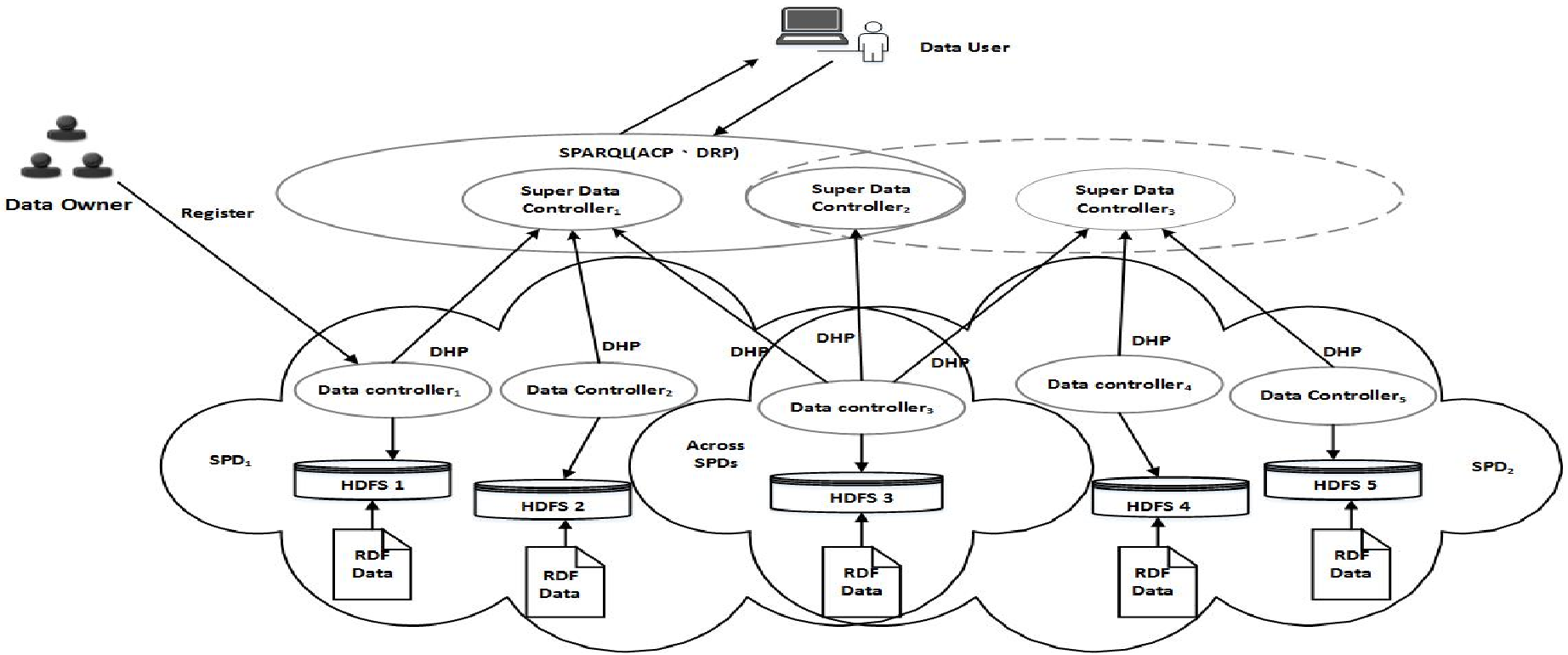
- Trust is Transparent: Users hand-pick a "Data Controller" to manage their privacy preferences.
The Core Methodology: Semantics-Enabled Policies
The genius of this approach lies in moving away from hard-coded security to Semantics-Enabled Policies. The author defines three layers of protection:
- Access Control Policy (ACP): Uses SPARQL queries to verify if an analyst’s role, purpose, and location match the data owner's requirements.
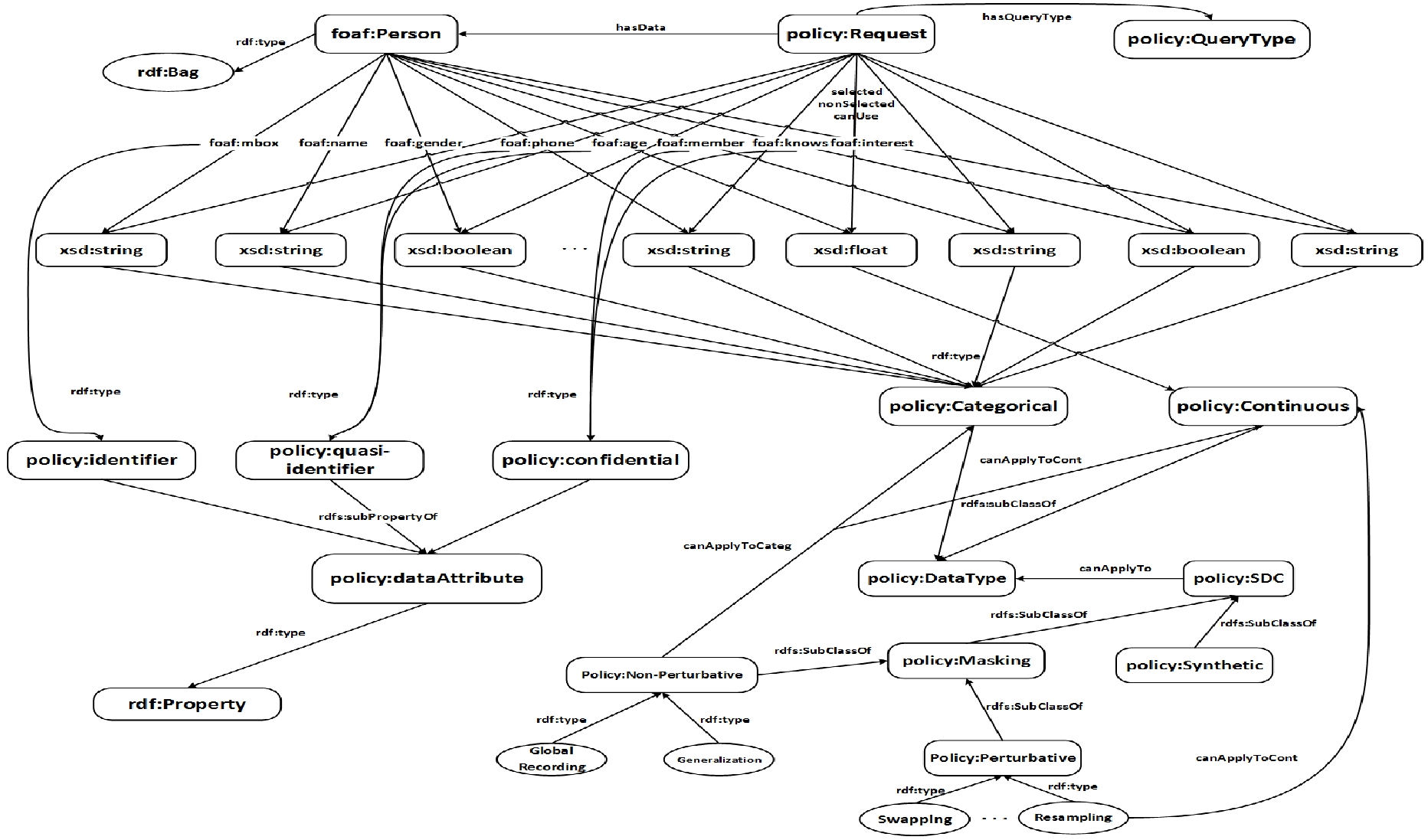
- Data Handling Policy (DHP): Maps specific attributes (Identifiers, Quasi-identifiers) to Statistical Disclosure Control (SDC) techniques like masking or perturbation.
- Data Releasing Policy (DRP): Operates at a "Super Data Controller" level to aggregate data from multiple sources while ensuring the output follows privacy principles.
Hybrid Analytics with RHadoop
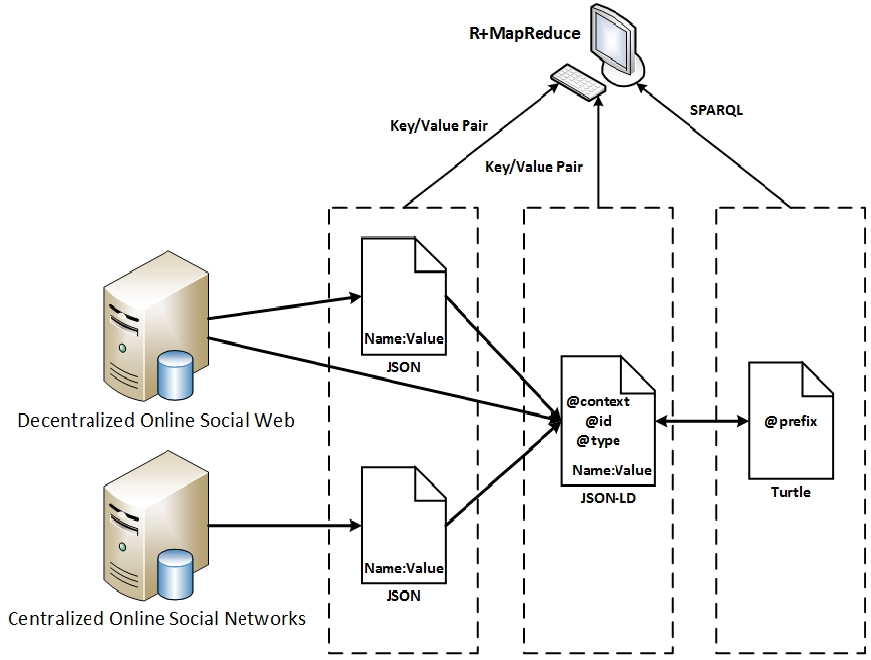
Raw data on the social web is messy. To handle it, the author proposes a Hybrid WebID Analytics workflow:
- Lightweight: MapReduce handles unstructured JSON-LD data.
- Heavyweight: The R language performs complex social network analysis (e.g., clustering, centrality measures) on structured Turtle RDF graphs.
- Unified Pipeline: By upgrading standard JSON to JSON-LD, existing centralized data can be integrated with decentralized WebIDs seamlessly.
Balancing Utility and Protection
A major contribution of this work is the formalization of the SDC Ontology. Privacy and Utility are often in a Zero-Sum game: more privacy usually means less useful data for analysts.
The system uses the DHP (Data Handling Policy) to navigate this trade-off. For instance, a user's phone number might be generalized (categorical), while their exact birthdate might be perturbed (continuous), allowing the analyst to see the "average age of a cluster" without identifying a specific person.
Critical Analysis & Conclusion
The paper successfully bridges the gap between Semantic Web technologies (RDF, SPARQL) and Big Data infrastructure (Hadoop).
Strengths:
- User Sovereignty: It puts the data owner back in the driver's seat.
- Interoperability: Converting JSON-LD to Turtle allows for a truly "Global" social graph that isn't limited by platform boundaries.
Limitations:
- Performance Overhead: Reasoning over complex OWL/RDF ontologies in a real-time Hadoop environment can introduce latency.
- Trust Adoption: The model relies on "Trusted Data Controllers." Finding entities that users trust more than current platforms remains a social, rather than technical, hurdle.
Future Outlook: As we move toward Web 3.0, frameworks like the one proposed here provide the mathematical and logical blueprint for analytics that respect human rights while still delivering the business insights needed for the modern web.