
Beyond the Uploader: Masterminding Collective Privacy in Social Networks
Privacy Protection Based Privacy Conflict Detection and Solution in Online Social Networks
The paper proposes a Collective Privacy Protection (CPP) framework for Online Social Networks (OSNs) to manage privacy conflicts in collaborative information (e.g., tagged photos). Using a majority vote mechanism, it empowers co-owners to influence privacy policies, achieving more balanced protection than traditional owner-centric models.
TL;DR
In the world of Facebook and Twitter, if you are tagged in a photo, you historically have had little say in who sees it. This paper introduces Collective Privacy Protection (CPP), a system that uses Majority Voting and multi-factor social graphs to give co-owners a seat at the table, ensuring that one person's post doesn't become another person's privacy nightmare.
The "Uploader-Takes-All" Problem
Most Online Social Networks (OSNs) operate on a flawed logic: the person who clicks "Post" owns the privacy settings. This creates a massive blind spot for collaborative information. If you are "Checked-in" at a sensitive location or tagged in an embarrassing photo, you are at the mercy of the owner's settings.
The authors argue that existing research often fails to provide a concrete mechanism for when privacy concerns clash. Why is this hard? Because "Privacy" is subjective—what a friend thinks is a funny photo might be a "fireable offense" if seen by your boss.
Methodology: The Five Pillars of CPP
The authors propose a structured workflow to transition from individual control to collective consensus:
- Social Graph: Mapping nodes (users) and edges (relationships) with metadata like "Affinity Level" (0.1 to 1.0) and "User Preference."
- Fine-grained Policy Factors: Instead of just "Public" or "Private," owners use four dimensions:
- T/G Rela: Relationship type (Family, Boss, etc.).
- Affinity Level (AL): Closeness.
- Preference (Pref): Shared interests.
- Distance (Dist): How many "hops" the info spreads.
- Co-owner Invitation: Automatically notifying everyone associated with the post before it goes live.
- Majority Vote: A democratic approach to posting. Notably, the system treats "No Response" as a Rejection—a "Privacy-First" design choice.
- Conflict Identification: Analyzing the social graph to find "Mutual Friends" who might still see the info despite a co-owner's objection and filtering them out.
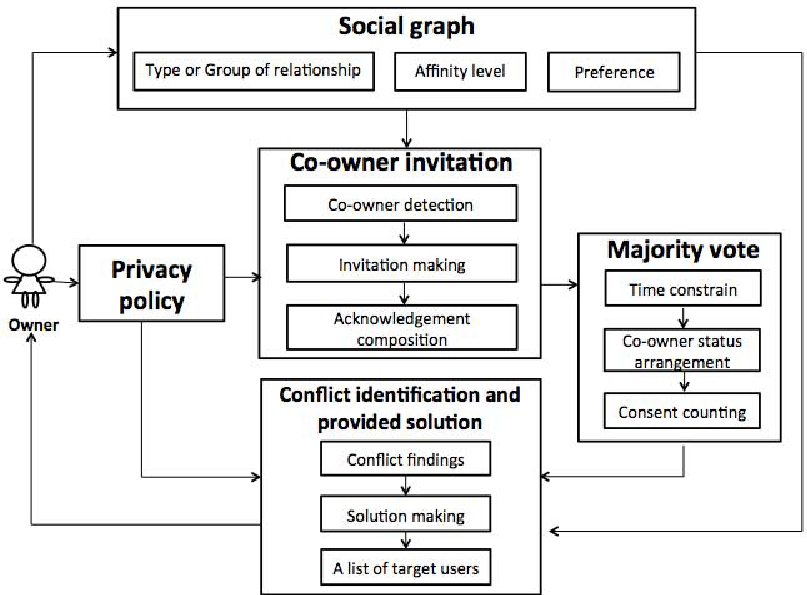 Figure 1: The proposed workflow of Collective Privacy Protection.
Why Multi-Factor Settings Matter
The research conducted an experiment using a virtual social graph of 88 nodes to see which policy combinations actually made users feel safe.
The standout finding? Inductive Bias toward Complexity. Users felt significantly safer when all four factors (Type, Affinity, Preference, and Distance) were combined. As shown in the data, the combination of these factors (Type 15 in their study) achieved the highest protection scores across categories like "Personal Information" and "Improper Morality."
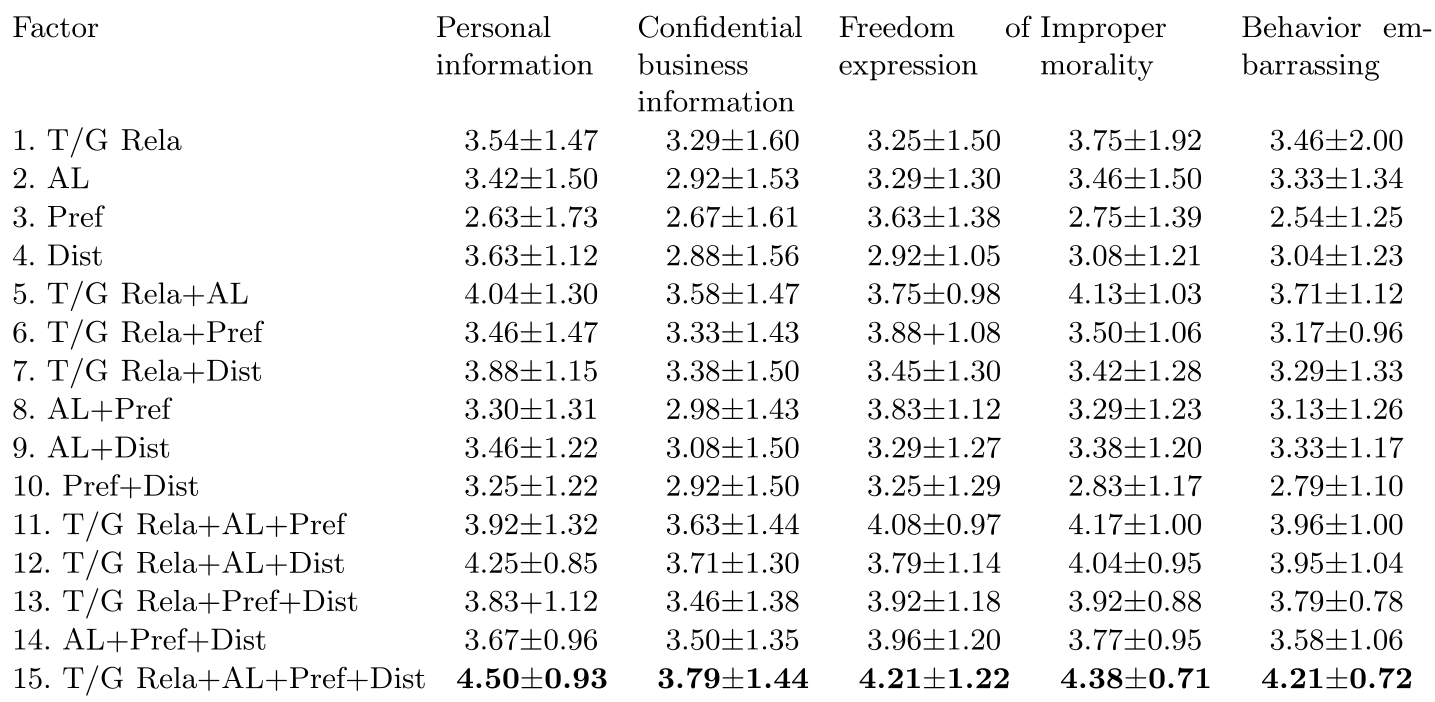 Table 1: Comparison of different factor combinations in protecting sensitive data types.
Critical Analysis: Is Democracy the Answer?
The paper’s use of Majority Vote is a pragmatic "middle ground." While it prevents a single "troll" from blocking every post (as a Unanimous Vote might), it still protects dissenters by filtering the audience to ensure their specific social circles aren't reached.
Key Insights:
- The "Boss" Factor: The study confirms that users are most terrified of info leaking to "Family" and "Bosses." This suggests OSNs should have specialized "Professional" filters by default.
- The Silence Rule: By moving "No Response" users to "Rejection," the authors acknowledge that in privacy, silence is not consent.
Limitations: The current model relies on users being willing to spend time voting. In a fast-paced social era, "Voting Fatigue" could lead to all posts being blocked if users ignore invitations.
Conclusion
This work shifts the OSN paradigm from "Personal Content" to "Shared Assets." By integrating social graph metrics with a democratic voting process, the CPP framework provides a blueprint for platforms that respect the privacy of every face in the photo, not just the one holding the camera.