
Bridging the Gap: Integrating Security and Privacy into Multi-modal UI Modeling
Privacy and Security in Multi-modal User Interface Modeling for Social Media
This paper proposes a model-driven approach to integrate privacy and security into Multi-modal User Interfaces (MUIs) for social media. It introduces an extension to the UsiXML User Interface Description Language (UIDL) and the PriS framework to bridge the gap between technical security requirements and UI design principles like awareness and affordance.
TL;DR
In the realm of social media, security is often treated as a "backend problem," while the UI is treated as a "usability problem." This paper argues that they are inseparable. By extending the UsiXML description language with a dedicated security metamodel, the authors demonstrate how privacy goals like anonymity and authorization can dynamically shape the affordance and awareness of multi-modal user interfaces, particularly in complex "SocialTV" environments.
The Problem: The Usability-Security Disconnect
Most security systems are designed for highly technical users. In social media, however, users are task-oriented; they want to share and consume content, not manage permissions.
The authors identify a critical failure in current UI design:
- Lack of Affordance: A UI that shows restricted links but throws an error when clicked is secure but has poor usability.
- Lack of Awareness: A UI that hides all restricted content might prevent errors but leaves the user unaware of available upgrades or the reason for hidden features.
Existing User Interface Description Languages (UIDLs) rarely allow designers to model these security-driven UI changes early in the development lifecycle.
Methodology: A Model-Driven Extension
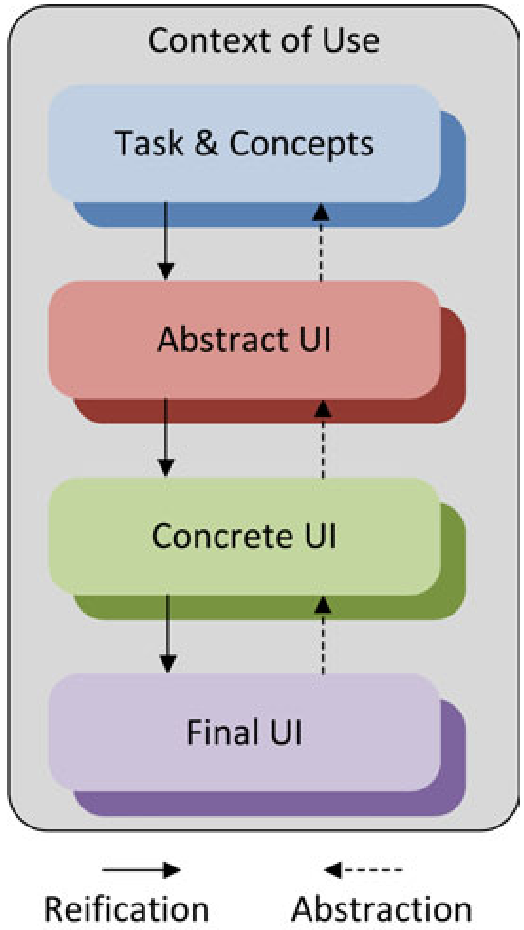
The core of the paper is the integration of the PriS (Privacy and Security) method into the Cameleon Reference Framework (CRF).
1. The Four-Layer Abstraction
The design follows four distinct layers of abstraction:
- Tasks & Concepts (T&C): What the user wants to do.
- Abstract UI (AUI): Modality-independent containers and components.
- Concrete UI (CUI): Platform-independent widgets and layouts.
- Final UI (FUI): The actual code running on a device.
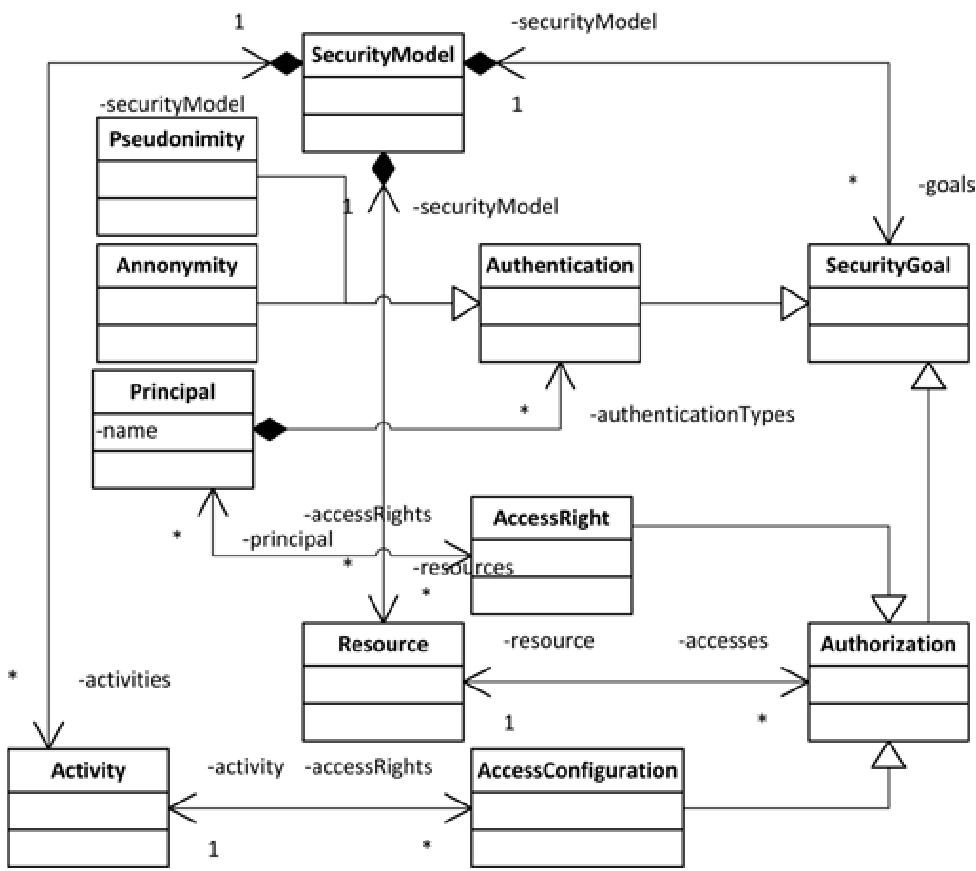
2. The Security Metamodel
The authors adapt the PriS framework to define security goals such as Authentication, Authorization, and Anonymity. These are mapped to "Activities" (which correspond to UI Tasks) and "Resources" (which correspond to Domain Classes).
Case Study: SocialTV and Distributed User Interfaces
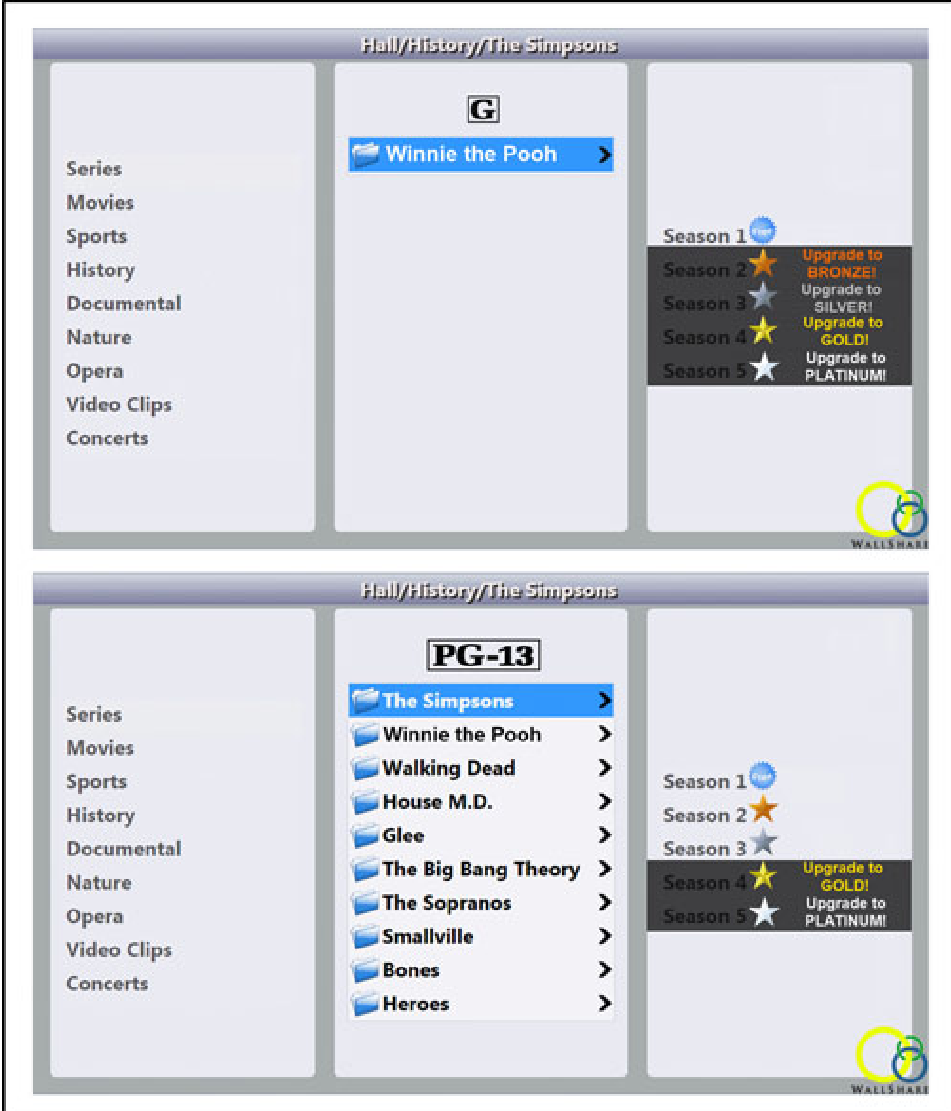
To prove the feasibility, the authors modeled a SocialTV scenario where users interact via a shared wall display and personal mobile devices.
By using the Idemix anonymous credential system, the UI can adapt based on user attributes without compromising privacy. For example:
- Scenario A (Child User): The shared display shows "Winnie the Pooh" and hides adult content (Affordance).
- Scenario B (Child + Adult): Once an adult joins and authenticates via their mobile device, the shared UI updates to show PG-13 content (Contextual Awareness).
SOTA Comparison & Deep Insights
Unlike previous works that focus solely on the technical implementation of access control lists (ACLs), this work provides a Mapping Model. This allows developers to say: "If the 'Authorization' goal is not met, change the 'Output Facet' of this UI component to 'Disabled' or 'Invisible'."
The key insight is that usability is a prerequisite for security. If a security feature is too hard to use or understand through the UI, users will bypass it or fail to use it effectively.
Final Analysis & Takeaways
This paper makes a compelling case for "Security-Aware UI Modeling." By moving security concerns from the code level to the model level:
- Consistency: Security policies are applied uniformly across multi-modal platforms (Mobile, TV, Desktop).
- User Experience: UI designers can proactively design how a "restricted access" state looks, improving user awareness.
Limitations: The security metamodel is still in its early stages. Future work needs to address more complex privacy goals like unobservability and unlinkability within the UI flow. As multi-modal interfaces (gestures, voice, tangible UI) become the norm, this model-driven approach will be essential for maintaining a secure yet seamless user experience.