
The Structural Fingerprint: Why Anonymizing Social Media Data is Harder Than You Think
Privacy Threat Analysis of Mobile Social Network Data Publishing
The paper introduces a novel structural re-identification attack targeting anonymized Mobile Social Network (MSN) data. By exploiting neighborhood structure and friendship information, the method achieves a high-accuracy de-anonymization rate of over 89% on real-world datasets.
TL;DR
Researchers have developed a new re-identification attack that proves traditional anonymization (like k-anonymity) is largely ineffective for Mobile Social Networks (MSNs). By using basic knowledge of a target's friends and their connections, the attack can unmask over 89% of "anonymous" users in a graph. This work highlights a critical vulnerability in how service providers share data with third parties.
Background: The Illusion of Anonymity
When mobile social network providers share data with researchers or marketers, they typically use k-anonymity. The logic is simple: remove the names, replace them with random numbers, and ensure at least individuals share similar attributes. However, this paper argues that the structure of your social circle is as unique as a fingerprint. Even if your name is hidden, the fact that you have 4 friends, two of whom know each other, might make you unique in a dataset of millions.
The Core Motivation: Neighborhood Vulnerability
Existing privacy research often focuses on location trajectories or profile matching. This paper pivots to the Friendship Information—the edges of the graph. The authors realized that while previous attacks looked at a node's degree (number of friends), they didn't fully exploit the internal connectivity of those friends. If an adversary knows who your "friend-of-friends" are, the search space for your identity collapses rapidly.
Methodology: The Three-Step Refinement
The proposed attack doesn't require a supercomputer or secret data; it relies on observable social structures. The process follows a logical funnel:
- Broad Query: Identify all nodes in the anonymized graph that have the same number of friends (degree) as the target.
- Structural Refinement: Compare the link structures among those neighbors. The adversary looks for specific patterns, such as "Friend A knows Friend B."
- Unique Identification: Use the specific neighborhood properties of an adjacent node (an "anchor") to bridge the gap to the target victim.
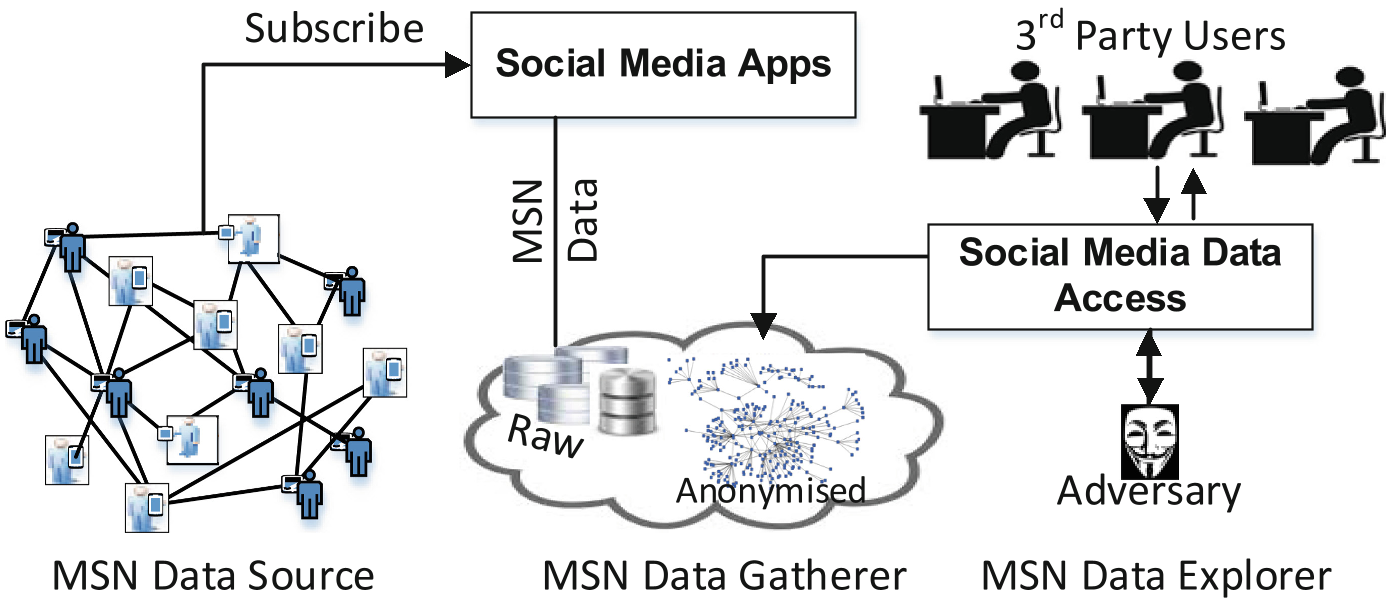 Figure 1: The Privacy Threat Analysis Framework involving data sources, gatherers, and adversaries.
Experimental Results: A Lethal Success Rate
The researchers tested their approach against two major baselines on the PolBooks and Small-World datasets. The results were startling:
- Prior Methods: Earlier attacks (like Liu & Terzi, 2008) only managed a 20-30% re-identification rate.
- The Proposed Approach: By combining degree information with neighborhood-pair properties, the success rate soared to over 89%.
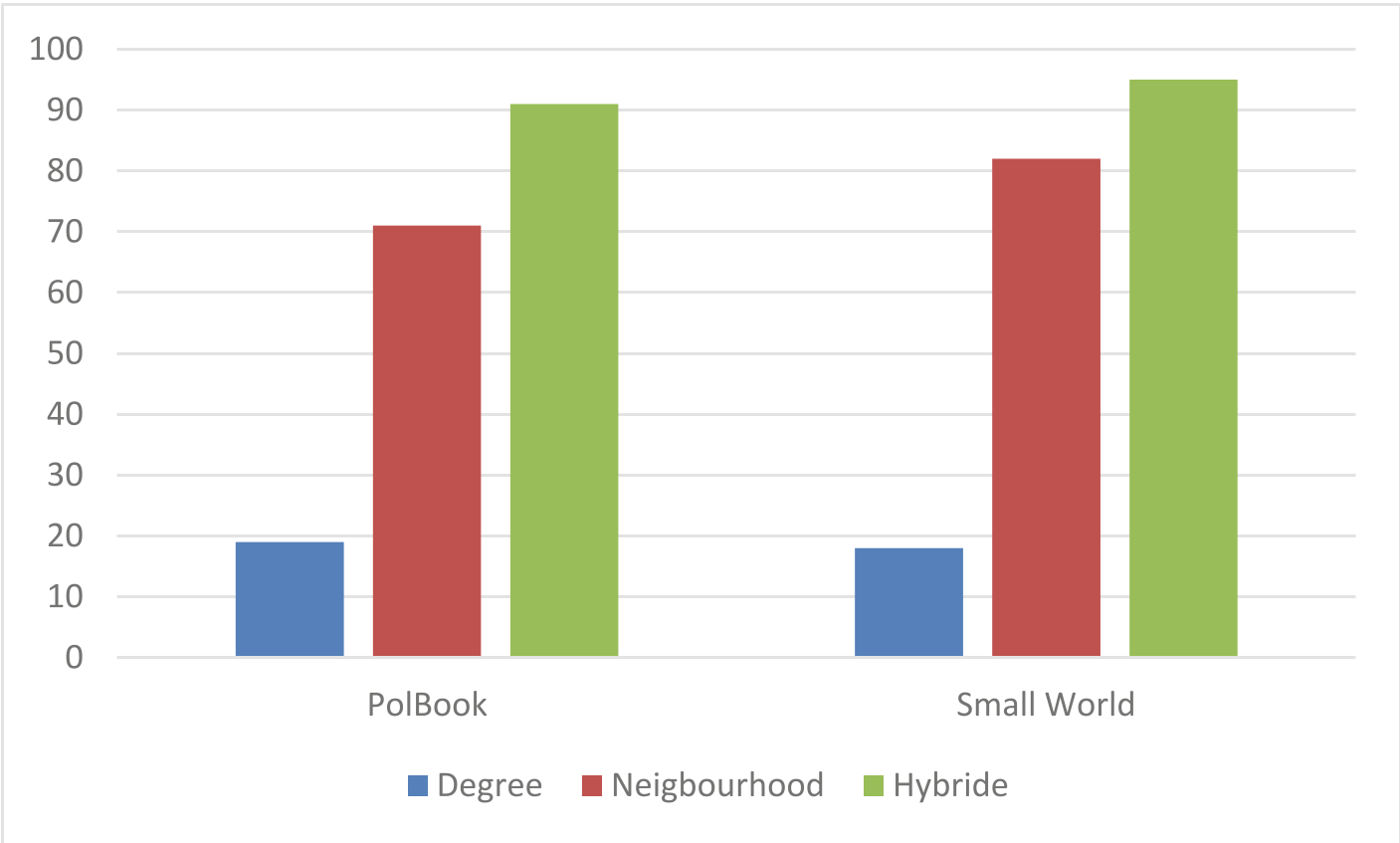 Figure 2: Performance analysis showing the proposed method significantly outperforming baseline structural attacks.
The "Success Rate" here refers to the percentage of vertices that were definitely and uniquely re-identified. In a real-world scenario, this means nearly 9 out of 10 users in a supposedly "safe" dataset could have their identities revealed.
Critical Insight & Future Outlook
The primary takeaway is that graph topology is inherently sensitive. As MSNs integrate more location-based services, the social graph becomes even more dense and descriptive.
Limitations: The attack assumes the adversary has some background knowledge of the target's immediate social circle. While this is a lower bar than previous attacks, it still requires "active" or "informed" adversarial intent.
Future Work: The authors suggest that simply "scrubbing" IDs is dead. The next frontier of privacy research must involve Utility-Aware Graph Anonymization—methods that slightly alter the structure of the graph to protect individuals without making the data useless for legitimate sociological research.