
Private Geosocial Networking: The End of the Privacy-Utility Tradeoff in LBSNs
15674_Private geosocial networking.
This paper introduces "Private Geosocial Networking," at the 2011 SIGSPATIAL conference, featuring a privacy-preserving framework for Location-Based Social Networks (LBSNs). It proposes a verifiable, anonymous check-in mechanism that allows users to prove spatial status (like "Mayor" or "Commoner") without revealing their exact location or identity history to the service provider.
TL;DR
In the early days of Location-Based Social Networks (LBSNs), users were forced to trade their movement history for social "badges" (like Foursquare's "Mayor"). This paper presents a cryptographic framework that allows users to claim these rewards anonymously and verifiably, ensuring the service provider learns that someone reached a milestone without knowing who they are or where they were specifically.
Background & Motivation: The Tracking Trap
By 2011, LBSNs like Foursquare and Gowalla had exploded in popularity. However, the system architecture was fundamentally flawed regarding privacy. To earn a "Mayor" title (granted to the person with the most check-ins at a specific venue), a user had to constantly report their GPS coordinates to a central server.
The authors identify a critical Privacy-Utility Gap:
- Utility: Requires proof of location to prevent "GPS spoofing" and reward loyal customers.
- Privacy: Requires that the server cannot link check-ins across different times/locations to build a comprehensive user profile.
Previous works attempted "spatial cloaking" (blurring the location), but these often degraded the utility of the service or were still susceptible to correlation attacks.
Methodology: Verifiable Anonymity
The core of the proposed solution lies in decoupling the Location Proof from the Identity Proof.
1. The Protocol Flow
The system involves three actors: the User, the Service Provider (LBSN), and a local Venue Point (AP/Gateway).
- Step 1: Anonymous Authentication: The user authenticates to the venue gateway using a blind signature scheme. This allows the user to get a "check-in token" without the gateway knowing the user's long-term identity.
- Step 2: Proof Generation: The user collects these tokens locally. To claim a badge (e.g., "Visited 10 times"), the user generates a cryptographic proof.
- Step 3: Verification: The LBSN server verifies the proof. Due to the secret-sharing logic, the server can confirm the count of visits is correct without seeing the individual timestamps or the user's unique ID.
2. Guarding Against Fraud
How do you stop a user from claiming they are in two places at once? The authors implement a "Simultaneous Check-in" detection. If a user tries to use the same cryptographic material to check into two different venues at the same time, their anonymity is revoked—a technique similar to double-spending protection in early digital cash.
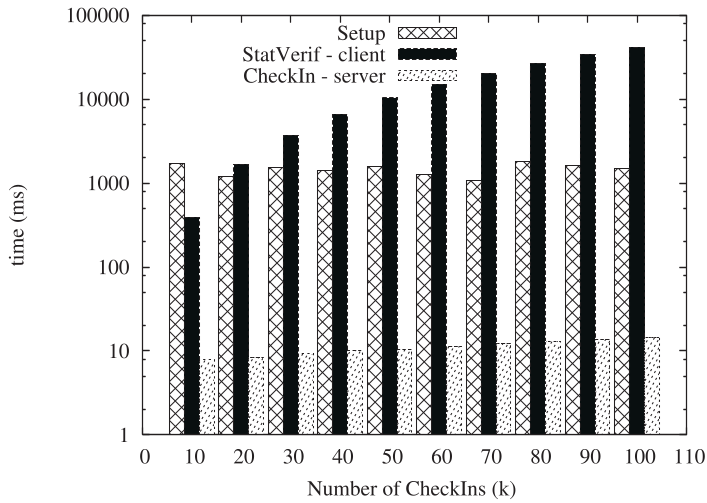 Figure 1: High-level overview of the check-in and proof verification cycle.
Experimental Validation
To prove this wasn't just theoretical, the authors implemented the system on Android smartphones of the era.
- Computational Cost: The entire check-in process takes ~213ms on the mobile device. This is negligible compared to the time it takes to open an app and wait for a GPS lock.
- Scalability: The server can process check-in verifications in roughly 2.2ms per request.
- Battery Impact: The cryptographic operations (Modular exponentiations) were found to be energy-efficient enough for daily use.
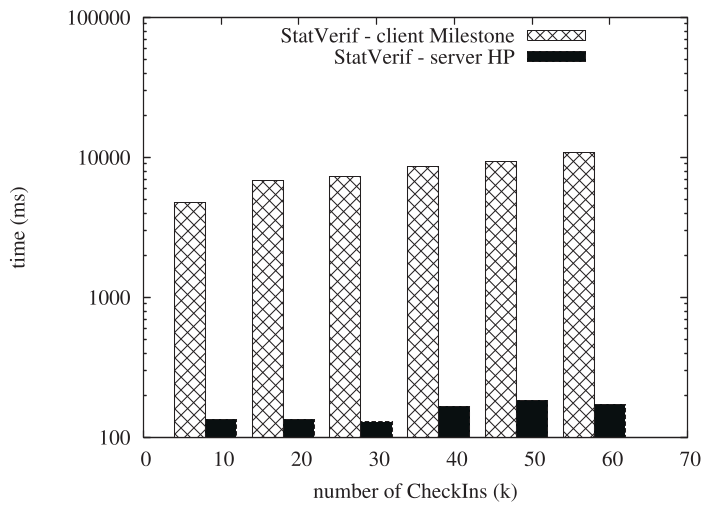 Figure 2: Performance metrics showing the feasibility of the protocol on mobile hardware.
Critical Insight: Why This Matters
This paper was ahead of its time by suggesting that Trust and Anonymity are not mutually exclusive. By using "verifiable credentials," a service can be just as robust against fraud as a centralized one, while keeping the user in control of their data.
Limitations
- Venue Participation: The model requires venues to have a trusted gateway/AP to sign location tokens, which poses a deployment hurdle compared to pure GPS-based apps.
- Collusion: If a venue gateway and the LBSN server collude, some aspects of user privacy could still be compromised.
Conclusion
"Private Geosocial Networking" served as an early blueprint for what we now recognize as Self-Sovereign Identity (SSI) in the context of the physical world. It proved that we could have our "Mayorships" and our privacy too.