
Winbook: Redefining Requirements Negotiation through Social Networking Paradigms
Process implications of social networking-based requirements negotiation tools
This paper introduces Winbook, a collaborative requirements negotiation tool that leverages the social networking paradigm (similar to Facebook) and color-coded organization (similar to Gmail) to implement the WinWin negotiation framework. It aims to bridge the gap between technical and non-technical stakeholders in software project definition.
TL;DR
Requirements engineering is notorious for being the graveyard of software projects, primarily because non-technical stakeholders are often alienated by formal tools. Winbook changes the game by "Facebook-ifying" the WinWin negotiation framework. By replacing formal syntax with "posts," "comments," and "likes," it fosters high levels of engagement and visualizes the "negotiation equilibrium" in a way anyone can understand.
Context & Positioning
In the landscape of software engineering, this work represents a pivotal shift from formalism to collaboration. While it stands on the legendary shoulders of Barry Boehm’s WinWin Framework, it moves away from the "Wiki-era" (WikiWinWin) toward a more intuitive, social-media-driven interface aimed at solving the perennial problem of stakeholder underrepresentation.
The Pain Point: The "Wiki" Tax
The authors identified that even the most advanced previous tools like WikiWinWin imposed a heavy "maintenance overhead."
- Synchronization Nightmares: Managing 30-50 separate pages for win conditions, issues, and options led to massive overhead.
- UX Friction: Non-technical clients found wiki syntax intimidating, eventually reverting to email, which fragmented the "institutional memory" of the project.
- Abstraction Gap: Traditional Requirement Specifications (SSRD) felt disconnected from the actual collaborative conversations.
Methodology: The "Winbook" Blueprint
The brilliance of Winbook lies in its psychological mirroring of daily digital habits.
1. The Social Architecture
Instead of a document, the project is a Wall.
- Win Conditions = Status Updates.
- Issues & Options = Nested Comments.
- Agreement = "Likes."
2. The WinWin Tree
To maintain the rigor of the WinWin framework, the tool organizes data in a hierarchical tree. This allows a freeform conversation to remain structured enough to be exported into technical artifacts later.
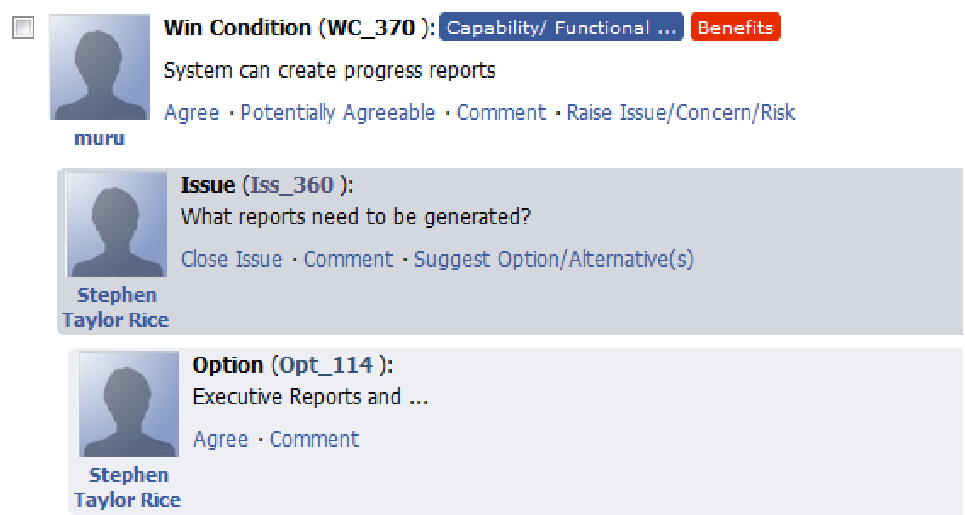 Figure 1: The zoomed-in view of the WinWin Tree showing how nested discussions resolve into negotiated outcomes.
3. Equilibrium Visualization
Winbook introduces a "Shaper" (a human moderator) who tracks the team's progress toward a WinWin Equilibrium. This is visualized through a color-coded wall:
- Green: Agreed/Committed.
- Yellow: Potentially Agreed/Under Research.
- Red: Not yet agreed/In conflict.
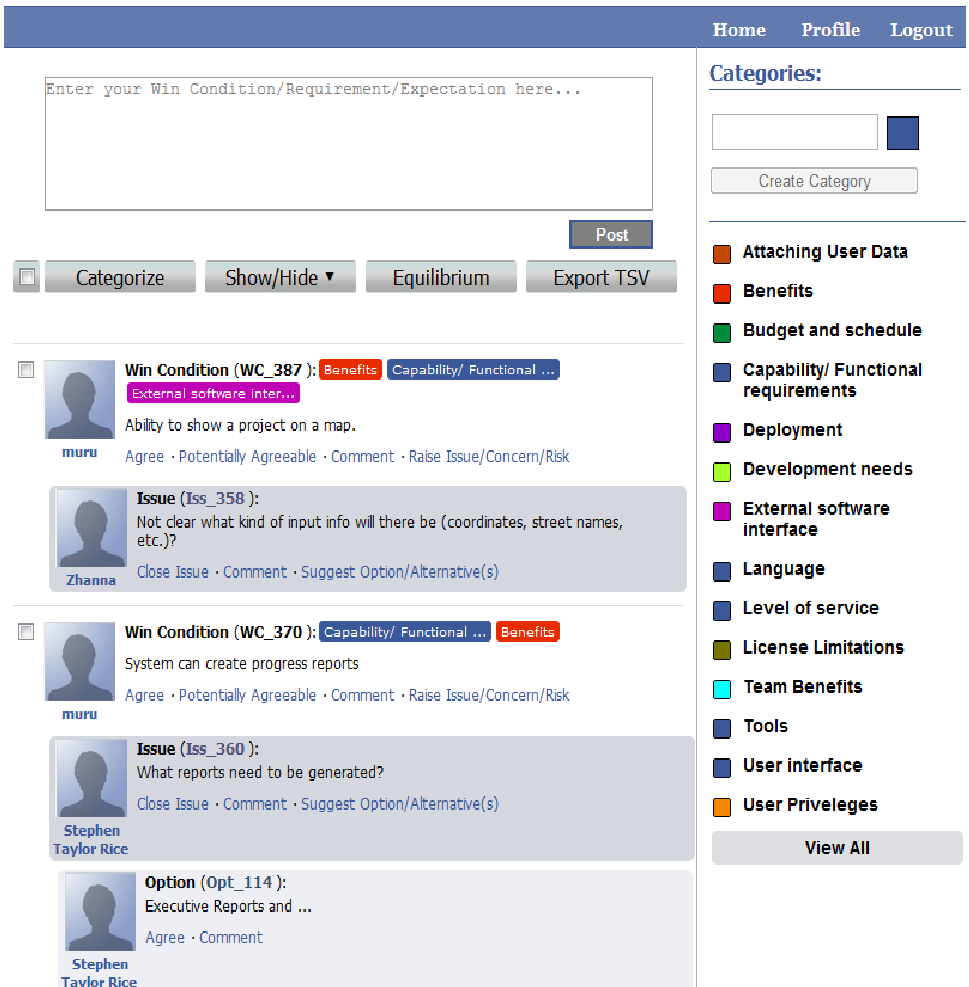 Figure 2: The Project Wall showing the integration of social posts and Gmail-style category labels.
Experimental Validation
The tool was tested across 14 projects involving real-world clients like the LA Department of Transportation.
Key Findings:
- Adoption Rate: Unlike previous tools, clients actually used Winbook directly to post and edit requirements instead of sending emails to developers.
- Agile Integration: The teams found that Winbook "Win Conditions" naturally evolved into User Stories, effectively eliminating the need for a cumbersome 100-page SSRD.
- Value-Focused Prototyping: Because the wall highlighted the most contentious (Red) or valuable items, developers could prioritize their prototyping efforts on high-risk areas first.
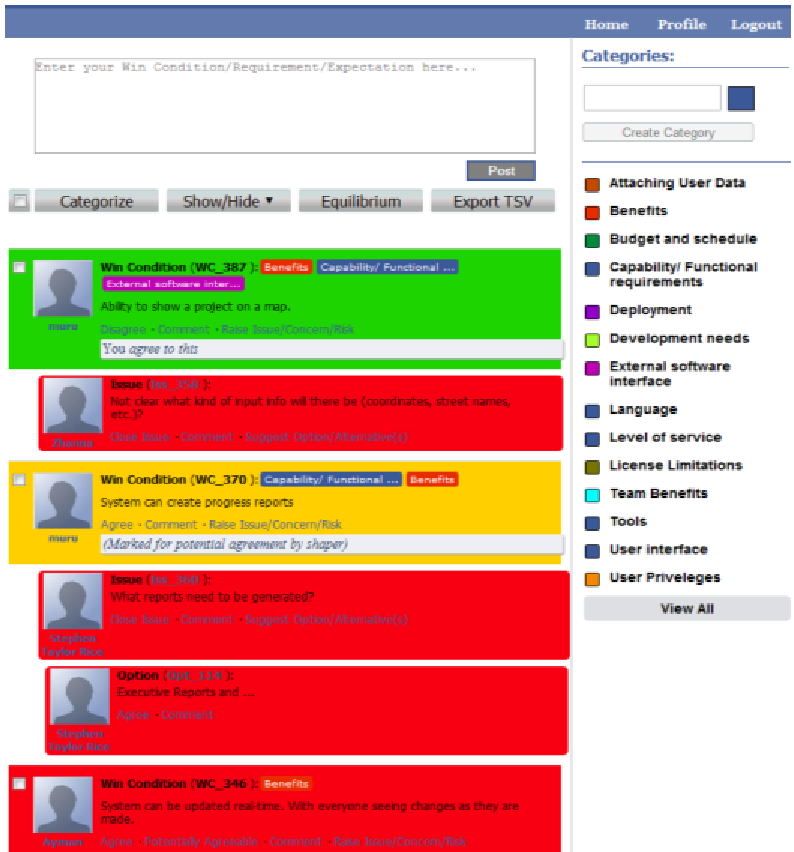 Figure 3: The Equilibrium View acting as a negotiable contract between stakeholders and developers.
Critical Insight & Conclusion
Winbook proves that the failure of requirements engineering is often a UX failure, not a logic failure. By shifting the "negotiation" from a formal meeting to a "social feed," the authors successfully captured the rationale behind requirements—the "Why"—which is usually lost in static documents.
Limitations & Future Work
The current version lacks built-in prioritization (currently handled via external spreadsheets) and automated email notifications. However, the future roadmap includes Goal-Oriented Requirements Elicitation, where win conditions are directly linked to high-level project objectives, ensuring that every "Like" on the wall contributes to the project's ultimate success.
Summary Takeaway
If you want stakeholders to engage, build a tool they already know how to use. Winbook transforms the "chore" of system definition into a familiar, collaborative social experience.