
The Human Element in Knowledge Mining: Why Psychology Trumps Algorithms in System Design
Process-oriented method usage for examining the knowledge mining process
This paper presents a formal framework for analyzing the knowledge mining process using the IDEF0 functional modeling standard. It specifically emphasizes the critical role of psychological and sociological factors in improving the interaction between Knowledge Engineers (KE) and Experts during information system development.
TL;DR
Knowledge mining—the art of extracting specialized insights from experts to build information systems—is often treated as a technical data problem. This paper argues it is fundamentally a psychological and communicative process. By using the IDEF0 modeling standard, the authors map out how human traits like temperament, age, and sensory preferences dictate the success of knowledge transfer from Expert to Engineer.
The Motivation: The "Broken Phone" of System Requirements
Why do expensive information systems often fail to meet user needs? The authors posit it isn't a lack of coding skill, but a breakdown in communication. An expert (E) knows the domain but often considers key logic "too obvious" to mention. The knowledge engineer (KE) lacks domain depth and may misinterpret the expert's verbal cues. This creates a "broken phone" effect where the final system architecture reflects a misunderstood reality.
Methodology: Deconstructing Knowledge through IDEF0
The authors don't just offer advice; they provide a structural decomposition of knowledge mining as a process.
1. Functional Modeling (IDEF0)
The process is visualized as a system of Inputs (Information, Problem Definitions), Outputs (Knowledge), Mechanisms (Experts, Engineers), and Controls (Psychological/Linguistic aspects).
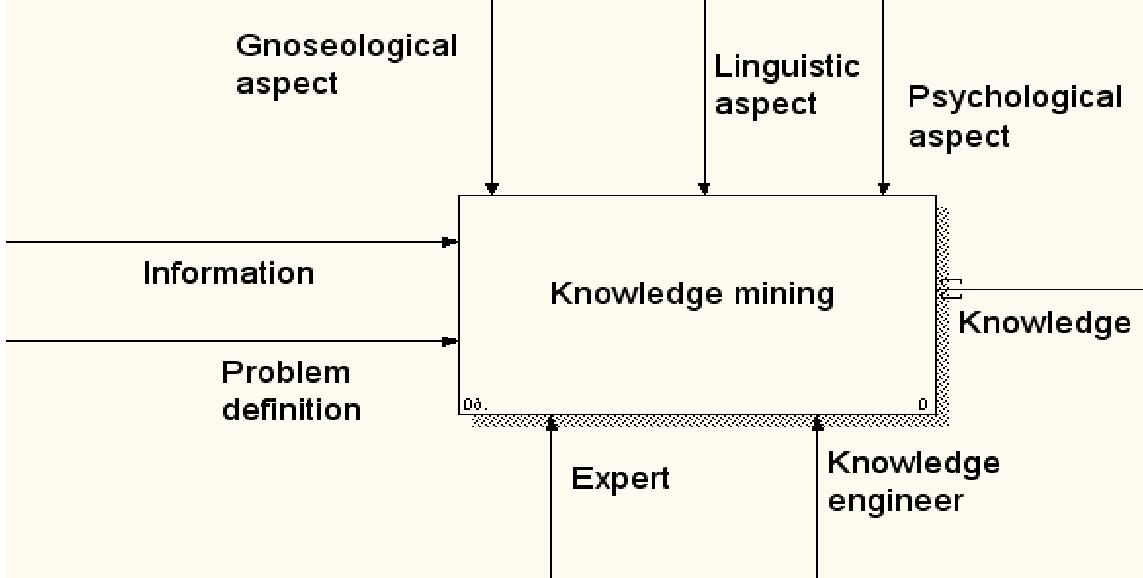
2. The Four Stages of Translation
The paper breaks the workflow into four critical transformations:
- Translation 1: The expert's perception of reality into an internal mental model (Model 1).
- Translation 2: The verbalization of that model into a report or interview.
- Translation 3: The Knowledge Engineer's perception and interpretation of the expert's words to form Model 2.
- Translation 4: The final conversion into a structured, technical format (e.g., UML diagrams or code).
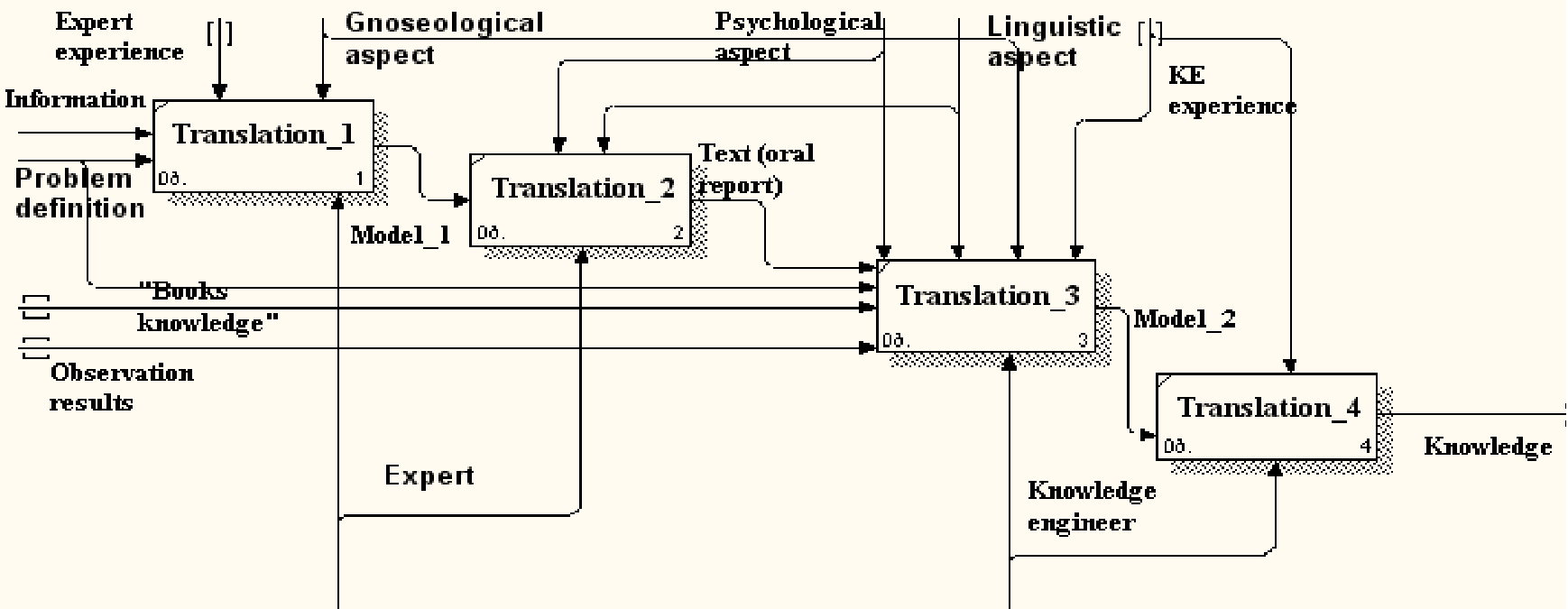
Deep Insights: The Psychology of Engineering
The most intriguing part of the paper is the application of behavioral science to technical engineering:
- The Age and Gender Gap: The authors suggest that heterogeneous pairs (Male/Female) often yield better results and propose an "Expert Age - KE Age" delta between 5 and 20 years for optimal respect and communication flow.
- Temperament Matching: Understanding if an expert is Choleric (fast, decisive) or Phlegmatic (slower, methodical) allows the Knowledge Engineer to adjust the "speed of discourse."
- Representation Systems: Humans process data through Visual, Audio, or Kinaesthetic channels. A visual expert needs UML diagrams and slides, while an audio-centric expert thrives in free dialogue.
Critical Analysis & Conclusion
The value of this work lies in its interdisciplinary bridge. While many AI/CS papers focus on the representation of knowledge (ontologies, databases), Zvereva and Morosova focus on the extraction of knowledge.
Limitations: The paper relies heavily on classical temperament theory (the four humors), which modern psychology has largely replaced with more nuanced models like the "Big Five." Additionally, it does not account for the role of automated tools or AI in bridging the expert-engineer gap.
Future Outlook: In the era of Large Language Models (LLMs), the "Knowledge Engineer" might eventually be an AI. However, the psychological barriers identified here—tacit knowledge, overlooked logical links, and the need for visual grounding—remain the primary bottlenecks in creating systems that truly understand human expertise.
Takeaway: To build better software, stop looking only at the code—start looking at the person behind the requirements.