
ProCES: Bridging Crowd Wisdom and Design Intelligence via Ontology
Product concept evaluation and selection using data mining and domain ontology in a crowdsourcing environment
The paper introduces ProCES (Product Concept Evaluation and Selection), a comprehensive framework that utilizes data mining and domain ontology to manage a large volume of crowd-sourced design concepts. It achieves a more efficient review process by clustering similar ideas and using a multi-attribute decision-making (MADM) process to identify promising SOTA product candidates.
TL;DR
Crowdsourcing at scale often leads to a "creativity tax": so many ideas are submitted that the best ones get buried in noise. ProCES (Product Concept Evaluation and Selection) is a technical framework that uses Web/Text Mining and Domain Ontology to automatically structure, cluster, and rank crowd-sourced concepts. By embedding a Concept Development Hierarchy (CDH) into the clustering algorithm, it allows designers to evaluate groups of ideas rather than individual submissions, increasing efficiency without sacrificing design quality.
The "Crowdsourcing Paradox"
In the era of Open Innovation, companies like Dell (IdeaStorm) and Fujitsu receive thousands of design concepts. The paradox is that while a larger "crowd" increases the chance of a "unicorn" idea, it makes the manual review process—traditionally reliant on internal R&D—an impossible bottleneck.
Prior works often treated design ideas as generic text. However, a design concept isn't just a string of words; it has a physical and functional logic (e.g., a "touchpad" is a part that enables a "user interaction" function). The author's core insight is that we must re-inject this design logic back into the data mining process to make it meaningful for engineers.
Methodology: The ProCES Architecture
The framework is divided into three distinct modules that transform raw web logs into a ranked list of high-potential candidates.
1. Design-Aware Information Extraction
Using tools like RapidMiner, the system crawls URLs, tokenizes text, and filters "stopwords." But unlike generic NLP, it treats tokens as building blocks for a specific product architecture.
2. Concept Re-construction (The Core)
This is where the magic happens. The authors established a Concept Development Hierarchy (CDH) with four levels:
- Scenario Design: Target crowd and activity.
- Function Design: Operation modes and user interactions.
- Part Design: Functional mechanisms (FM) and hardware.
- Property/Attribute: Shape, color, and specifications.
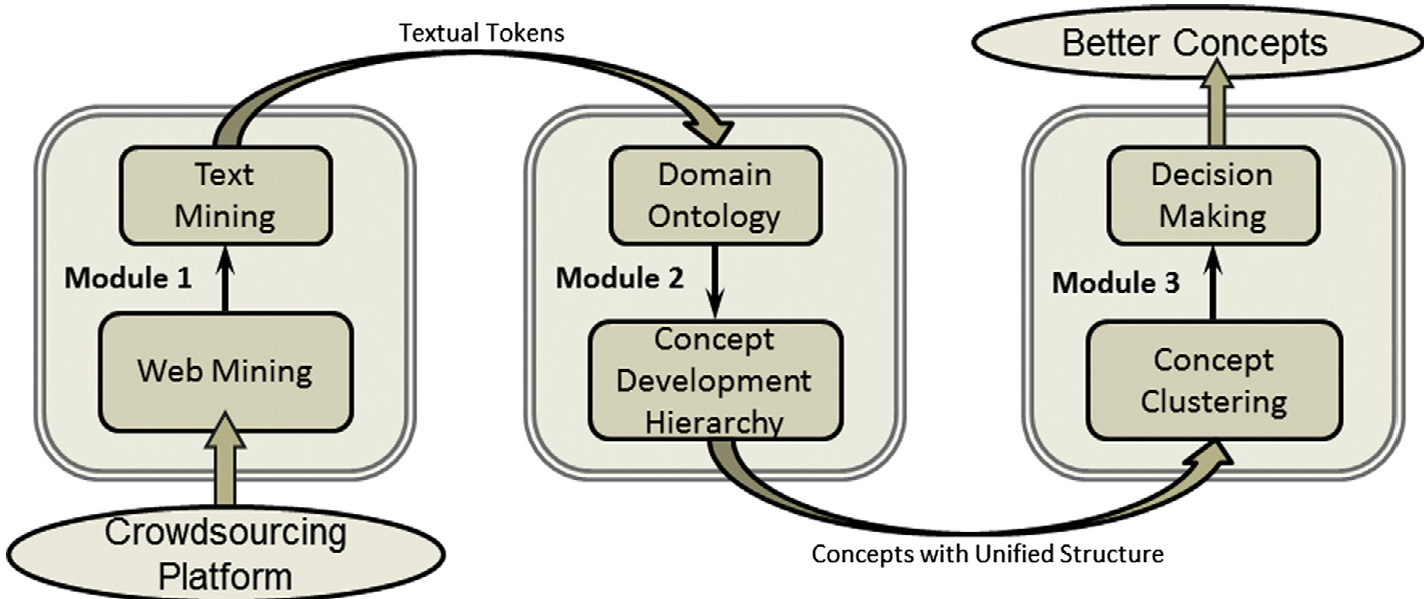 Fig 1: The ProCES framework integrating CDH and Ontology.
By mapping word tokens to WordNet and then to the CDH, the system transforms messy, colloquial descriptions into a "Unified Concept Frame."
3. Intelligent Clustering with Semantic Depth
Standard K-means uses simple Euclidean distance. ProCES uses a Multi-dimensional Similarity Measure that calculates term correlation based on:
- Path Length (): How many steps between words in the ontology tree.
- Depth (): How specific the word is (lower-level words like "4K-OLED" carry more design weight than "Display").
The final similarity formula is a weighted sum across the CDH layers, ensuring that functional similarity is prioritized over mere lexical overlap.
Experiments: Future PC Design
A pilot study was conducted on a Fujitsu "Future PC" design contest.
- Data Source: 25 qualified concepts from DesignBoom.
- The Filter: The system reduced these to 6 clusters.
- Expert Validation: A focus group of senior experts used AHP (Analytic Hierarchy Process) to rank the concepts.
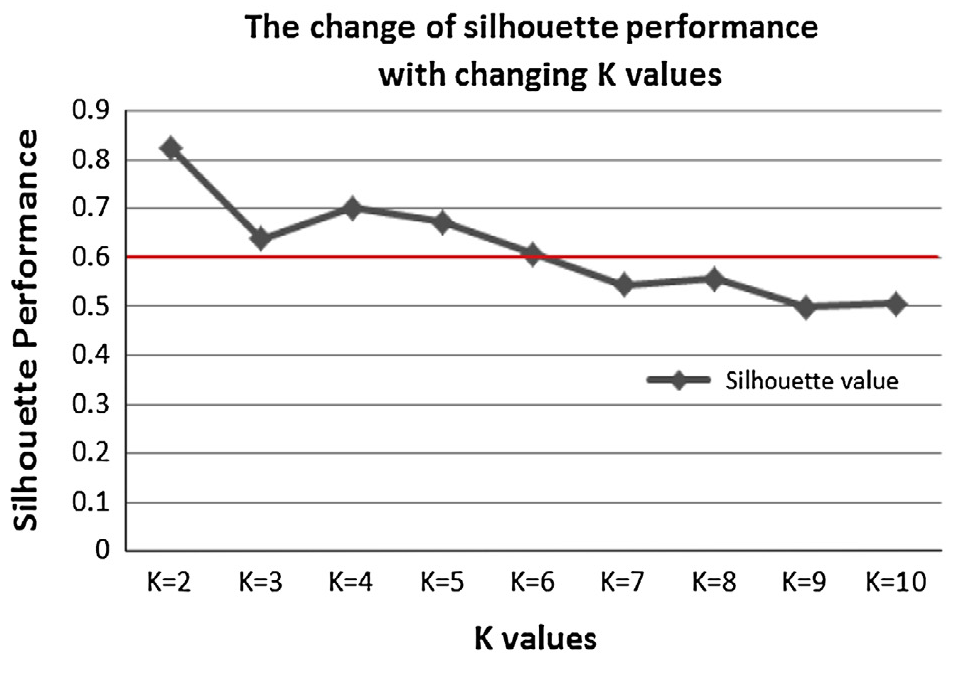 Fig 2: Silhouette performance and optimal sum distance for K-means.
Key Outcome: The cluster represented by "Concept 9" was identified as the winner. When compared to the conventional manual review process, the ProCES method successfully captured all top 3 concepts identified by experts, whereas manual review was more susceptible to human fatigue and oversight.
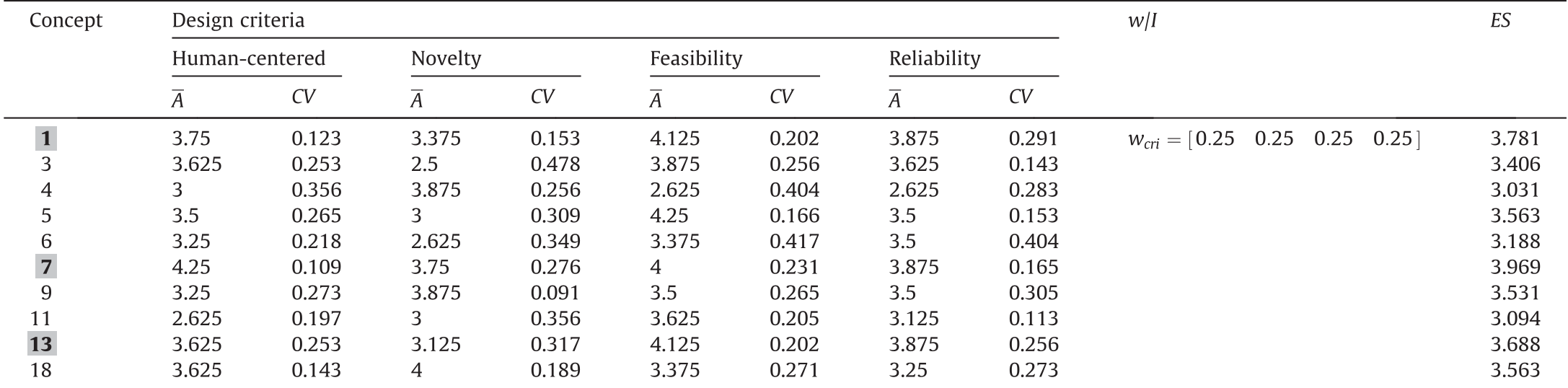 Fig 3: Final ranking based on Human-centeredness, Novelty, Feasibility, and Reliability.
Critical Insight: Why This Matters
The real value of this paper is the quantification of "Design Intuition." By using the CDH as an inductive bias for clustering, the authors prove that domain-specific structures are more effective than general-purpose text mining.
Limitations:
- Image Processing: Most design concepts are 80% visual. ProCES currently ignores sketches and 3D models.
- Ontology Maintenance: Building a CDH for every new product category (from PCs to Toasters) is labor-intensive.
Future Outlook: With the rise of Multimodal Large Language Models (LLMs) like GPT-4V, the next step for ProCES would be to integrate visual feature extraction into the semantic similarity module, creating a truly automated "AI Industrial Designer."
Conclusion
ProCES provides a blueprint for how companies can stop "drowning in data" and start "executing on insight." By turning the evaluation challenge into a structured data mining problem, it paves the way for a more scalable and democratic design process.