
Decoding the Career DNA: Using Formal Concept Analysis to Map Professional Competence
Professional Competence Identification Through Formal Concept Analysis
This paper introduces a Formal Concept Analysis (FCA)-based approach to identify "professional competence" by mining LinkedIn data. It proposes the PropIm algorithm to extract "proper implications"—the minimal sets of specific skills required to achieve a particular job position—achieving a structured mapping of career trajectories.
Executive Summary
TL;DR: How exactly does one become a Data Scientist or an IT Director? This paper moves beyond guesswork by applying Formal Concept Analysis (FCA) to LinkedIn data. By extracting Proper Implications, the authors identify the absolute minimum clusters of skills required to unlock specific job titles, providing a mathematically rigorous framework for career planning and recruitment.
Positioning: This work is a strategic bridge between Mathematical Lattice Theory and Social Network Analysis (SNA). While most social network research focuses on "who knows whom," this paper focuses on "what skills imply which outcomes," making it a SOTA contribution to computational human resources and career pathing.
The Problem: The Ambiguity of Professional Success
Navigating the job market is often a "black box" problem. We know that certain skills lead to certain jobs, but we rarely know the minimal sufficient set. Prior works using simple frequency counts or graph clustering tell us that "Data Scientists often know Python," but they fail to capture the logical necessity: What is the smallest combination of skills that differentiates a Data Scientist from a Software Engineer?
The authors argue that without a formal logical structure, career guidance remains anecdotal rather than evidentiary.
Methodology: The Logic of Proper Implications
The core innovation lies in the use of Formal Concept Analysis (G, M, I).
- Modeling: LinkedIn profiles represent Objects (G), while skills and positions represent Attributes (M).
- Proper Implications: The authors focus on logical rules of the form , where is a minimal set of skills. For example,
{Statistics, Machine Learning, Databases} \rightarrow \{Data Scientist\}. - The PropIm Algorithm: Traditional FCA algorithms are computationally expensive. The authors developed PropIm, which uses pruning heuristics to ignore implications with zero support, focusing only on the "local support" (Relative Frequency) relevant to specific job classes.
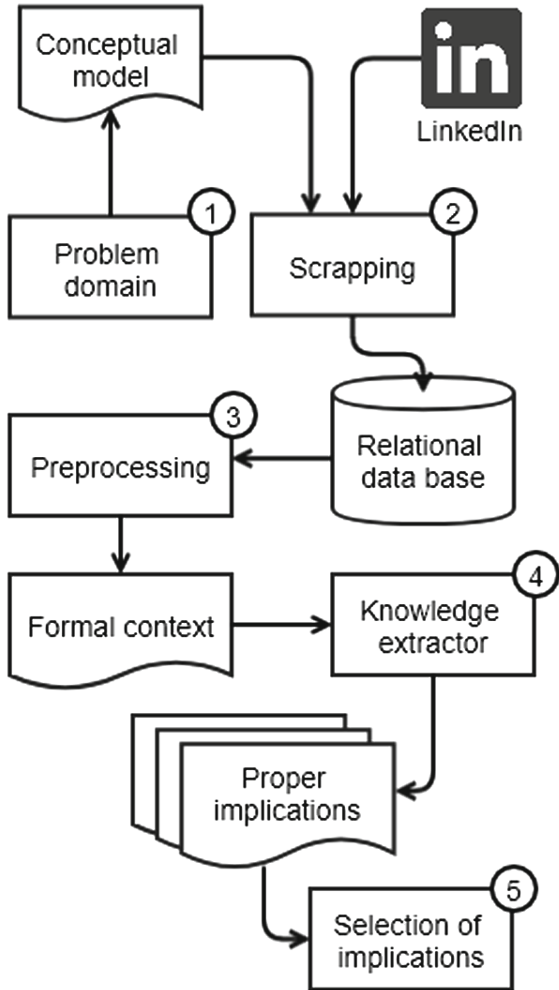 Figure 1: The proposed 5-step methodology from LinkedIn scraping to Knowledge Extraction.
Two Dimensions of Career Insights
The paper categorizes its findings into two fascinating types of implications:
1. Type : Diverse Paths to a Goal
This represents different skill sets that lead to the same job.
- Insight: Roles like Administrative Director are "dense nodes," meaning there are hundreds of different minimal skill combinations to get there (Technical, Managerial, or Entrepreneurial).
- Visual Evidence: In the graph below, the density of edges toward a center node indicates how "flexible" the entry requirements for that role are.
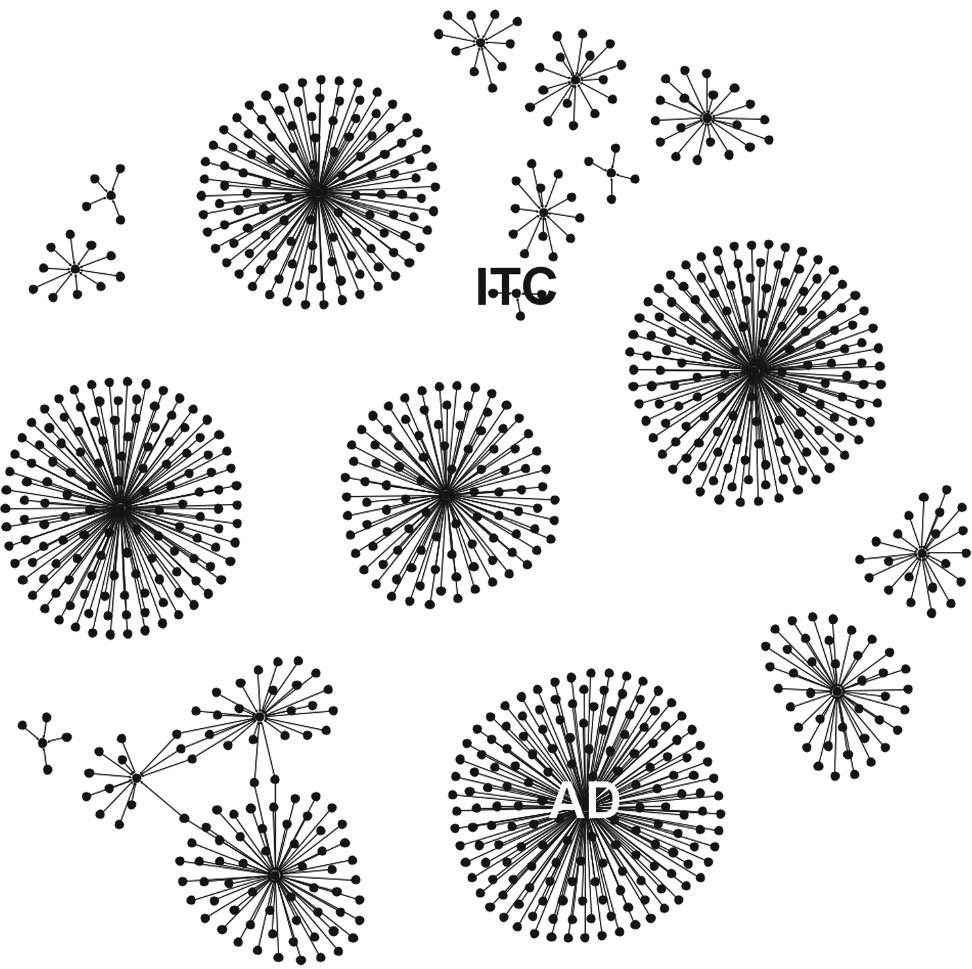 Figure 2: Type \beta implications showing the diversification of skill sets for various IT positions.
2. Type : Skill Intersections and Mobility
This explores how one set of skills can lead to multiple roles.
- Insight: The paper analyzes the "Top 3 Jobs" (Data Scientist, Security Analyst, Software Engineer). They found that shared skills like Agile Methodology or BI act as "hubs," allowing professionals to pivot between these elite roles with minimal friction.
Experimental Validation
The authors tested their approach on a dataset of IT professionals from Belo Horizonte, Brazil.
- Data Transformation: They condensed 4,000 raw text attributes into 366 standardized terms (e.g., mapping "JPA" and "JSF" to "Java Frameworks").
- Hierarchical Analysis: They successfully mapped the transition from IT Analyst (Technical focus: .NET, Automation) to IT Director (Managerial focus: Assets Management, Consulting), proving that their formal logic mirrors real-world hierarchical progression.
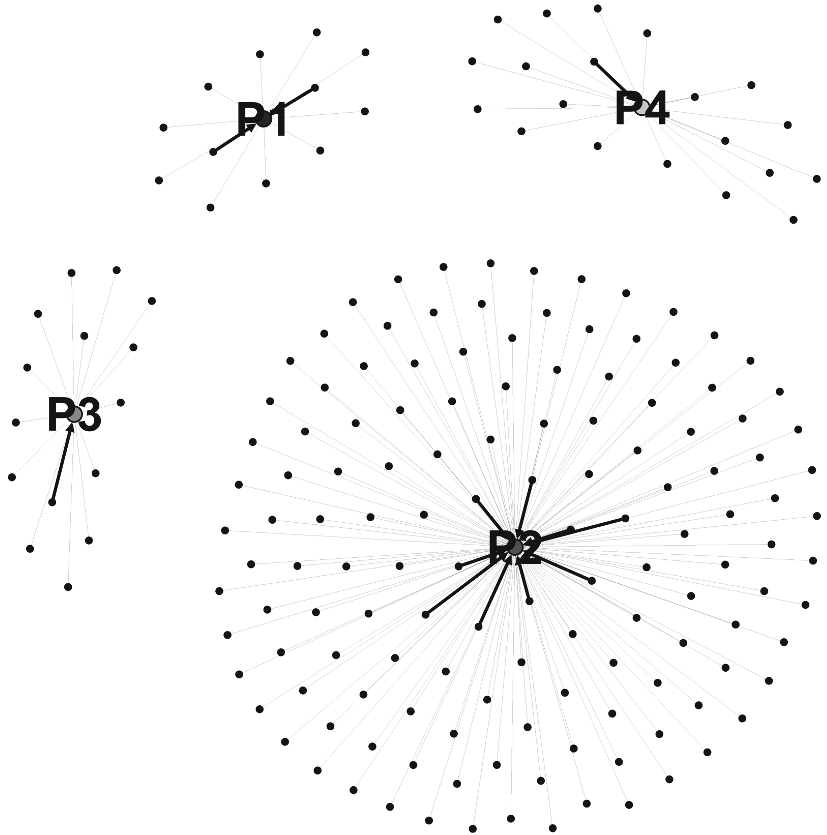 Figure 3: Mapping the skill evolution from Analyst to Director levels.
Critical Insight & Conclusion
Takeaway
The value of this paper lies in its logical transparency. Unlike a "Black Box" AI recommender, an FCA-based system can tell a user: "You are missing exactly two skills (C# and ERP) to logically qualify as an IT Coordinator based on current market data."
Limitations & Future Work
- Expert Dependence: The "Cleaning" phase still requires a human expert to group skills, which is a bottleneck.
- Scalability: While PropIm is faster than previous algorithms, FCA is inherently exponential in complexity.
- Future Scope: The authors plan to build a web platform for dynamic career pathing and extend the model to evaluate Attitudes and Knowledge (academic background) alongside technical skills.
Ultimately, this work transforms LinkedIn from a simple social directory into a computational engine for human capital development.