
Beyond the Map: Enhancing Disaster Relief through Groupsourcing and Coordination
Promoting Coordination for Disaster Relief – From Crowdsourcing to Coordination
2011-01-01
Summary
Problem
Method
Results
Takeaways
Abstract
This paper proposes the ASU Coordination Tracker (ACT), a disaster relief management system that transitions from simple crowdsourcing to "groupsourcing." It integrates data from both unverified citizens and sanctioned relief organizations to facilitate real-time, coordinated crisis response.
## TL;DR
While social media has revolutionized how we collect disaster data (Crowdsourcing), it has failed to solve the "last mile" of humanitarian aid: coordination. This paper introduces **ACT (ASU Coordination Tracker)**, a system that evolves crowdsourcing into **groupsourcing**, allowing NGOs and governments to coordinate resources without duplicating efforts or compromising the safety of relief workers.
## The Crisis Coordination Gap
In the wake of disasters like the 2010 Haiti earthquake, digital platforms like Ushahidi proved that the public could act as a "distributed sensor" for information. However, "knowing" there is a problem is not the same as "solving" it. The authors identify three critical shortfalls in current systems:
1. **Resource Duplication**: Without a shared ledger of actions, multiple organizations might send water to the same village while an adjacent one starves.
2. **Security Risks**: Publicly broadcasting the exact locations of relief supplies can put workers at risk of targeting by nefarious groups.
3. **Data Noise**: Crowdsourced data is often subjective, redundant, or lacks the technical specificity (e.g., exact fuel types or quantities) needed for logistical planning.
## Methodology: From Crowdsourcing to Groupsourcing
The core innovation is the shift to **Groupsourcing**. While crowdsourcing relies on the "wisdom of the crowd," groupsourcing leverages a sanctioned group of professionals with disparate resources but a unified goal.
### The Four Pillars of the ACT System
The system is built on a modular architecture designed to streamline the lifecycle of a relief request:
* **Request Collection**: Merging noisy citizen reports with high-fidelity organizational data.
* **Response Management**: A heterogeneous platform (web/mobile) allowing responders to build "relief packages."
* **Coordination Logic**: The heart of the system—it prevents "response conflict" by managing request states.
* **Statistics**: Evaluating overall progress through spatio-temporal delivery reports.
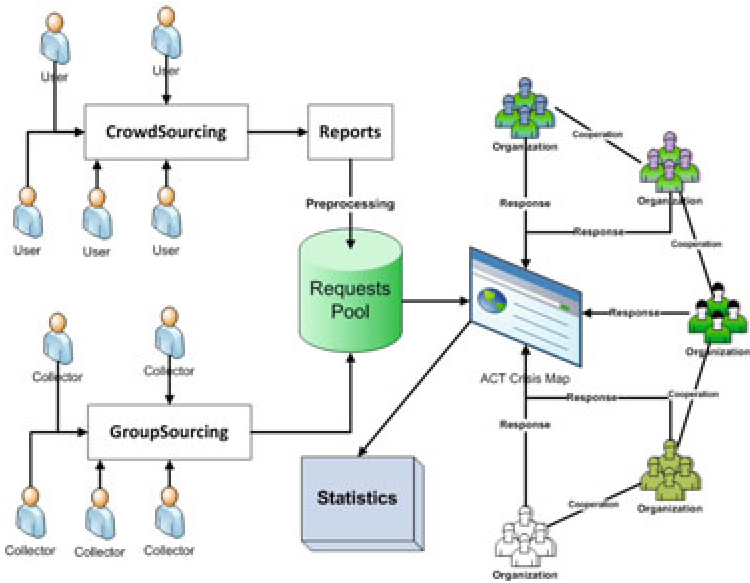
*Figure 1: The standard workflow of ACT, showing the transition from raw requests to processed, visualized coordination tasks.*
## Critical Mechanism: Request State Transitions
To solve the coordination problem, ACT treats every request as a state machine. This prevents the "Free-for-all" nature of current crisis maps.
* **Available**: Seen by everyone on the map.
* **In Process**: Claimed by an organization. It becomes invisible to others for 24 hours to prevent duplication.
* **In Delivery**: The resource is en route.
* **Delivered**: The task is archived, providing data for the statistics module.
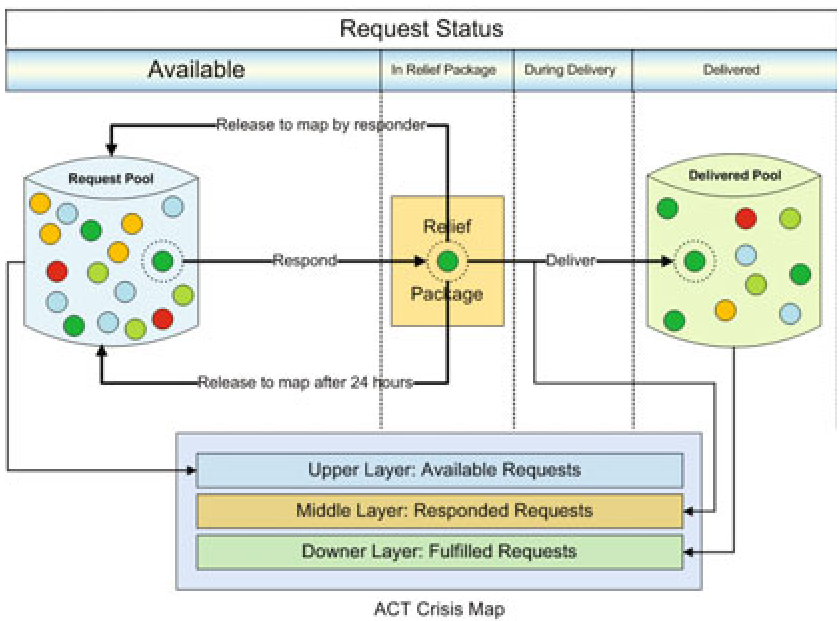
*Figure 2: The Finite State Machine logic that governs how requests move through the humanitarian pipeline.*
## Experimental Insight: Visualizing Logistics
The system utilizes a clustering algorithm on the crisis map. When zoomed out, individual requests for resources (like fuel) are aggregated into "demand clusters." As a responder zooms in, they can see specific quantity requirements (e.g., a request for 113 k-gallons of fuel). This hierarchical visualization allows commanders to see both the "big picture" of the crisis and the tactical details of a specific neighborhood.
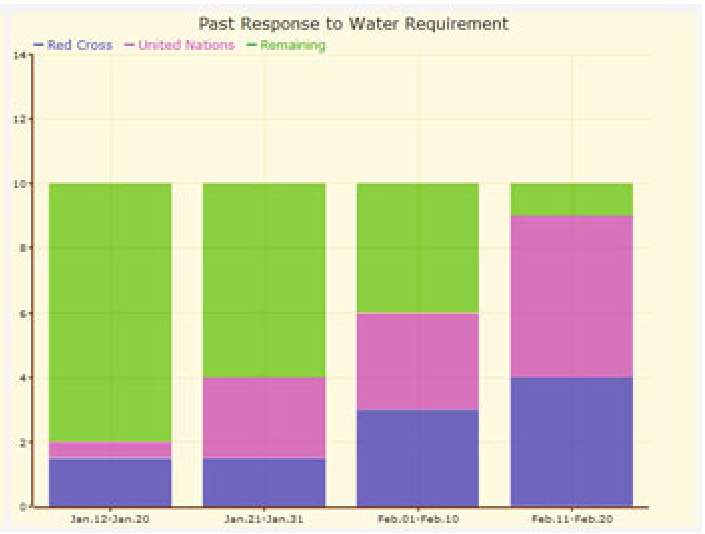
*Figure 3: Statistical reporting showing the fulfillment gap (pie chart) and organizational contributions over time (bar chart).*
## Critical Analysis & Conclusion
The ACT paper provides a necessary bridge between social computing and operational logistics. Its contribution is moving the discourse from "How do we get data?" to "How do we act on data securely?"
**Strengths**:
* Introduces a scalable state-transition logic for humanitarian tasks.
* Addresses the vital but often ignored issue of personnel security in disaster zones.
**Limitations**:
* The success of the system depends heavily on "sanctioned" organizations agreeing to use a centralized platform—a "political" challenge as much as a technical one.
* The 24-hour timeout for "In Process" requests might be too long for rapid-onset disasters where minutes matter.
**Future Work**:
The integration of automated verification (perhaps via AI) to cross-reference crowdsourced "noise" against satellite imagery or groupsourced reports will likely be the next frontier in making ACT even more resilient.