
Bridge Nodes: The Unsung Linchpins of Social Cohesion
Properties of Bridge Nodes in Social Networks
This paper investigates the topological and structural properties of "bridge nodes" within social networks, focusing on their role in connecting regular cliques to peripheral nodes and groups. Using the Thurman office network as a case study, the authors demonstrate that bridge nodes can be effectively identified through a specific "Social Position" centrality metric, which outperforms simple degree-based measures.
Executive Summary
TL;DR: In any social structure, from corporate offices to digital communities, certain individuals act as the "glue" holding the periphery to the core. This paper defines these Bridge Nodes, provides a systematic method for their extraction, and proves that their structural importance is better captured by a recursive reward metric called Social Position than by how many friends they have.
Positioning: This work bridges the gap between classic Graph Theory (clique analysis) and modern Centrality Metrics, offering a practical heuristic for identifying "weak tie" connectors who prevent network fragmentation.
The Problem: When Popularity $
eq$ Importance In social network analysis (SNA), we often focus on the "stars"—the most connected nodes. However, the authors argue that the true structural health of a network depends on Bridges.
The problem is twofold:
- Computational Complexity: Finding bridges usually requires mapping every possible clique (complete subgraph), which is NP-hard.
- Metric Failure: A node might have a high degree (many connections) but be "trapped" inside a dense clique, contributing nothing to the network's overall connectivity to outliers.
Methodology: Mapping the Social Fringe
The authors define a bridge through a process of elimination and connection:
- Clique Extraction: Find all maximal complete subgraphs.
- Isolating the Periphery: Identify Peripheral Nodes (individuals belonging to no cliques) and Peripheral Cliques (groups isolated from all other groups).
- Bridge Identification: A node is a Bridge if it belongs to a "Regular Clique" but maintains a direct link to a Peripheral Node or Clique.
To analyze these nodes, they use the Social Position (SP) function: This formula suggests that your status isn't just about who you know, but the status of the people active with you.
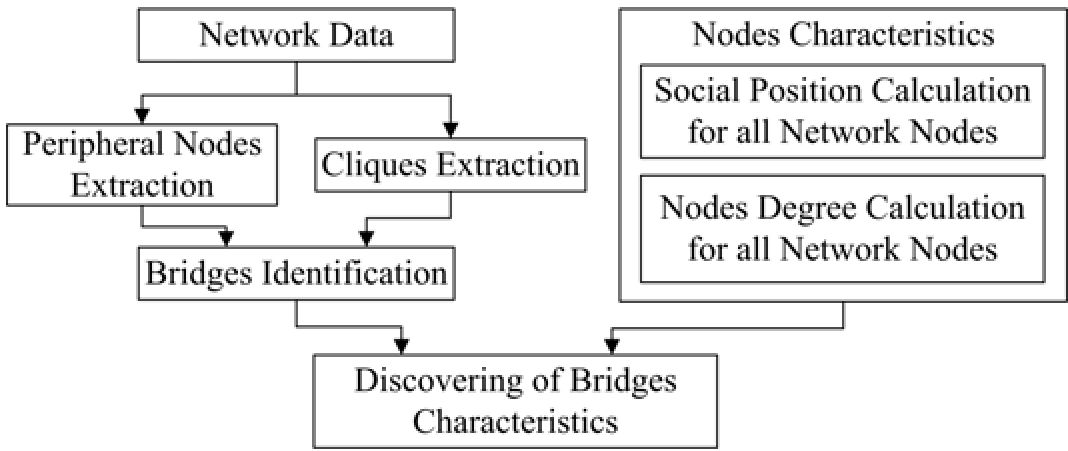 Figure 1: The dual-track process of bridging node identification and property calculation.
Experimental Insights: The "Emma" vs. "President" Paradox
Using the Thurman Office Network (a real-world dataset of 15 employees), the authors found a fascinating discrepancy.
- The Bridge (Emma): Emma (Node 12) connects almost all peripheral users to the core. She holds the #1 Social Position.
- The Powerless Leader (President): The "President" (Node 9) has a high degree of outgoing edges but ranks 10th in Social Position and is not a bridge.
This proves that "structural holes" (the gaps between groups) are filled by specific individuals whose value is inherited from their unique placement, not their formal title or total social activity.
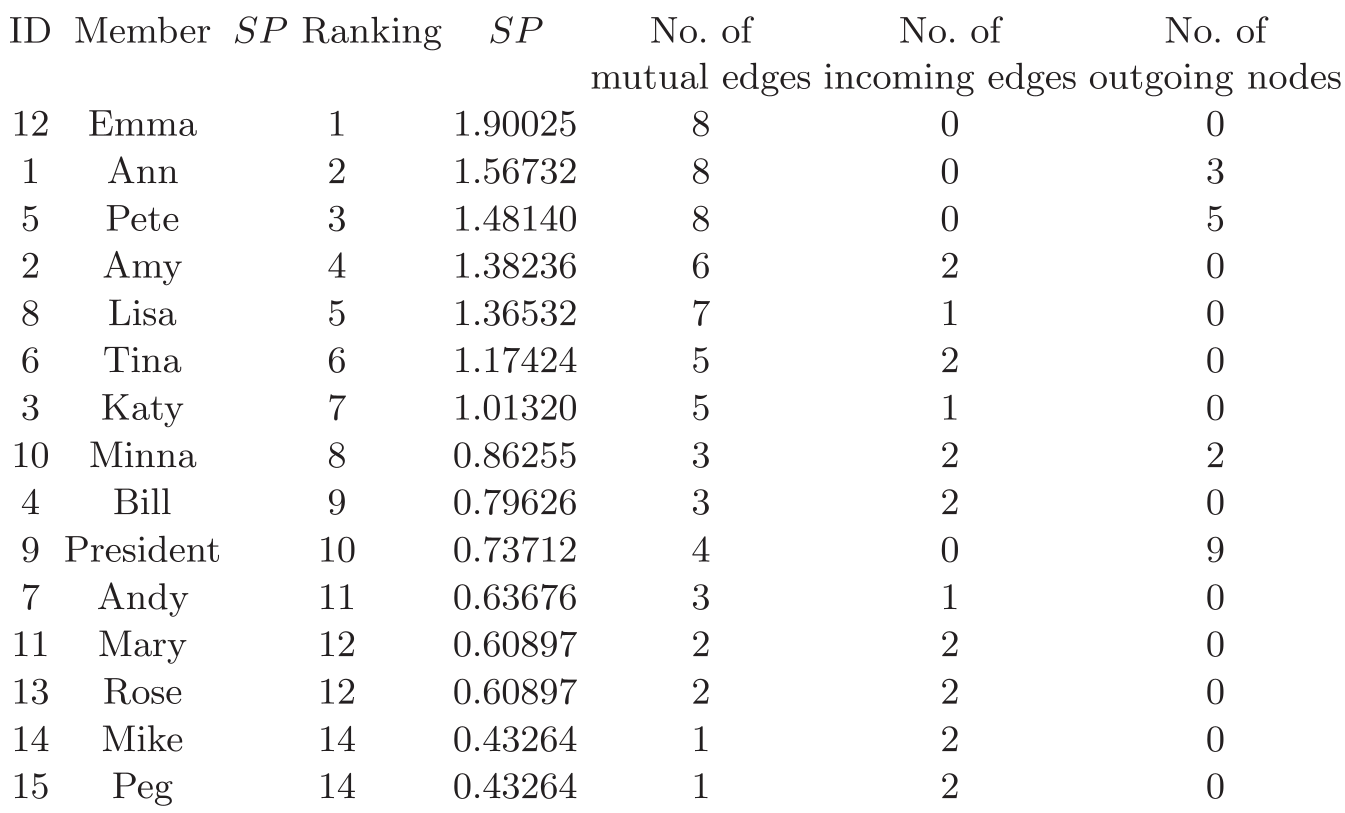 Table 1: The correlation between Social Position (SP) and bridging status. Note how the top 4 SP ranks perfectly match the identified bridges.
Critical Analysis & Conclusion
Takeaway
The paper successfully demonstrates that Social Position is an excellent proxy for bridging status. If you can calculate SP, you can likely identify the bridges without doing the expensive work of finding every clique in a massive graph.
Limitations
- Scale: The Thurman network is tiny (N=15). In massive social media graphs (N>1M), the "clique" definition might be too rigid, requiring "fuzzy" or "k-plex" definitions instead.
- Directionality: The study treats specific directed interactions, but in many modern networks, the "strength" of a tie is harder to quantify than a simple binary 1/0 relationship.
Future Outlook
The authors suggest using bridge monitoring to track Community Dynamics. If a bridge node's Social Position drops, it is a leading indicator that a group is about to split or that peripheral members are about to "churn" (leave the network). This has immense applications in HR analytics and customer retention.