
Prottasha: Bridging the Diagnostic Gap for Ovarian Cancer in Rural Bangladesh
Prottasha: An Attempt to Help the Women Fighting Ovarian Cancer in Rural Areas of Bangladesh
This paper introduces Prottasha, a mobile health (mHealth) application designed to assist rural Bangladeshi women in detecting ovarian cancer risks through data mining and a low-cost ultrasound interface. The system leverages Naive Bayesian and Decision Tree classifiers to analyze clinical symptoms and provides a user interface specifically optimized for illiterate and semi-literate users.
TL;DR
Ovarian cancer is the second most dangerous genital cancer in Bangladesh, yet rural women often detect it too late due to literacy barriers and lack of hospital access. Prottasha is a proposed mHealth ecosystem that combines a simplified, audio-visual mobile app with a low-cost portable ultrasound scanner to bring early screening directly to the doorsteps of rural communities.
Problem & Motivation: The Literacy and Infrastructure Barrier
In many developing nations, "Digital Health" remains a privilege of the urbanized and literate. In rural Bangladesh, existing cancer-tracking apps are virtually useless for women who struggle to read or write. Furthermore, clinical ultrasound technology—the first line of defense for ovarian screening—is tethered to expensive, distant hospitals.
The authors identify a critical "Care Gap":
- Physical Barrier: Distance to diagnostic clinics.
- Economic Barrier: High cost of existing portable solutions like MobiUS.
- Cognitive Barrier: Text-heavy interfaces that ignore the local socio-educational context.
Methodology: Prottasha’s Multi-Tiered Approach
The Prottasha framework is not just an app; it is a deployment strategy involving local health workers and specialized technology.
1. The Audio-Visual Mobile Interface
Recognizing that text-based inputs are a barrier, the app uses Bengali audio cues and graphical icons to guide users. It collects data points like age, marital status, pelvic swelling, and abnormal bleeding.
2. Risk Prediction via Data Mining
Once data is collected, the system employs Naive Bayesian classifiers or Decision Trees to assess the risk factor. This allows health workers to triage patients immediately.
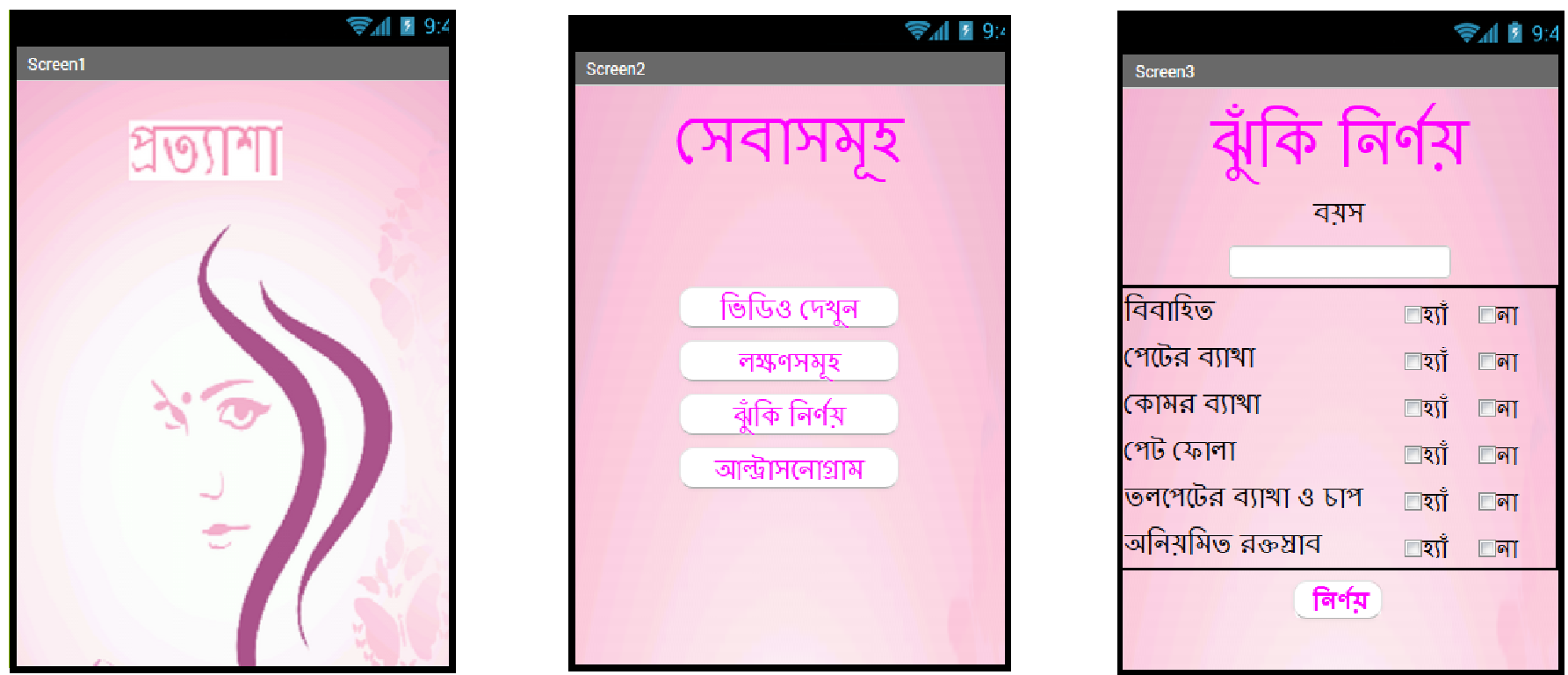 Figure: The Prottasha User Interface designed for local language support and visual clarity.
3. Integrated Low-Cost Ultrasound
The most ambitious part of the proposal is a USB-connected ultrasound probe. High-level software on the smartphone translates the echoes into images, which can then be automatically analyzed for malignancy using image classification algorithms.
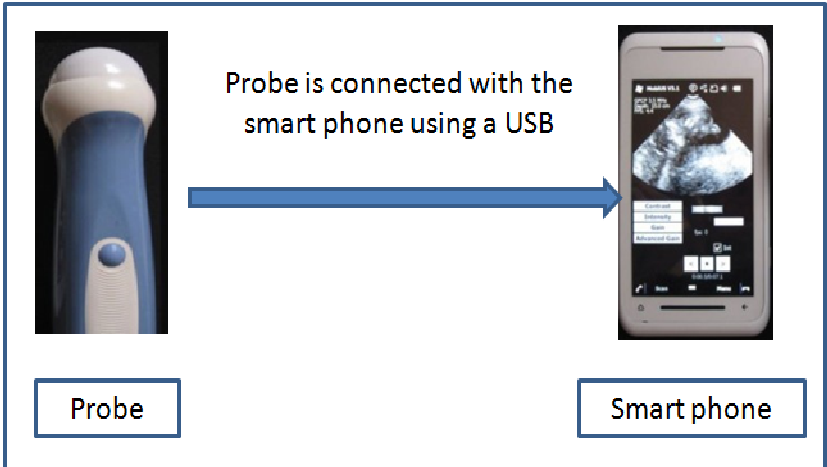 Figure: The high-level overview of the portable scanner connecting a probe to a smartphone with software-based image processing.
Experiments & Results: Identifying Malignancy
To validate the need for automated screening, the authors highlight the distinct visual differences between normal and malignant abdominal scans. By training classifiers on these image datasets, the system moves beyond subjective human interpretation, which is often a source of error in rural healthcare.
| Case | Age | Symptoms (Pain/Bloating) | Risk Result |
|---|---|---|---|
| Patient 1 | 45 | Yes / Yes | High Risk |
| Patient 2 | 35 | No / No | Low Risk |
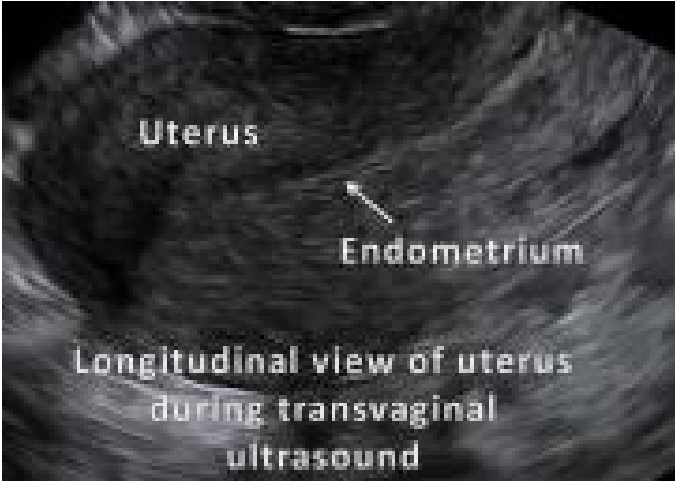 Figure: Ultrasound image characteristics used for training classification algorithms (Malignant Tumor).
Critical Analysis & Conclusion
Prottasha represents a shift from "High-Tech" to "Appropriate-Tech." Its real strength lies in the three-level training model: engaging government/NGOs, training local health workers, and finally reaching the rural women.
Limitations:
- Hardware Prototyping: While the software and strategy are well-defined, the physical low-cost ultrasound probe requires significant engineering to meet clinical diagnostic standards while remaining affordable.
- Data Privacy: Empowering users to enter their own data is a step forward for privacy, but maintaining a secure "personalized history database" on health-worker phones requires robust encryption.
Future Outlook: The authors plan to extend this framework to cervical and uterine cancers, potentially creating a unified gynecological health platform for the Global South. If successful, Prottasha could serve as a blueprint for AI-assisted community medicine.