
CDHS: Breaking Domain Barriers in Mobile Healthcare Social Networks with Efficient ECC Handshakes
A Provably-Secure Cross-Domain Handshake Scheme with Symptoms-Matching for Mobile Healthcare Social Network
The paper proposes CDHS, a provably-secure Cross-Domain HandShake scheme for Mobile Healthcare Social Networks (MHSNs) based on Elliptic Curve Cryptography (ECC). It enables patients from different healthcare domains to perform mutual authentication and symptom-matching without relying on computationally expensive bilinear pairings.
TL;DR
Mobile Healthcare Social Networks (MHSNs) allow patients to share experiences based on shared symptoms, but privacy and cross-domain connectivity remain massive hurdles. This paper introduces CDHS, an Elliptic Curve Cryptography (ECC) based handshake protocol that allows patients from different hospitals to authenticate each other and match symptoms securely. By ditching expensive "Bilinear Pairings," it achieves up to 18% faster computation and significant communication savings on standard Android devices.
Problem & Motivation: The "Silo" of Modern Healthcare
Healthcare social networks are often fragmented. If Patient A is registered at Medical Center X and Patient B at Medical Center Y, most current protocols cannot facilitate a secure handshake because they lack a cross-domain framework.
Furthermore, the "heavy" math used in existing security—specifically Bilinear Pairings—drains mobile batteries and slows down user experience. Security is also a concern: many previous schemes were vulnerable to "Key-Compromise Impersonation" or lacked "Traceability," meaning a malicious user could spread misinformation anonymously without the healthcare center being able to revoke their access.
Methodology: The Hierarchical Approach
The authors solve this by proposing a three-tier architecture:
- Trusted Authority (TA): Manages the root of trust and healthcare center registrations.
- Healthcare Centers (HC): Acts as domain managers that issue private keys to patients based on their specific symptoms.
- Patients (PA): The end-users who execute the handshake.
The Secret Sauce: ICDH-based Matching
Instead of standard encryption, the protocol relies on the Inversion Computational Diffie-Hellman (ICDH) problem. During the handshake, patients exchange tokens that incorporate their symptom signatures. If and only if the symptoms match, the mathematical "inversion" cancels out, allowing both parties to derive the same session key.
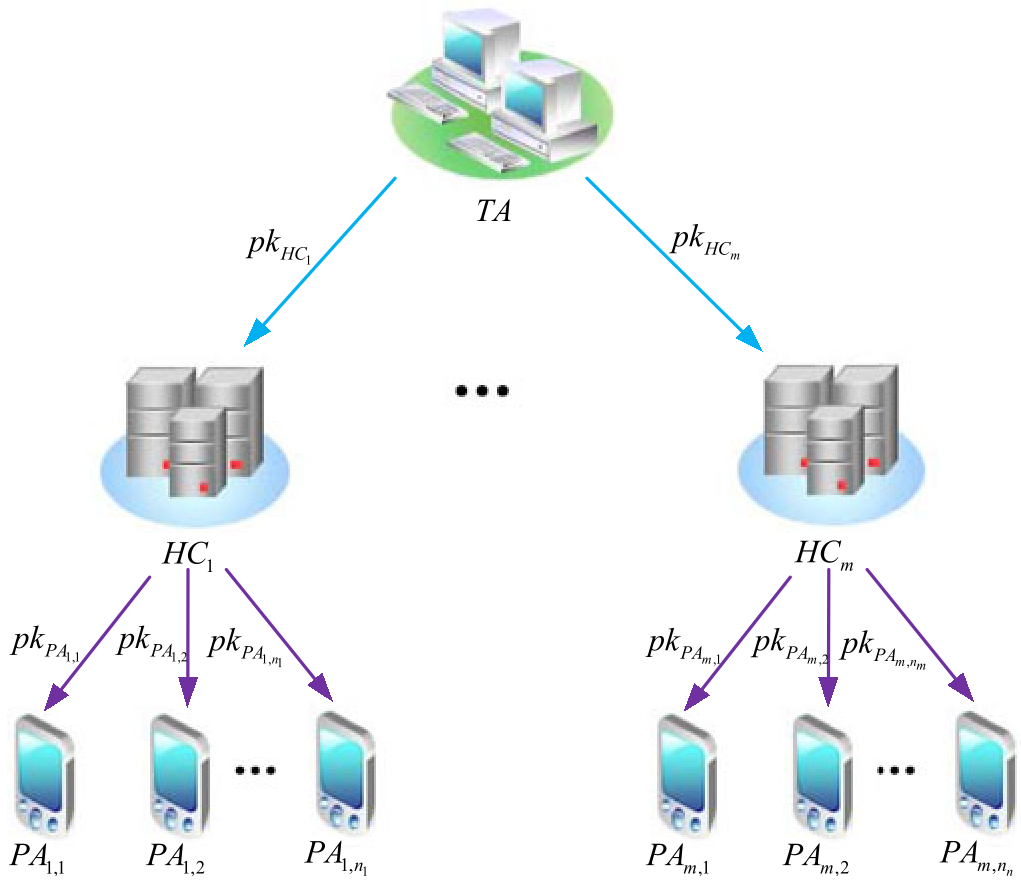 Fig 1: The proposed hierarchical network frame for cross-domain communication.
Performance: Lightweight is King
The superiority of CDHS lies in its "ECC-only" diet. By avoiding Map-to-Point hashes and Pairings, the computational complexity is reduced to 6 scalar multiplications.
Experimental Results
The authors tested CDHS against three major baselines (Huang-Cao, Gu-Xue, and Lu et al.) across six different Android device configurations.
- Computation: CDHS is ~18% faster than the nearest competitor (Huang-Cao).
- Communication: The packet size is reduced to 2,240 bits, a 5.41% improvement over legacy schemes and nearly 50% better than pairing-based cross-domain schemes.
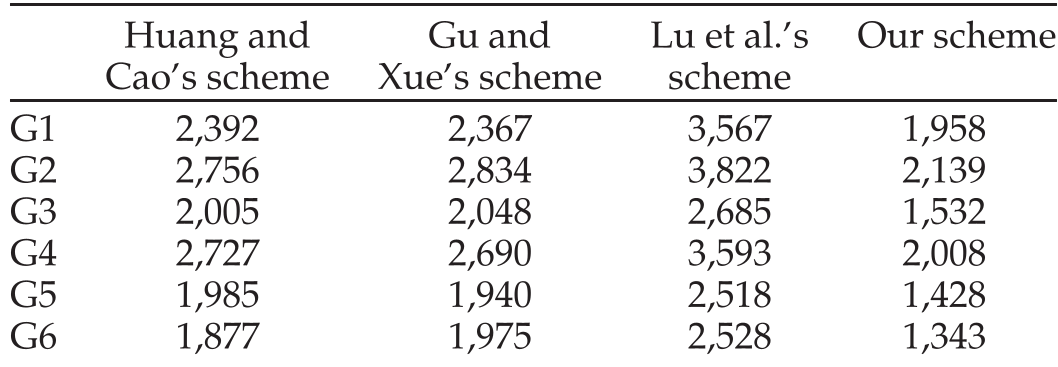 Table 1: Runtime (ms) across different mobile groups (G1-G6).
Critical Insight & Conclusion
The CDHS scheme marks a shift toward "practical" cryptography for MHSNs. While theoretical security is paramount, the inclusion of Patient Traceability is a masterstroke for real-world deployment; it ensures that while users are anonymous to each other, they remain accountable to their providers.
Takeaway: If you are building mobile-first decentralized identity or social systems, this paper proves that hierarchical ECC is the most efficient path to cross-domain privacy.
Limitations
Currently, the symptom-matching is "binary"—you either match or you don't. Future iterations could benefit from Fuzzy Matching, allowing patients with related but not identical conditions (e.g., Type 1 vs Type 2 Diabetes) to connect.