
Secure Content Sharing in MSNs: A Proxy Re-Encryption Approach
A novel authorization delegation scheme for multimedia social networks by using proxy re-encryption
This paper presents a novel authorization delegation scheme for Multimedia Social Networks (MSNs) using Proxy Re-Encryption (PRE). It enables secure, fine-grained sharing of copyrighted or private multimedia content by transforming ciphertexts between users without revealing private keys or plaintext content.
TL;DR
Sharing private or copyrighted videos in social networks usually involves a trade-off between security and convenience. This paper introduces a Proxy Re-Encryption (PRE) based authorization scheme that allows users to delegate access rights to others without sharing passwords or private keys. By combining PRE with the Usage Control (UCON) model, the authors provide a system that handles rights revocation and fine-grained access while avoiding the "ACL bloat" common in large-scale social platforms.
The Motivation: Why ACLs Fail in Modern MSNs
In massive multimedia social networks (MSNs), the traditional Access Control List (ACL) approach—where a server keeps a list of "who can see what"—breaks down. As millions of users upload content, these lists become astronomically large, slowing down search efficiency and database performance.
Moreover, when Alice wants to share a purchased movie with Bob, she faces a dilemma:
- The Privacy Gap: Traditional DRM focuses on the content owner but ignores the privacy of the delegator (Alice) and the delegatee (Bob).
- The Security Risk: Sharing account passwords or symmetric keys is a "security nightmare."
- Static Control: Most systems grant access once, but cannot easily revoke it based on usage time or frequency.
The Core Solution: Proxy Re-Encryption (PRE)
The authors pivot from "list-based access" to "cryptographic delegation." The architectural backbone is a unidirectional, single-hop PRE scheme.
How it Works (The Intuition)
- Enc1 (Symmetric): The actual video content is encrypted with a high-speed Content Encryption Key (CEK).
- Enc2 (Asymmetric): The CEK is encrypted using Alice's public key (becoming ).
- ReKeyGen: Alice creates a special "Re-Encryption Key" using her private key and Bob's public key.
- Re-Encryption: A proxy server uses this key to transform into .
- Crucially: The proxy cannot see the CEK or the video. It only "shifts" the lock from Alice's key to Bob's.
- Decryption: Bob uses his own private key to unlock the CEK and watch the video.
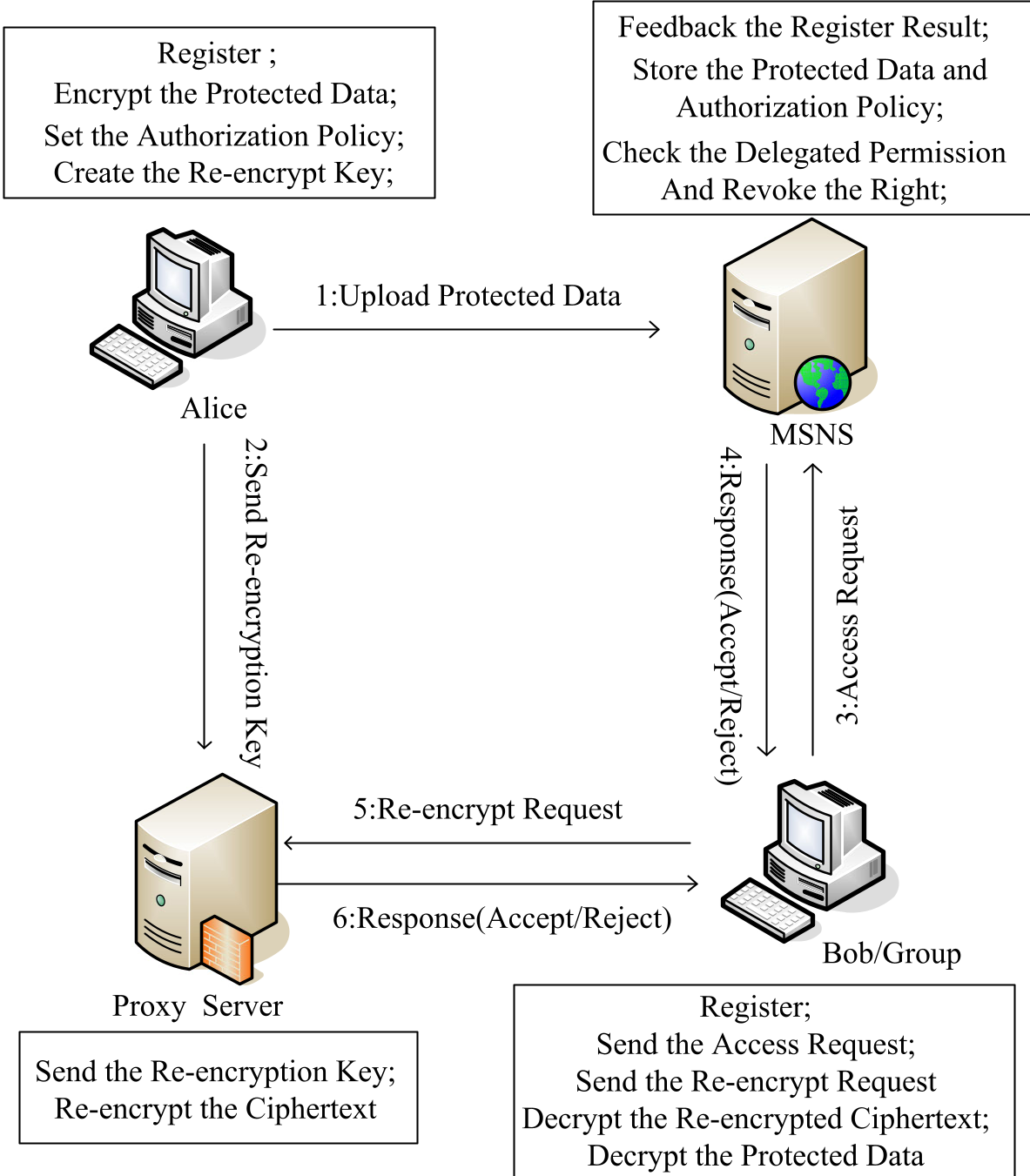 Fig 1. The structural flow of authorization delegation across the delegator, proxy, and MSNS.
Fine-Grained Usage Control
Unlike traditional "all-or-nothing" access, this scheme integrates the UCON model. This adds "Decision Continuity." The Multimedia Social Network Server (MSNS) monitors attributes (like play counts or time elapsed). If Alice grants Bob the right to watch a video 5 times, a "temporary attribute" tracks this. Once the threshold is met, the privilege is revoked by stopping the proxy's re-encryption capability.
Experimental Validation: The CyVOD MSN Prototype
The authors implemented this in CyVOD MSN, a prototype platform for secure media sharing.
Comparative Advantage
| Feature | Traditional ACL | ABE (Attribute-Based) | Proposed PRE Scheme |
|---|---|---|---|
| Scalability | Low (Heavy ACLs) | Medium | High |
| Efficiency | Medium | Low (Computationally heavy) | High |
| Key Privacy | N/A | Low (Proxy needs keys) | High (Key-Private) |
| Collusion Resistance | High | Usually No | Yes |
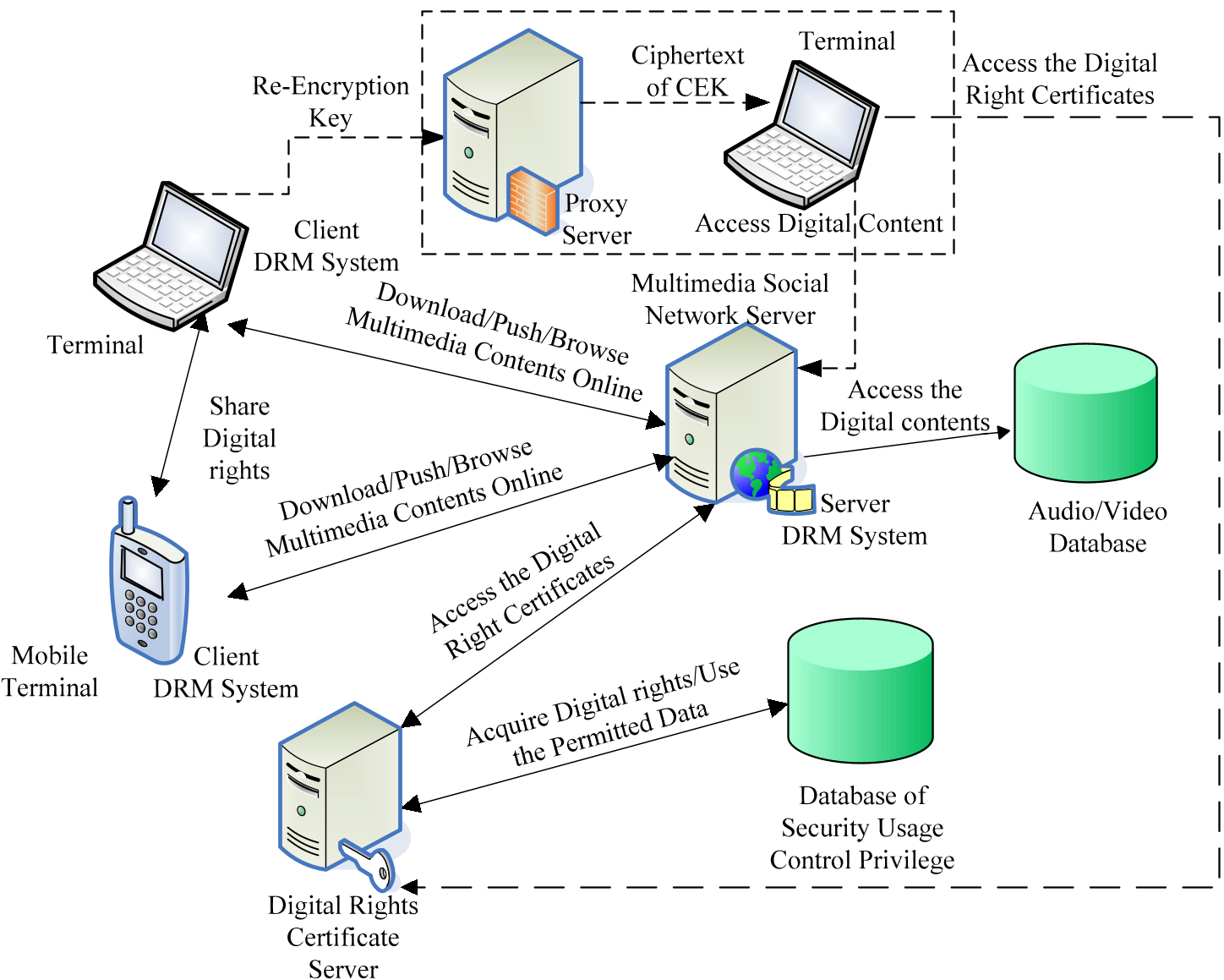 Fig 2. The CyVOD MSN Prototype Architecture showing the integration of the authorization module.
Critical Analysis & Takeaways
The real genius of this work lies in achieving Key-Private delegation. In many earlier PRE schemes, the proxy was "semi-trusted" but still required sensitive information to function. Here, the delegator is the only one who generates the re-encryption key, and the proxy is strictly a "blind transformer."
Future Outlook
While the scheme is mathematically robust (CCA-secure under DBDH assumptions), the authors acknowledge two main areas for growth:
- Cross-Domain Delegation: How do we delegate rights between different social platforms (e.g., from YouTube to Facebook)?
- Policy Conflicts: Managing cases where multiple delegated policies might contradict each other remains a challenge for the UCON engine.
Ultimately, this paper serves as a blueprint for moving away from centralized access control toward a more secure, decentralized, and cryptographically-enforced social web.