
E-Learning on Social Networks: More Than Just a Distraction for the Modern Student
Psychological impact of e-learning on social network sites: online students’ attitudes and their satisfaction with life
This study investigates the correlation between students' attitudes toward e-learning on social network sites (SNS) and their Satisfaction with Life (SWL). Utilizing an online survey of 607 students with e-learning experience, the research demonstrates that positive attitudes toward SNS-based learning are significantly and positively correlated with higher subjective well-being.
TL;DR
Is social media a "black hole" for productivity, or the future of mental-health-conscious education? This study challenges the "distraction myth" by proving that students who embrace e-learning on platforms like Facebook and YouTube actually report higher Satisfaction with Life (SWL). By surveying over 600 students, the research suggests that the friendly, spontaneous nature of social networks creates a psychological "win-win" for both grades and well-being.
The "Myth of Online Immersion"
For years, educators have battled social media, viewing it as a competitor for student attention. Previous research often highlighted "internet addiction" or the negative consequences of online immersion. However, the author of this study, Poonsri Vate-U-Lan, posits a different Insight: If students are already spending their time on Social Network Sites (SNS), why not leverage the "friendly user interface" and "mobile convenience" of these platforms to improve the e-learning experience?
The core problem isn't the technology, but the isolation of traditional LMS. Formal discussion boards are often described as "unhappy" places for students compared to the vibrant, interactive world of SNS.
Methodology: Measuring the "Feel-Good" Factor
The study utilized two primary psychometric instruments:
- Attitude Test: Measuring convenience, communication friendliness, and peer-lecturer interaction.
- Satisfaction with Life Scale (SWLS): Assessing global life contentment rather than specific academic performance.
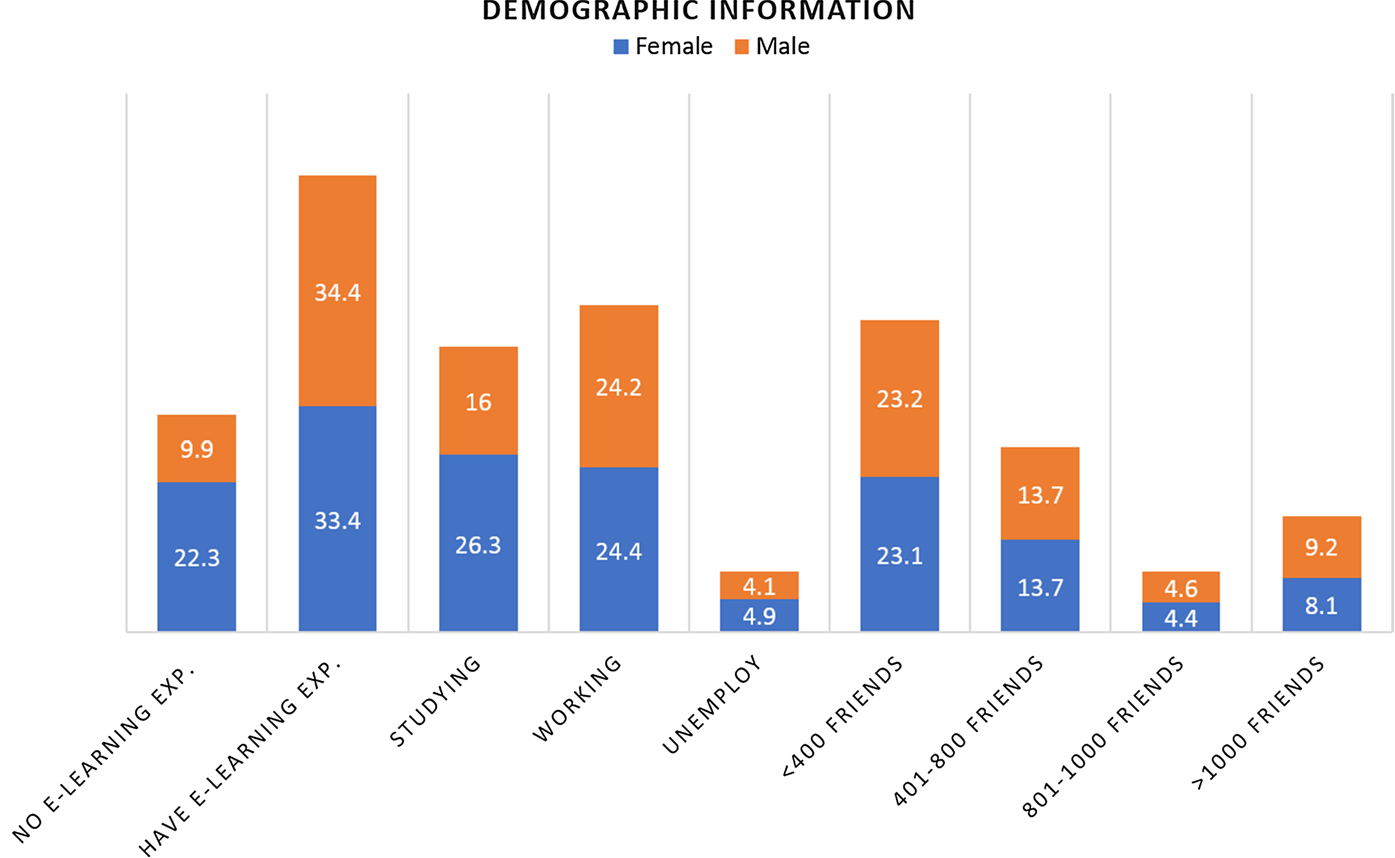 Figure 1: The study achieved a balanced gender profile with a high percentage of respondents already possessing e-learning experience.
Key Findings: The Gender Divide and The Correlation
The data provided several "Aha!" moments for academic tech enthusiasts:
- The Positive Loop: There is a statistically significant, though "small but positive," correlation between liking e-learning on social media and being satisfied with life.
- Female Preference: Interestingly, females displayed a significantly higher affinity (p < .05) for SNS-based e-learning than males. While both genders liked it, females felt more strongly that these sites "supported e-learning potential."
- User Interface Matters: The highest-ranked items in the attitude survey were "Accessibility to academic content" and "Friendly design of communication."
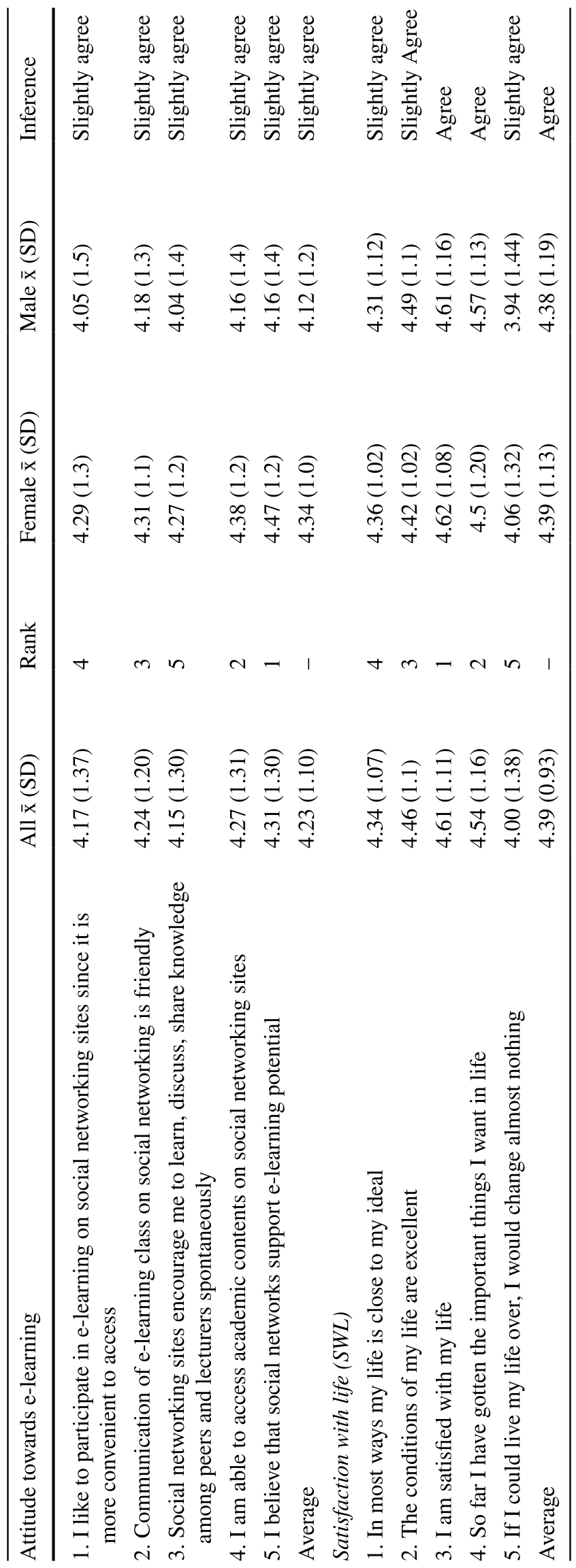 Table 1: Detailed breakdown of itemized scores showing "Slightly Agree" to "Agree" across all positive psychological indicators.
Critical Insight & Future Outlook
The most striking takeaway is that human connection beats closed systems. The study suggests that "isolated systems" (formal, closed-off LMS) are less sustainable than "integrated ecosystems" (social networks) that suit the modern lifestyle.
Limitations to Consider:
- Causation vs. Correlation: The study does not prove that social media learning causes happiness. It might be that happier students are simply more open to various forms of learning.
- Information Pollution: As noted in the Turkish faculty study cited, educators must still guard against the "noise" and "pollution" inherent in social platforms.
Conclusion
This paper serves as a vital signal for the "Education 4.0" era. As we move toward competency-based education, the psychological state of the student is just as important as the delivery mechanism. Future e-learning should not just be about "uploading PDF files" to a portal, but about fostering "academic community" where students already live: online.