
A Psychosocial Framework for Predicting Adolescent Substance Use Disorder
A Psychosocial Approach to Predicting Substance Use Disorder (SUD) Among Adolescents
This paper introduces an ensemble learning framework to predict Substance Use Disorder (SUD) among adolescents by integrating 34 psychosocial factors. Using Gradient Boosting and Random Forest models on National Survey on Drug Use and Health (NSDUH) data, the study achieves an exceptional Area Under the ROC Curve (AUC) of over 0.90.
TL;DR
Predicting Substance Use Disorder (SUD) in adolescents is notoriously difficult—often described as looking for a "needle in a haystack" due to its 5% prevalence rate. This research leverages an ensemble machine learning approach to integrate 34 distinct psychosocial factors, achieving a SOTA-level AUC of 0.91. The study reveals that SUD is rarely the result of a single "bad" influence but rather a perfect storm where individual traits like obesity and impulsivity collide with environmental triggers like easy drug access.
Motivation: Moving Beyond Siloed Factors
Prior public health studies have traditionally looked at SUD through a narrow lens: some focused purely on parenting styles, others on community poverty, and some on physiological markers like BMI. However, an adolescent’s life is a complex network of interactions. Using a dataset of over 18,000 observations from the National Survey on Drug Use and Health (NSDUH), this paper argues that to predict risk accurately, we must model the "entire sphere" of an adolescent’s life.
Methodology: The Psychosocial Architecture
The core of the methodology lies in the classification of risk and protective factors into two specific dimensions:
- Proximal (P): Centric to the individual (e.g., race, gender, obesity, religious beliefs, risk-taking personality).
- Distal (D): Centric to the environment (e.g., availability of drugs, parenting style, state laws, school environment).
Model Architecture and Handling Imbalance
Because only 5% of adolescents in the data have SUD, a standard model would simply predict "No SUD" for everyone to achieve 95% accuracy. To solve this, the author used SMOTE (Synthetic Minority Over-sampling Technique) to balance the training set, followed by training two heavy-hitting ensemble classifiers: Random Forest (RF) and Gradient Boosting (GB).
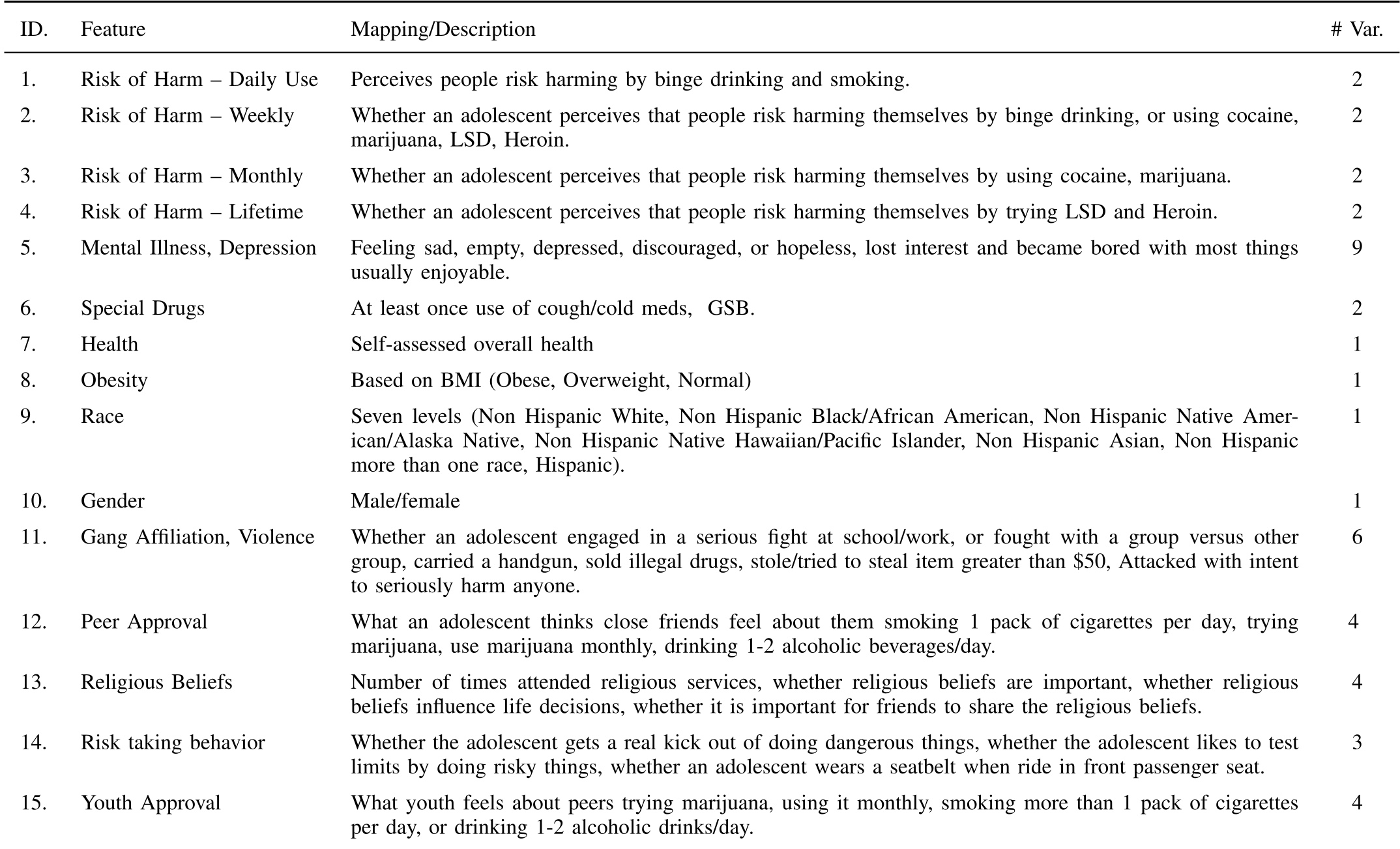 Table 1: Example of Proximal factors analyzed in the study.
Experiments and Results
The ensemble models demonstrated "exceptional" performance according to psychological research standards (AUC > 0.90).
- Gradient Boosting achieved an AUC of 0.91, showing superior sensitivity (the ability to correctly identify at-risk youth).
- Random Forest achieved an AUC of 0.90, showing slightly better specificity.
- Both models beat the baseline Logistic Regression (AUC: 0.88), proving that the non-linear relationships captured by trees are essential for this task.
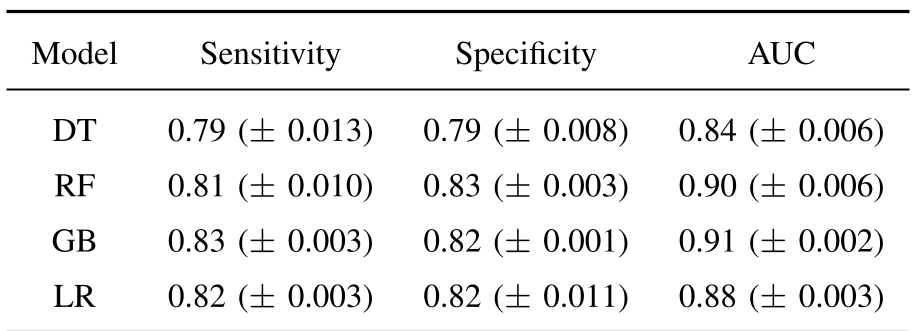 Table 3: Comparison of Decision Trees (DT), Random Forest (RF), Gradient Boosting (GB), and Logistic Regression (LR).
The "Obesity-Access" Insight
A standout finding from the Interaction Analysis was the high predictive power of the interaction between Obesity and being approached by drug sellers. The author posits that since food and drugs compete for the same reward pathways in the brain, obese adolescents might have a higher biological vulnerability to substance misuse when the community provides easy access.
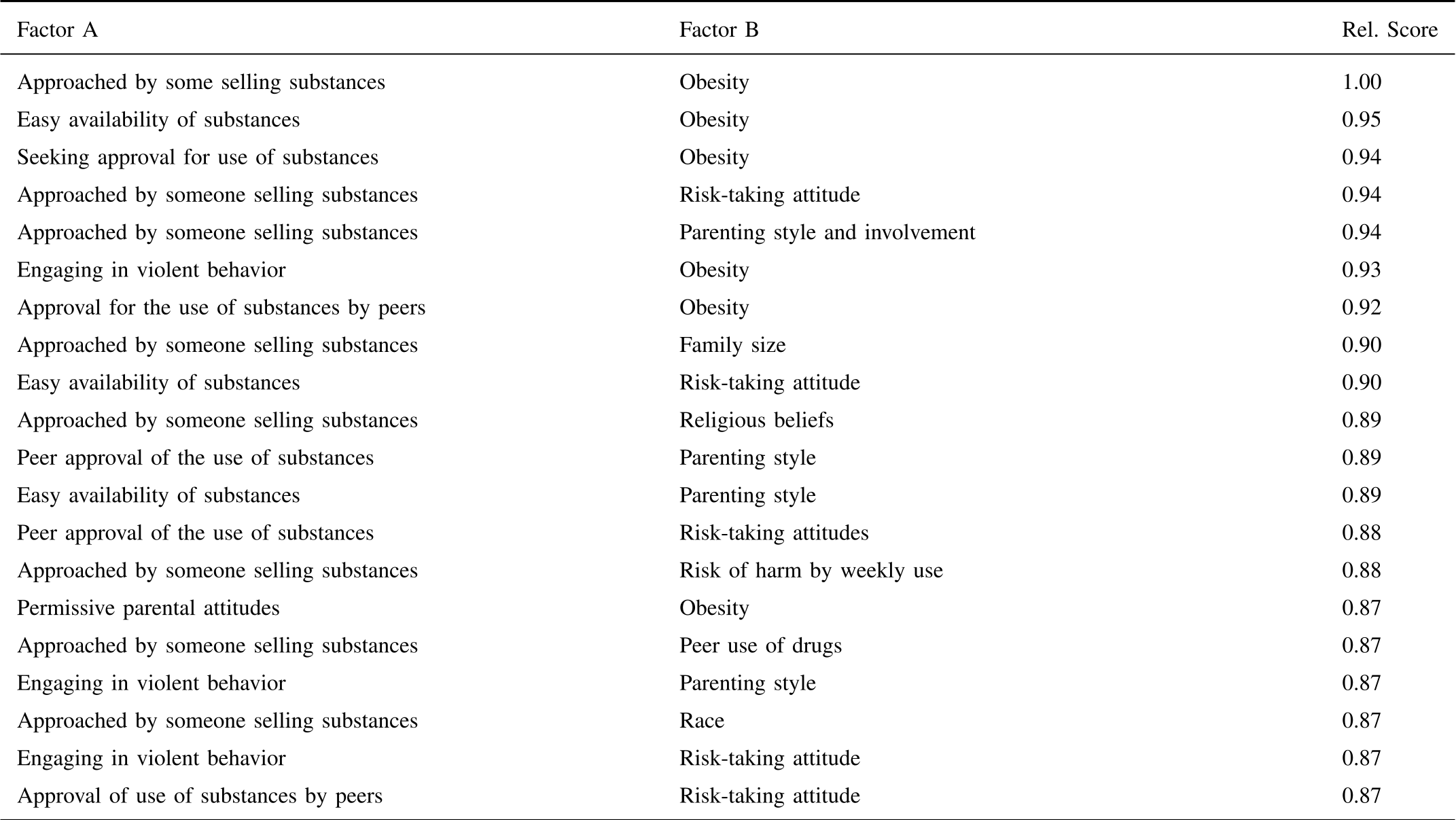 Table 5: The top factor interactions identified by the model.
Critical Insight & Conclusion
This work shifts the narrative from finding a "culprit" (e.g., "it's the parents' fault") to a systems-thinking approach.
Key Takeaways:
- Access is Key: Distal factors like "Easy availability of substances" rank nearly as high as personality traits.
- Prevention Deserts: Interestingly, participation in drug education programs ranked very low in predictive importance, suggesting current school-based warnings may not be effective at counteracting high-risk environmental and personality factors.
- Future Work: The model currently lacks data on parental substance use, which is a known strong correlate. Integrating multi-generational data could be the next frontier for this framework.
Ultimately, this research provides a high-accuracy blueprint for public health officials to identify high-risk cohorts before the onset of addiction.