
Public vs. Private: Can Public Data Replace the "Privacy Nightmare" of Email Mining?
Public vs. private: comparing public social network information with email
This paper presents a comparative study of public vs. private social network information within an organization, utilizing the SONAR system to aggregate data from eight public intranet sources (e.g., wikis, blogs, SNS) and one private source (email). It demonstrates that public data can effectively approximate email-based networks while revealing unique "long-tail" social connections.
TL;DR
In the realm of Social Network Analysis (SNA), email has long been the "Gold Standard" for mapping human connections—but it is also a privacy minefield. This seminal CSCW paper by IBM Research investigates whether we can ditch the private inbox and instead use public "digital breadcrumbs" (blogs, wikis, and SNS) to map an organization. The verdict? Public data not only approximates email networks with surprising accuracy (over 30% overlap) but also captures a "social reach" that email completely misses.
The Problem: The High Cost of Private Data
Historically, researchers had to choose between two evils:
- Egocentric Analysis: Looking at one person's private inbox (accurate but fragmented).
- Sociocentric Analysis: Mapping the whole organization (powerful but requires invasive access to everyone's mail).
The core motivation of this study is to determine if public intranet sources—where employees interact openly—can serve as a privacy-preserving proxy for the global social network.
Methodology: Mining the "Public" Persona
The researchers utilized SONAR, an architecture designed to aggregate social data. They categorized public sources into two distinct functional types:
- Collaboration Sources: Papers, Patents, and Wikis. These track "working together."
- Socializing Sources: Blogs, SNS (Beehive), and People Tagging (Fringe). These track "thinking together" and social bonding.
They calculated relationship strength through a frequency-based and group-size-normalized algorithm:
- Relationships are stronger if you share more groups.
- Relationships are weighted less if the group is massive (e.g., a 500-person mailing list is less intimate than a 3-person wiki team).
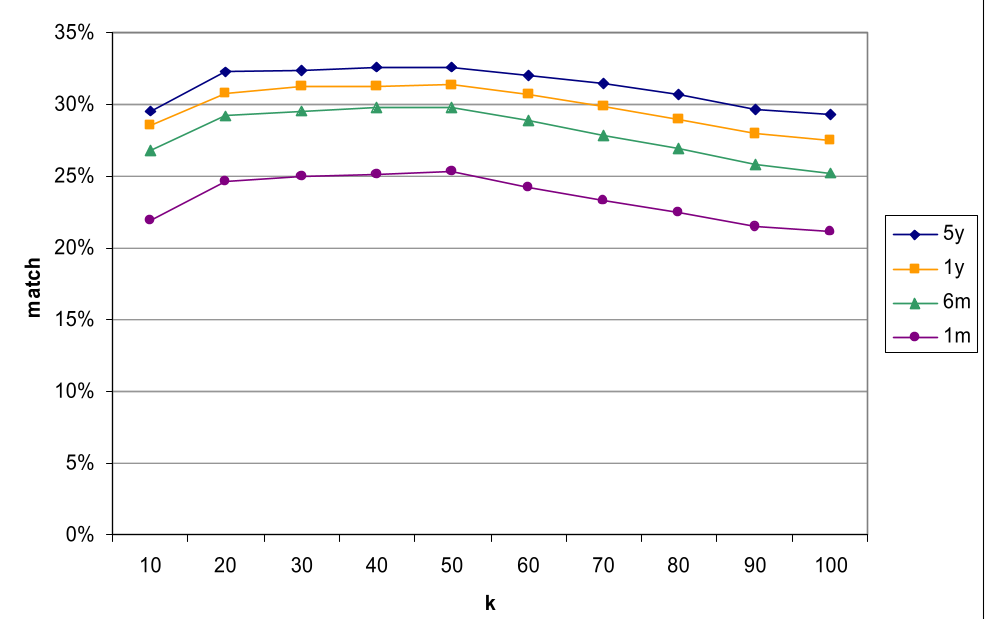 Figure 1: The UI used for participants to validate their private email network before sharing.
Critical Findings: Collaboration vs. Socializing
The study revealed a fascinating split in how different data sources mirror human behavior:
- Collaboration Sources (The Inner Circle): These sources (like Wikis) yield the highest "Precision" for the top 5-10 contacts. They perfectly reflect your immediate "Strong Ties"—the people you sit in the trenches with every day.
- Socializing Sources (The Long Tail): These sources (like Blogs) have lower initial precision but capture the "Weak Ties." As the list gets longer, socializing sources match email more consistently, capturing the broad network of acquaintances that email often ignores.
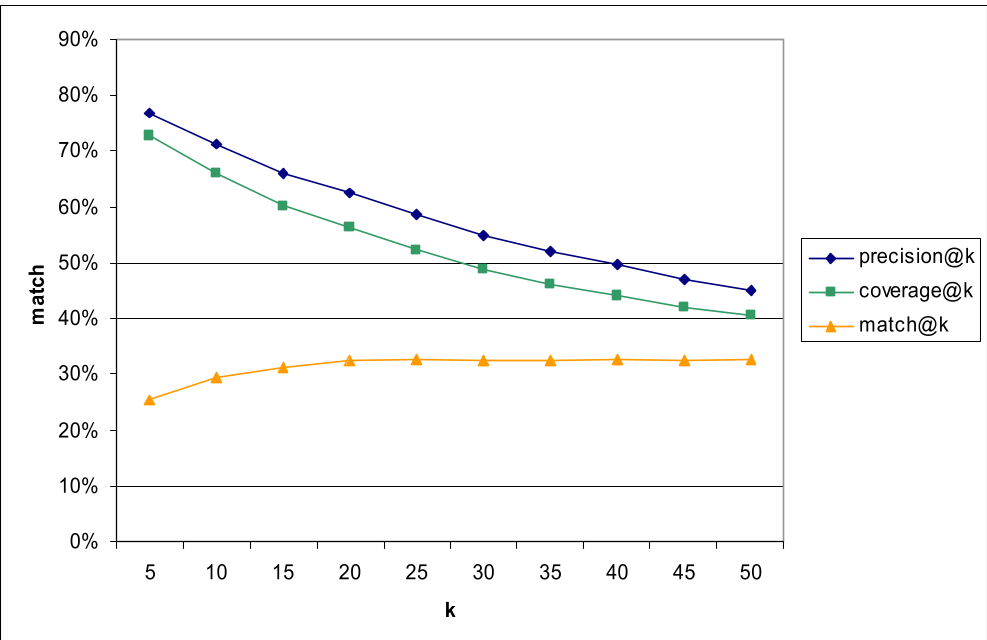 Figure 2: Performance measures over a 5-year window, showing that public data covers 73% of the top email contacts (Coverage@5).
The "Beer" vs. "Work" Insight
Perhaps the most profound takeaway came from the qualitative interviews. One participant noted:
"Email represents the work I do, and public represents the work I'd like to do."
Another summarized:
"Email people are for day-to-day work, while public people are for beer."
The "Public Network" often included:
- Former colleagues (where email history had been deleted).
- Mentors and 'Influencers' (whom the user follows on blogs but doesn't email).
- Cross-departmental links (essential for innovation, yet invisible in project-specific email threads).
Expert Analysis: Why This Matters for Today
While this study was conducted in 2008, its implications for the 2026 workplace are massive. In an era of Slack, Teams, and internal "Enterprise Social Networks," the reliance on private email mining is becoming obsolete.
The Inductive Bias of this research suggests that organizational health shouldn't be measured by how many emails we send, but by the "public reach" of our collaborations. For companies looking to foster innovation, the "Public Social Network" is actually a truer reflection of an employee's latent value and influence than their private inbox.
Limitations
- Data Sparsity: If an employee isn't a "social" user (e.g., doesn't blog or tag), their public profile remains a ghost.
- The "Admin" Noise: Email is often cluttered with service providers and HR assistants who "pollute" the private network map but aren't true social ties.
Conclusion
This work proves that we can respect privacy and still get high-fidelity social data. By aggregating multiple public signals, SONAR achieves a sociocentric view that is arguably more valuable than email mining because it captures the aspirational and long-term social capital of the workforce.
Reference Table: Summary of participant familiarity with "Public-only" contacts.
