
Beyond Keywords: Leveraging Social Networks for Smart Venue Recommendation
Publication Venue Recommendation Using Author Network’s Publication History
This paper proposes a social network-based recommendation system to help researchers select appropriate publication venues by analyzing author networks and publication histories. Utilizing algorithms like normalized frequency and network topology weighting, the approach achieves superior performance over traditional content-based methods in predicting ACM conferences and Special Interest Groups (SIGs).
TL;DR
Choosing where to submit a paper is a perennial headache for researchers. While most systems look at what the paper says, this research demonstrates that looking at who wrote it and who they work with is much more effective. By analyzing the "social footprint" of authors within a 3-level co-authorship network, the proposed system boosts Top-3 recommendation accuracy to over 91%, outperforming traditional text-based classifiers.
Background: The Content-Based Bottleneck
Traditionally, venue recommendation was treated as a text classification problem. If your paper contains "Support Vector Machines," the system points you toward KDD or SIGIR. However, in modern computer science, subdomains overlap significantly. A paper on "Big Data" could fit in a database conference (SIGMOD), a data mining conference (KDD), or a web conference (WWW).
Text-based models often struggle with this ambiguity. The authors argue that a researcher’s social network—their co-authors and the venues where their community historically succeeds—serves as a latent "expert signal" that captures the cultural and topical nuances a keyword search misses.
Methodology: Mapping the Scientific Social Graph
The core innovation lies in shifting from document features to Network Topology Features. The researchers developed a crawler to build a social network three levels deep (Author Co-authors Their Co-authors).
They proposed three escalating methods to turn this graph into a recommendation:
- Method 1 (Global Frequency): Simply count how many times everyone in your network has published in a specific venue.
- Method 2 (Author Normalization): Prevents a single prolific "rockstar" author from skewing the results by normalizing each author's contribution to a total of 1.0.
- Method 3 (Topology Weighting): This is the "secret sauce." It weights a co-author's influence based on the strength of the connection (how many papers they have actually co-authored with the main author).
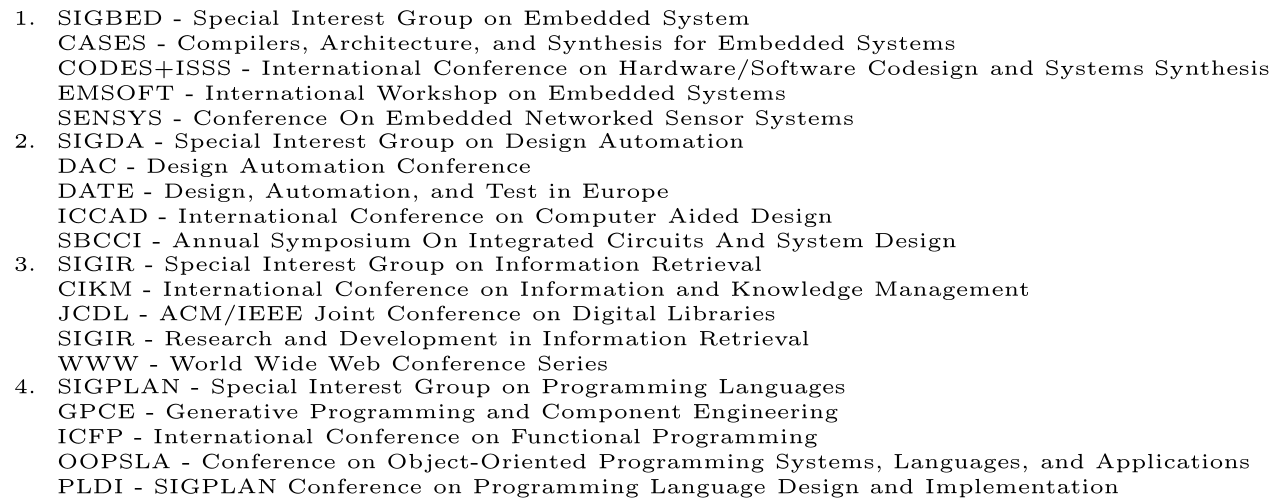 Figure 1: The general workflow of building the social network and extracting history.
The weight for a conference for main author is calculated as: Where represents the collaborative weight between the author and their peer.
Experiments & Results: The Social Advantage
The authors tested their approach against a competitive kNN content-based baseline using a dataset of 16 ACM conferences.
Key Findings:
- Context Matters: Method 3 achieved a 12% absolute improvement in Top-1 accuracy over the text-based baseline.
- The Power of Relations: Simply knowing the network (Method 1) made the system competitive with text analysis; adding relationship strength (Method 3) made it superior.
- Top-3 Stability: In 91.56% of cases, the correct conference was in the system's top three suggestions.
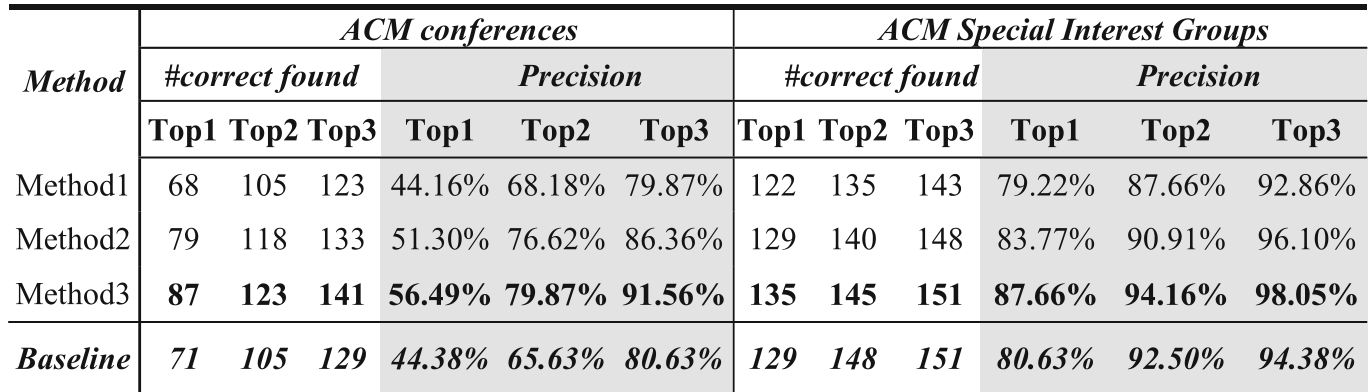 Table 1: Accuracy comparison between the three social methods and the baseline.
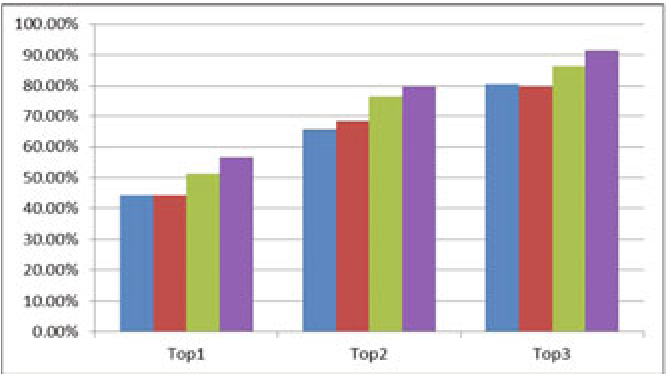 Figure 2: Method 3 (incorporating network topology) consistently dominates across all metrics.
Critical Insight & Conclusion
Why does this work so well? Academics are tribal. We tend to publish where our mentors published and where our collaborators are currently active. This "social inertia" is a powerful predictor that accounts for "soft" factors like a conference's prestige, community vibe, and preferred methodology—things that a TF-IDF or kNN text classifier simply cannot see.
Limitations: The primary weakness is "Cold Start." If a new author has no publication history and no established co-authors, this system fails. Future work should naturally look toward Hybrid Systems—using text analysis for the content and social networks for the context.
Takeaway for the Industry: In the era of LLMs, we often forget that metadata (the social graph) can be as powerful as the data itself. For platforms like CiteSeerX or ResearchGate, these findings suggest that "social-aware" recommendation is the key to managing academic information overload.