
Hierarchical Decision Modeling: Unlocking "Soft" Expert Logic in Clinical Diagnostics
Applications of qualitative multi-attribute decision models in health care
This paper presents a qualitative hierarchical multi-attribute decision support approach for healthcare, utilizing the DEX expert system shell. It introduces HINT, a data mining method capable of automatically inducing these hierarchical structures and utility functions from retrospective clinical data, achieving SOTA-level interpretability and accuracy.
TL;DR
Medicine is rarely a game of pure numbers; it’s a field of nuanced expert judgment. This paper details a methodology using DEX (an expert system shell) and HINT (a data mining tool) to transform complex clinical problems into qualitative, hierarchical "if-then" models. These models don't just predict; they explain, providing a transparent roadmap from basic patient data to high-level risk assessment.
Background: The Limits of Quantified Medicine
Most decision-support systems rely on weighted averages or linear regression. While effective for "hard" technical problems, these methods often fail in healthcare because:
- Domain Complexity: Clinical variables are often interrelated in non-linear ways.
- Qualitative Nature: Doctors think in terms of "Regularity," "High Risk," or "Average Duration," rather than just 0.72 vs 0.75.
- The "Why" Requirement: A black-box score is useless to a surgeon who needs to know exactly which factor (age, weight, or history) triggered a high-risk alert.
Methodology: The DEX and HINT Framework
1. Qualitative Hierarchies (DEX)
Instead of a flat list of variables, DEX structures knowledge into a tree. Basic attributes (e.g., age, physical factors) feed into aggregate attributes (e.g., cancerogenic exposure), which eventually determine the root utility (Overall Risk).
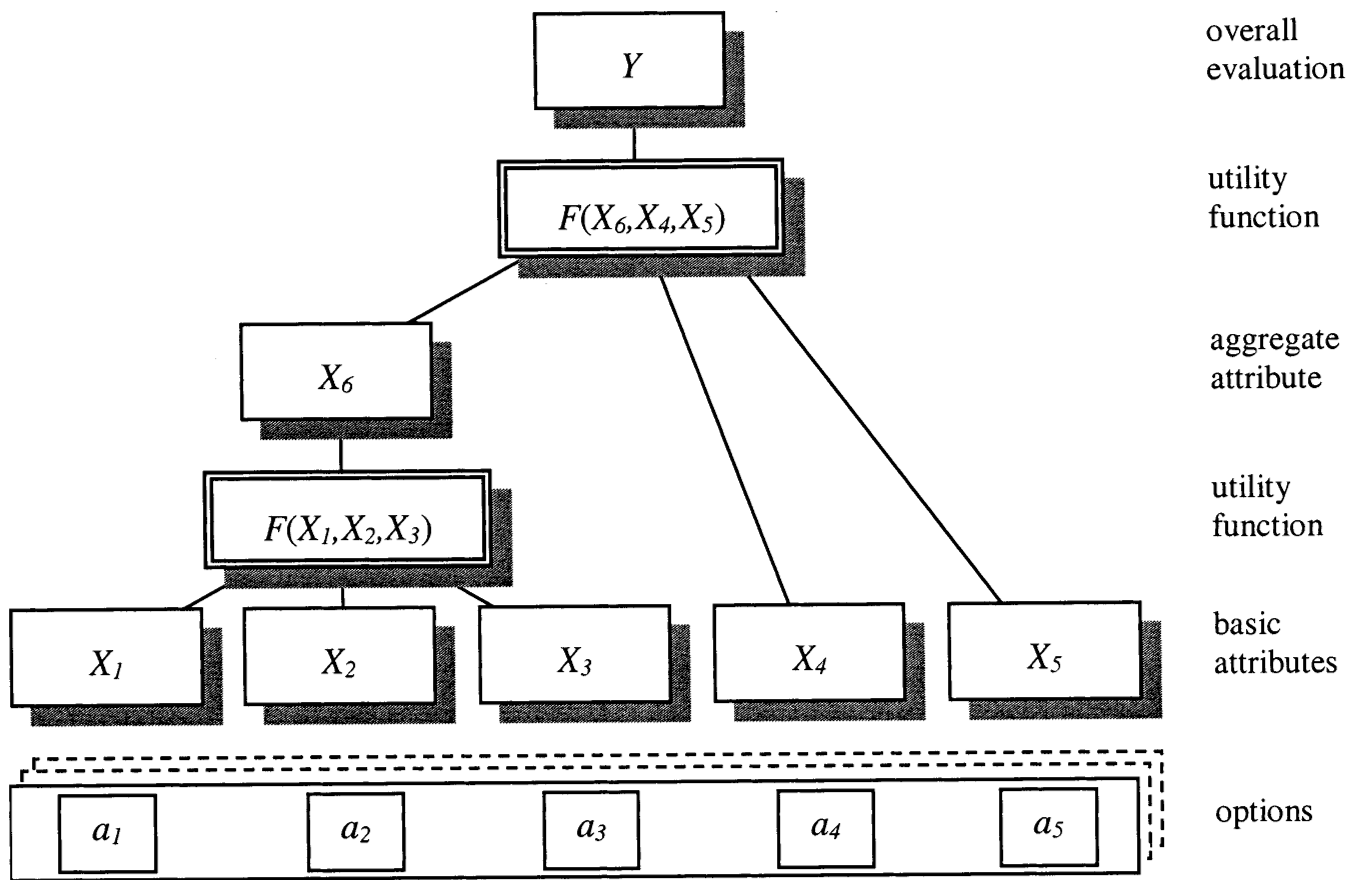
Physical Intuition: By decomposing a massive problem into sub-problems, the system mirrors human expertise. You don't judge breast cancer risk in one go; you evaluate hormonal status, then personal history, and then combine them.
2. Automated Discovery (HINT)
The most innovative part of this work is HINT. If an expert isn't available to build the tree, HINT analyzes retrospective data to "invent" intermediate concepts (latent variables) that simplify the decision logic.
Case Study: Breast Cancer Risk Assessment
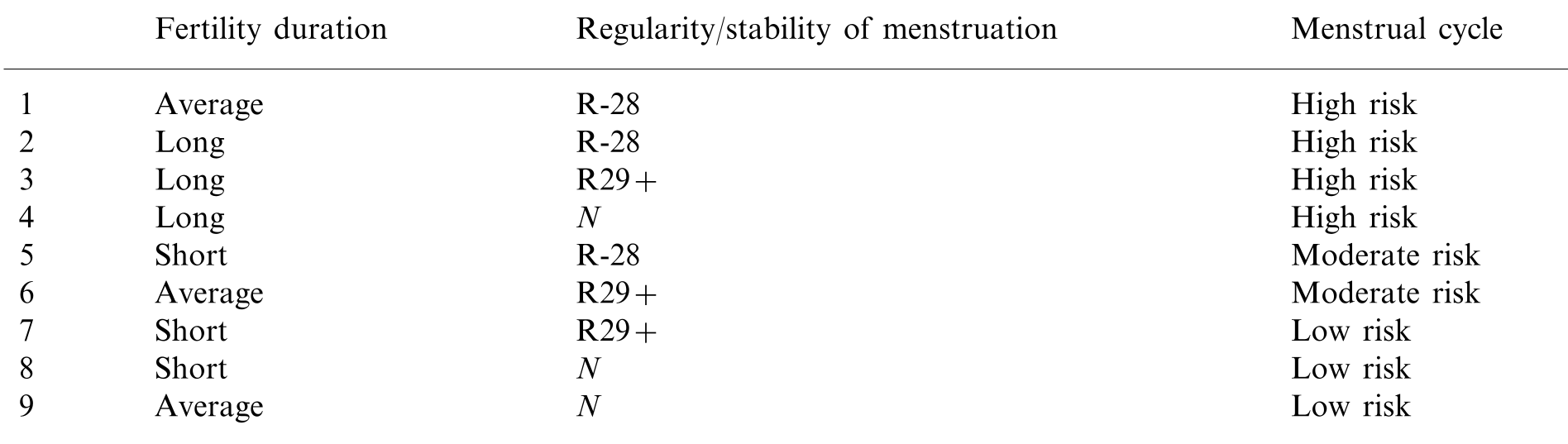
The authors demonstrated the model on breast cancer diagnostics. The utility functions were defined as decision tables. For instance, a "Long" fertility duration combined with "Regular" menstruation might result in a "High Risk" classification.
Feature: Selective Explanation
DEX allows for "What-if" analysis. If a patient is high risk, the system can pinpoint exactly which branch of the tree is the culprit—allowing clinicians to see both "reasons for" and "reasons against" a specific diagnosis.
Experimental Results & Impact
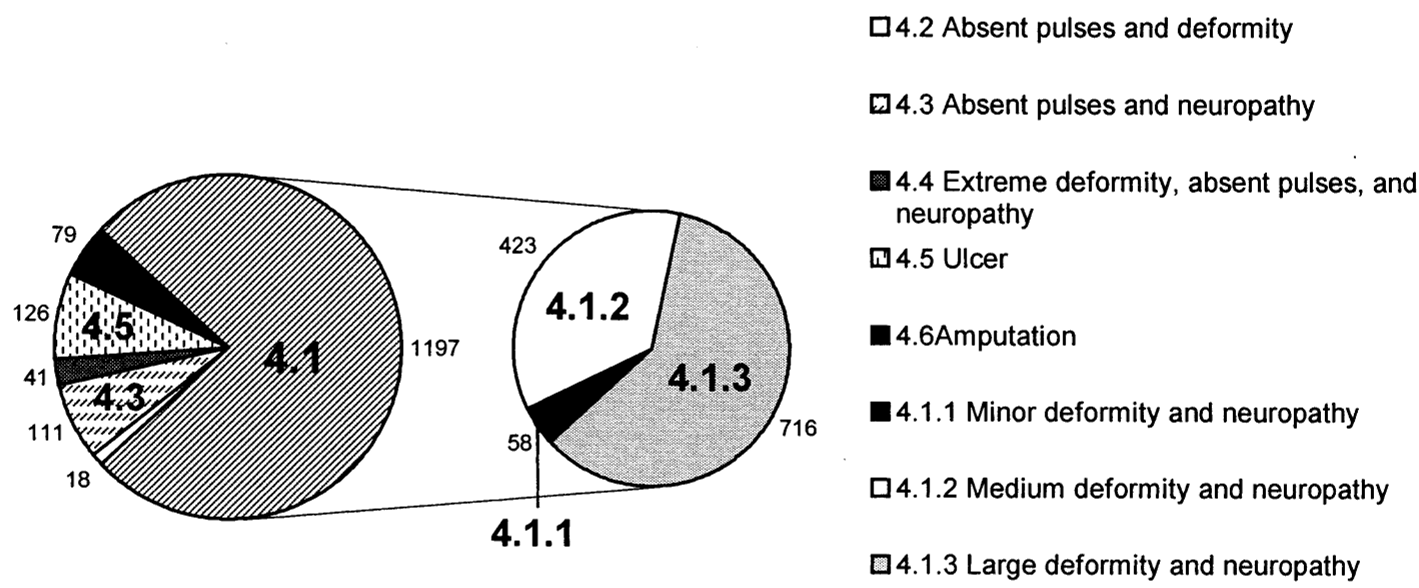
- Diabetic Foot Care: The model refined a previously "heterogeneous" high-risk group of 2,925 patients into specific subgroups (e.g., Ischemic vs. Neuropathic). This allowed for customized shoe prescriptions and educational programs.
- Data Mining Efficiency: HINT outperformed standard decision tree algorithms like C4.5 in terms of model compactness and interpretability, discovering "hidden" biological properties in nerve fiber data.
Critical Insight: The Value of Symbolic AI
While modern Deep Learning dominates the headlines, this paper reminds us that interpretability is the currency of healthcare. The ability to manually override a rule or visualize a hierarchy is vital for clinical safety.
Limitations: The model is purely qualitative. It currently lacks a seamless way to handle precise continuous data (like exact blood glucose levels) without first discretizing them into "High/Low" categories.
Conclusion
The marriage of expert-driven hierarchies and data-driven induction (HINT) provides a robust framework for medical AI. It moves beyond simple classification toward a "second opinion" system that clinicians can actually trust and interrogate.