
Navigating the Noise: How Preprocessing Shapes Educational Data Mining
Quantitative and Qualitative Evaluation of Sequence Patterns Found by Application of Different Educational Data Preprocessing Techniques
2017-01-01
Summary
Problem
Method
Results
Takeaways
Abstract
This paper evaluates the impact of session identification and path completion preprocessing techniques on Educational Data Mining (EDM) results. By applying various heuristics to VLE Moodle log files, the study identifies that Reference Length-based sessionization significantly enhances the quality of extracted sequential behavioral patterns.
## TL;DR
Data preprocessing is the "black box" of Learning Analytics, often requiring more effort than the actual modeling. This study reveals that more data isn't always better: while "Path Completion" increases the number of rules found, it mostly introduces noise. The real winner is the **Reference Length method** aided by a sitemap, which pinpoints high-value student behavioral patterns that simple time-based methods miss.
## The Motivation: Why Care About Log Preprocessing?
In the world of Virtual Learning Environments (VLEs), every click tells a story. However, raw log files are messy. Students use the "Back" button (which isn't always logged), leave sessions open for hours, or click through pages at lightning speed.
Prior work in **Educational Data Mining (EDM)** has often blindly borrowed techniques from e-commerce. But whereas a shopper wants to buy an item (a simple path), a student is engaging in a complex, non-linear cognitive process. The authors argue that we need to understand which preprocessing steps—specifically **Session Identification** and **Path Completion**—actually lead to "Actionable Knowledge" rather than "Trivial Rules."
## Methodology: The Science of Sessionization
The researchers transformed raw Moodle logs into analytical matrices using two primary levers:
1. **Session Identification**: How do we know when one study session ends and another begins? They compared:
* **STT (Session Timeout Threshold)**: Simple time-based limits (Mean vs. Quartile-based).
* **Reference Length**: A more sophisticated heuristic that uses the *sitemap* to distinguish between "navigational" pages (brief clicks) and "content" pages (long stays).
2. **Path Completion**: Using the sitemap to "fill in the gaps" when a student uses the browser's back button, effectively reconstructing their actual traversal path.
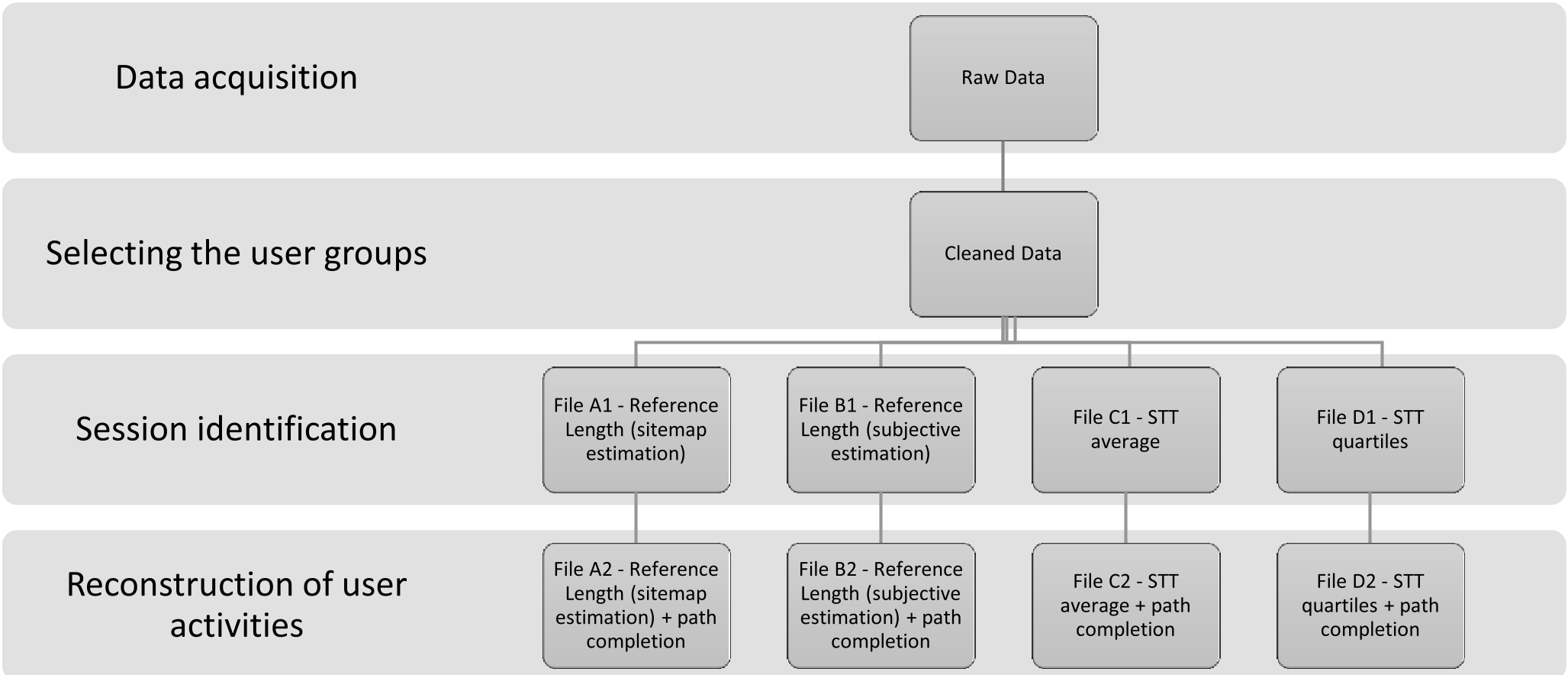
*Figure 1: The experimental workflow from raw log files to preprocessed data matrices.*
## Experiments & Results: Quality vs. Quantity
The study used the A-priori algorithm to find sequence rules (e.g., "If student views Topic A, they then attempt Quiz B"). These were then manually classified by human experts into three categories: **Useful**, **Trivial**, and **Inexplicable**.
### 1. The Trap of Path Completion
The data showed a significant spike in the *quantity* of rules when Path Completion was applied. However, a closer look revealed a disappointing truth: most of these were "Trivial" rules (e.g., Main Page => Course Content). Adding missing links did not statistically increase the discovery of "Useful" insights.
### 2. The Power of the Sitemap
The **Reference Length method** (File A1), which used a sitemap to calculate the ratio of auxiliary pages, was the clear winner for quality.
* **Useful Rules**: It captured 95.24% of all "Useful" rules identified across the entire experiment.
* **Statistical Strength**: It achieved a higher "Confidence" score compared to simple time-based methods.
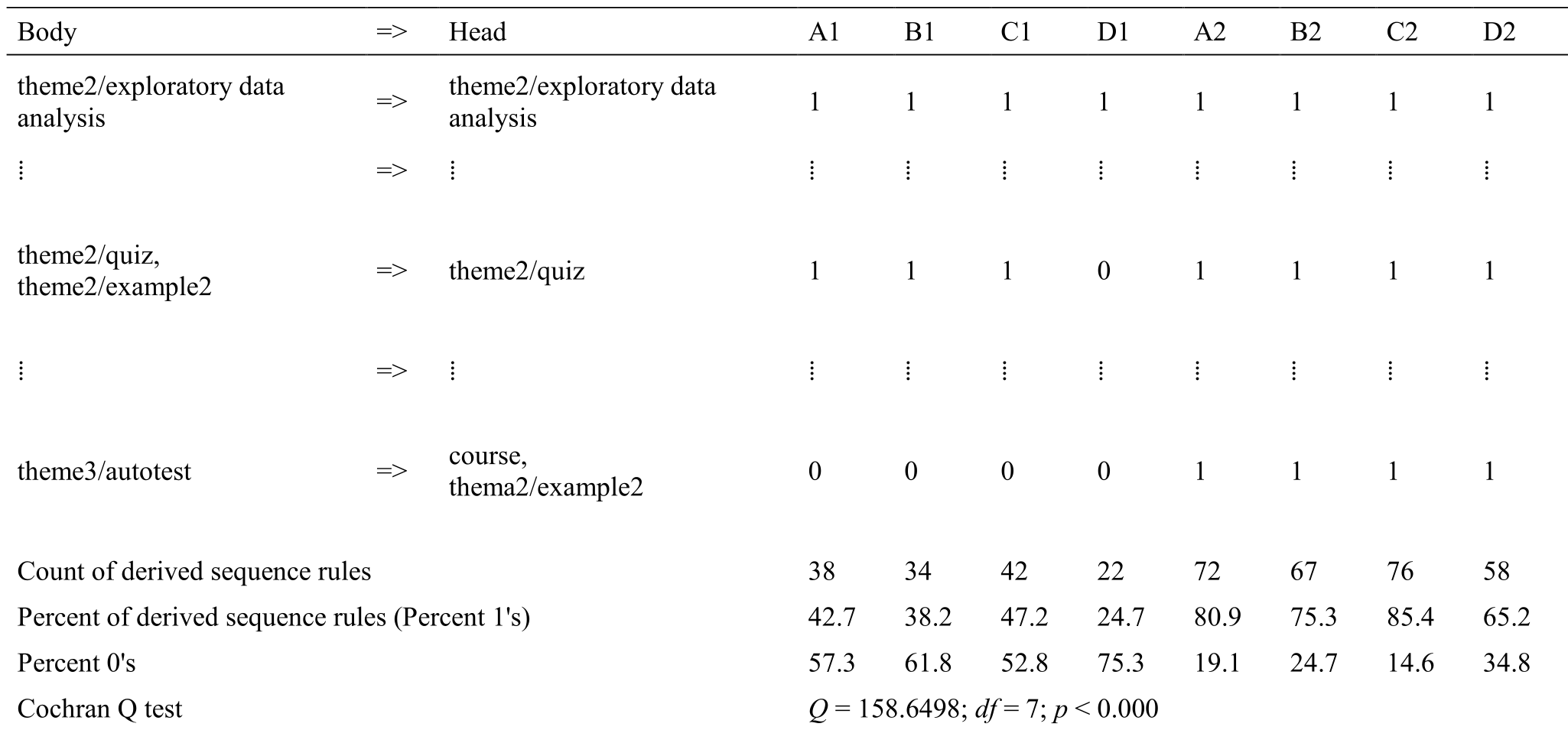
*Table 1: Quantitative results showing that while C2 (Path Completion) has the most rules, A1 (Sitemap-based) yields the most meaningful results.*
## Critical Analysis & Takeaways
The most profound insight from this paper is that **structural knowledge (Sitemaps)** is more valuable than **temporal heuristics (Timeouts)**.
* **Actionable Insight**: Educators shouldn't just look at how long a student is logged in. By mapping the VLE's structure, we can distinguish between a student who is "lost" (clicking through auxiliary pages) and a student who is "learning" (dwelling on content pages).
* **Automation Potential**: The authors suggest that because the Reference Length method can be automated through web crawling, it is a prime candidate for integration into real-time Learning Analytics plugins.
* **Limitations**: The study was conducted on a relatively small cohort (80 students). Future work needs to validate if these patterns hold across massive courses (MOOCs) where "noise" is significantly higher.
## Conclusion
This research provides a much-needed manual for the first, and often most painful, stage of educational data science. By prioritizing sitemap-aware sessionization and skepticism toward path completion, researchers can move past trivial data and find the actionable behavioral patterns that lead to better student outcomes.