
Deciphering Clinical Bias: A Reverse Machine Learning Approach to Healthcare Disparity
Does Race Play a Role in Invasive Procedure Treatments? An Initial Analysis
This study utilizes machine learning on the Nationwide Inpatient Sample (NIS) to investigate racial disparities in invasive heart treatments for Acute Myocardial Infarction (AMI). By employing a "Reverse Machine Learning" framework to predict patient race from treatment and comorbidities, the research achieves an AUROC of 0.62, suggesting that race plays a moderate but detectable role in clinical decision-making.
TL;DR
Does the color of a patient's skin influence whether they receive life-saving heart surgery? This study tackles this sensitive question by flipping the traditional predictive script. Using "Reverse Machine Learning," researchers attempted to guess a patient's race based on their medical history and the surgery they received. With a prediction accuracy (AUROC) of 0.62, the study reveals that while race isn't the primary factor, it remains a "moderately successful" predictor of treatment, signaling the presence of subtle systemic bias.
The "Uncertainty" Problem in Clinical Decisions
Medical disparities are well-documented, especially in Acute Myocardial Infarctions (AMI). Historically, Black patients are less likely to receive invasive surgical interventions compared to White patients.
The core difficulty for researchers lies in the diagnostic heuristic. When a physician faces a patient, they must infer unobservable physiological states. Under time pressure and uncertainty, even well-meaning doctors may rely on stereotypes or generalized heuristics. Prior work struggled to isolate whether different outcomes were due to "access to care" or "actual clinical bias."
Methodology: The Reverse Machine Learning Framework
To move past simple correlation, the authors employed Reverse Machine Learning. The logic is elegant:
- Forward Task: Predict Treatment based on (Comorbidities + Race).
- Reverse Task: Predict Race based on (Comorbidities + Treatment).
If race can be predicted significantly better than random chance using the treatment received, it implies that the treatment itself carries a "racial signal" that shouldn't be there if the decision were purely clinical.
Data Preprocessing & Modeling
To solve the class imbalance (as Black patients represent only ~14% of the AMI population), the authors used Nearest-Neighbor Matching. They paired each Black patient with a White patient sharing nearly identical non-medical characteristics.
They then tested several architectures:
- XGBoost (Extreme Gradient Boosting)
- Generalized Linear Models (GLM)
- Naive Bayes
- C4.5 Decision Trees
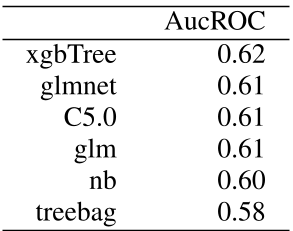 Figure 1: Comparison of different algorithms in the Reverse ML task (Predicting Race).
Experimental Insights
The study’s findings are nuanced. The Reverse ML task achieved an AUROC of 0.62. While not a "strong" predictor (like 0.90), it is significantly above the 0.50 random baseline.
When the researchers flipped the task to predict the Treatment Decision, the AUROC jumped to 0.74.
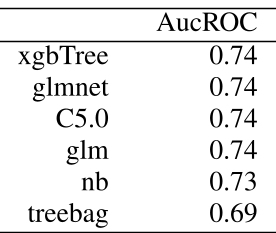 Figure 2: Performance of algorithms when predicting the surgery decision based on health status and race.
What do these numbers mean?
- AUROC 0.74 (Forward): Clinical factors (comorbidities) are the dominant drivers of whether a patient gets a heart procedure. This is the "correct" medical behavior.
- AUROC 0.62 (Reverse): The fact that we can guess a patient's race with 62% accuracy just by looking at their record and surgery choice suggests that the treatment "leaks" information about the patient's race.
Critical Analysis & Takeaways
The strength of this paper lies in its methodological objectivity. By framing bias detection as a predictive task, it moves away from subjective surveys and into the territory of "Algorithmic Auditing."
Limitations:
- Unobserved Variables: Factors like "differential access to quality hospitals" or "patient preference" might be why the model can predict race, rather than direct physician bias.
- Moderate Signal: A 0.62 AUROC suggests the bias is subtle or perhaps restricted to specific sub-populations within the dataset.
The Path Forward: This work serves as a blueprint for automated surveillance. Healthcare systems could use these types of models to perform "bias checks" on their own data, identifying departments or procedure types where race is weighing too heavily on the decision-making scale.
Conclusion: While heart surgery decisions are primarily based on medical need, race still plays a "minor but nonetheless existent role." Machine learning, once feared as a source of bias, is proving to be one of our best tools for detecting it.