
RASE: Deciphering the Multi-Faceted Semantics of Social Connections
RASE: Relationship Aware Social Embedding
The paper introduces RASE (Relationship Aware Social Embedding), a novel framework for learning user representations in social networks that preserve relationship-specific proximity. It employs a two-step iterative optimization to handle multi-relational links and severe label sparsity, outperforming baselines like DeepWalk and LINE in classification and relationship prediction.
TL;DR
RASE (Relationship Aware Social Embedding) is a framework designed to learn user embeddings that respect the different "types" of social roles (e.g., family, work, school) within a single network. By iterating between learning relationship-specific projections and "soft" link weights, RASE solves the problem of relationship label sparsity and outperforms traditional generic embedding methods like DeepWalk and TransE in classification and link prediction.
Problem & Motivation: Beyond Generic Proximity
In a standard social network, a link between two users is often treated as a simple binary edge. However, human relationships are multi-dimensional. Two people might be close in a "professional" context but distant in a "personal hobby" context.
Existing methods fall into two traps:
- Network Embeddings (DeepWalk, LINE): Treat all links as uniform, losing the semantic nuance of the relationship.
- Knowledge Graph Embeddings (TransE, TransR): Require every link to have a specific label, making them brittle in social networks where labels are often missing (sparsity) or where one link represents multiple relationships simultaneously.
The authors' insight is to model each link as a combination of multiple relationship types and project users into specific subspaces where the distance represents a specific social "flavor."
Methodology: The Mutual Enhancement Framework
RASE uses an iterative approach inspired by the EM algorithm to tackle the "chicken-and-egg" problem: you need relationship weights to learn good embeddings, and you need good embeddings to infer missing relationship weights.
1. The Relationship Projection
For every relationship , RASE learns a projection matrix . The proximity between two users and for a specific relationship is calculated in the projected space:
2. Modeling First and Second Order Proximity
RASE doesn't just look at direct neighbors (1st order); it also looks at shared context (2nd order). If two users are connected to similar sets of people within a "school" context, they should be close in the "school" embedding space.
3. Solving Sparsity via Soft Weights
When labels are missing, RASE infers them. It assumes that if the difference vector is small, the link likely belongs to relationship . To keep this computationally efficient ( instead of ), the authors use a link-clustering strategy based on k-medoids.
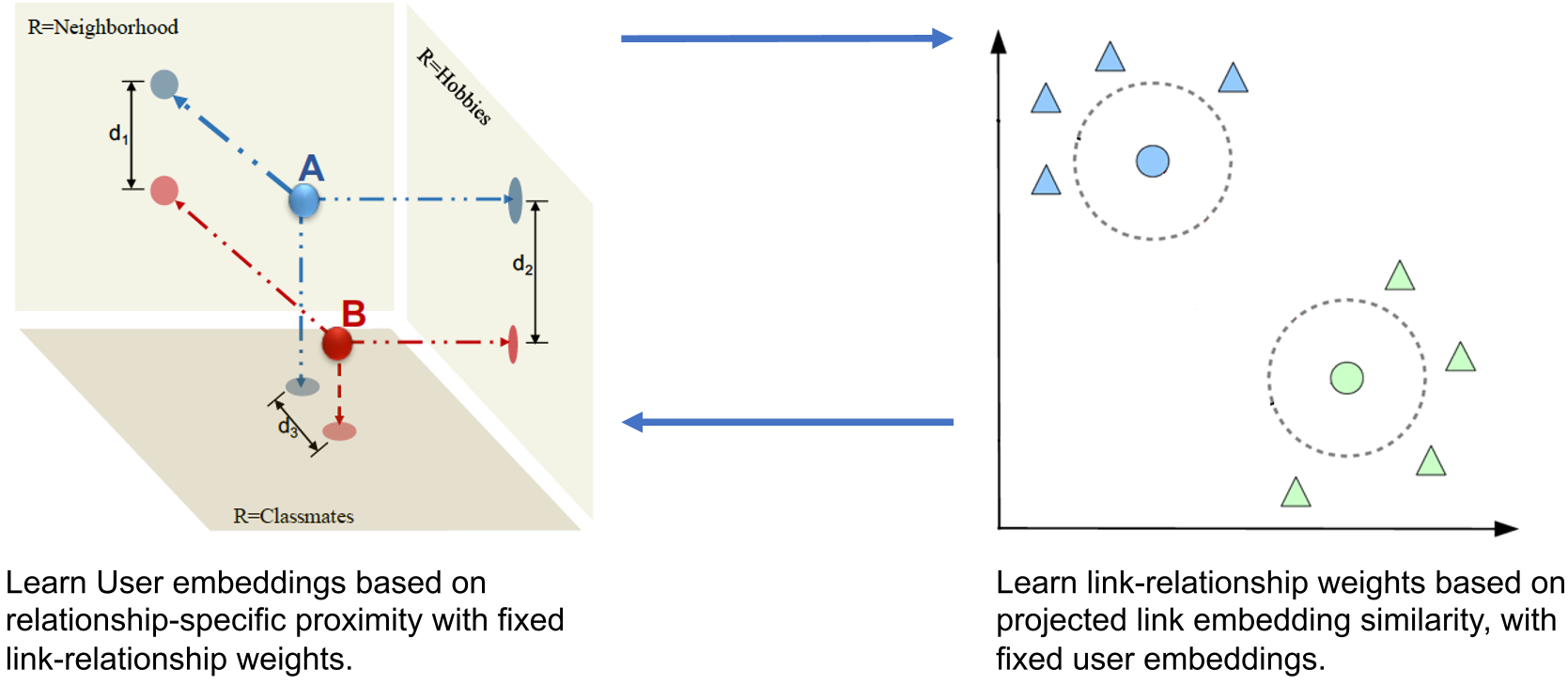 Fig 1. The two-step iterative learning process of RASE.
Experiments & Results
The model was tested on Facebook (8 relationships) and LinkedIn (3 relationships) ego-networks.
Multi-label Classification
RASE consistently outperformed baselines. The specific relationship-aware projections allow the model to capture features that are otherwise "blurred" in a generic embedding space.
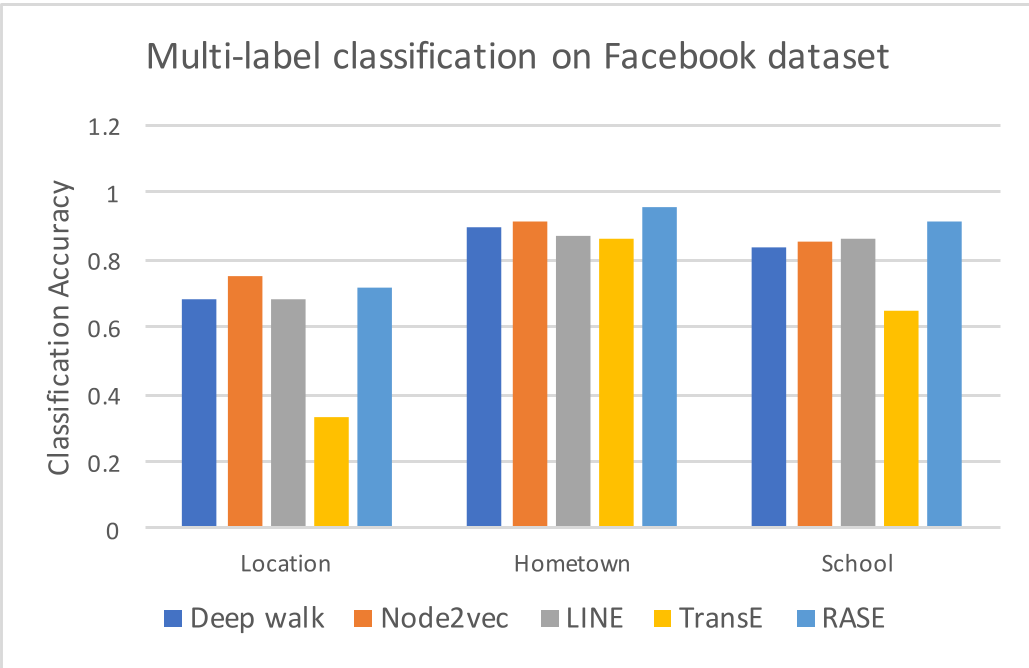 Fig 2. Performance comparison on Facebook (left) and LinkedIn (right) for node classification.
Relationship Prediction
Even when relationship labels were partially removed, RASE's ability to "soft-assign" weights allowed it to predict the nature of unknown links more accurately than TransE, which struggled with the lack of explicit labels.
| Relationship (Facebook) | RASE (Hadamard) | Node2vec | DeepWalk |
|---|---|---|---|
| Location | 0.667 | 0.658 | 0.613 |
| Hometown | 0.721 | 0.687 | 0.654 |
| School | 0.662 | 0.654 | 0.620 |
Critical Analysis & Conclusion
Takeaway
The core contribution of RASE is the balance it strikes between the structural modeling of Social Networks and the semantic modeling of Knowledge Graphs. It effectively handles the "messiness" of real-world social data—incomplete labels and overlapping roles.
Limitations
A notable limitation mentioned by the authors is the potential for overfitting in the projection matrices (which are ). In networks with many relationships, the parameter count can explode. Future iterations might benefit from low-rank constraints or diagonal projection matrices to improve regularization.
Future Work
The logical next step is integrating this relationship-aware logic into Temporal Graphs (how do social roles change over time?) and Graph Neural Networks (using message passing that is gated by relationship types).