Being Rational or Aggressive? The Digital Frontier of Dunbar's Number
Being rational or aggressive? A revisit to Dunbar׳s number in online social networks
This paper revisits Dunbar's number in the context of Online Social Networks (OSNs), identifying a new "magic number" ranging from 200 to 300. Through structural and interaction analysis of datasets like Facebook and LiveJournal, it categorizes users into "rational" and "aggressive" types based on their ability to maintain meaningful social ties.
TL;DR
Is your list of 1,000 Facebook friends a sign of superior sociability or just digital clutter? This research reveals that while Online Social Networks (OSNs) push our social limits, a new "magic number" emerges between 200 and 300. Beyond this, our social structures collapse into superficiality. The paper classifies us into two camps: the Rational, who maintain deep, reciprocated circles, and the Aggressive, who collect ties like trophies without the cognitive capacity to sustain them.
Problem & Motivation: The Illusion of Infinite Connection
In the physical world, evolutionary psychology (Robin Dunbar) suggests our brains can only manage about 150 stable relationships. OSNs like Facebook and LinkedIn removed the "cost" of adding a friend, leading many to believe that human sociability had scaled. However, the authors argue that time and cognition are the ultimate bottlenecks. They set out to find if a digital "turning point" exists where the quality of a social network qualitatively changes.
Methodology: Hunting for the "Turning Point"
The study analyzes a diverse array of datasets, including a 63,000-node Facebook snapshot of New Orleans and a massive 5-million-node LiveJournal crawl. To detect the limits of sociability, they tracked four critical local measures:
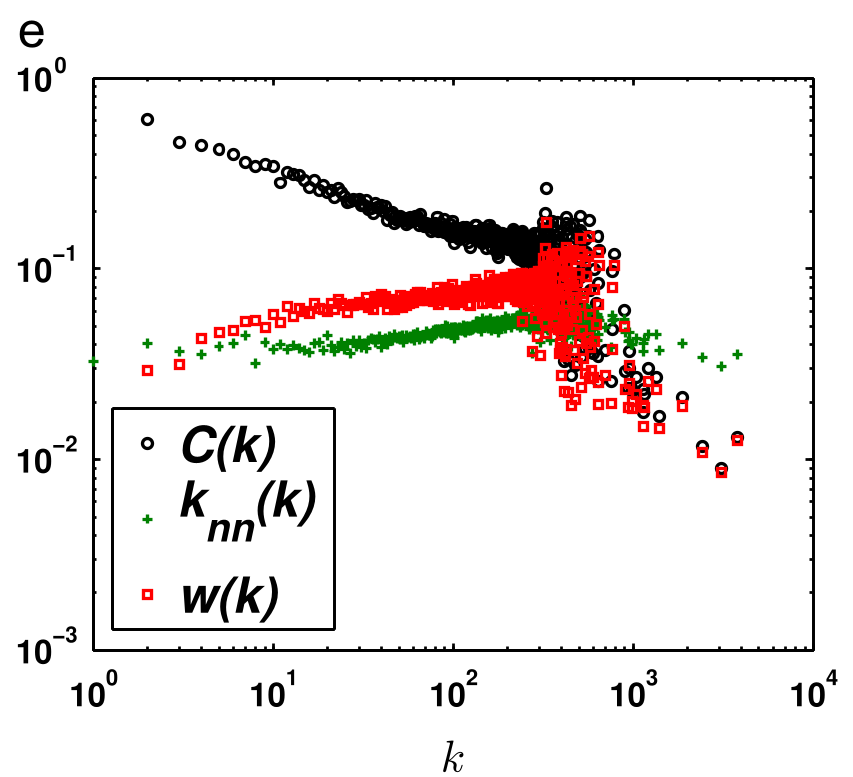
- Clustering Coefficient (C): Do your friends know each other?
- Assortativity (knn): Do you connect with people similar in social status?
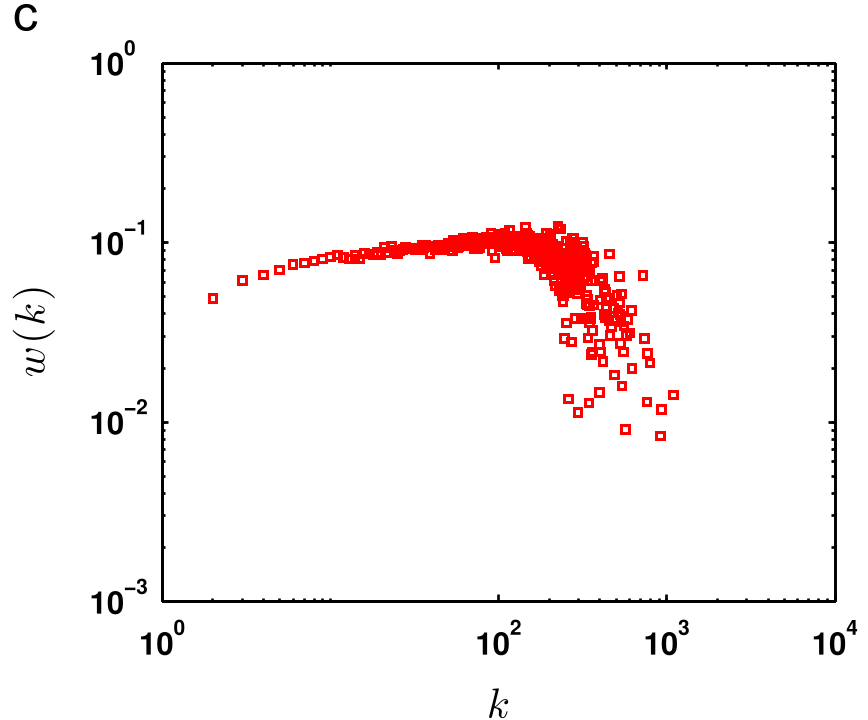
- Tie Strength (w): How many mutual friends do you share?
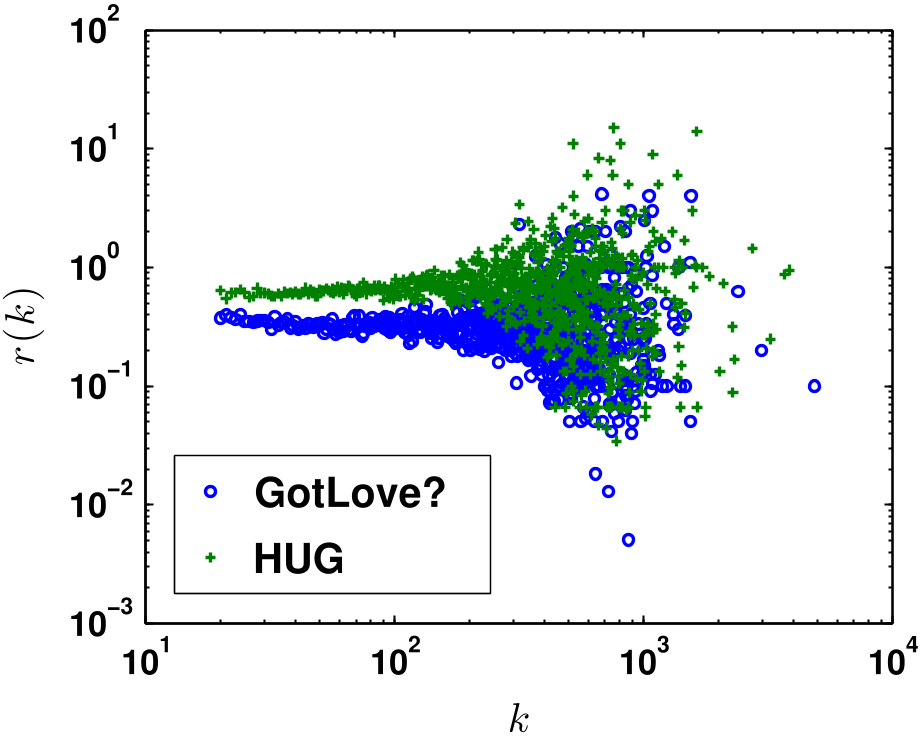
- Reciprocation (r): If you send a "hug" or "love," do you get one back?
Core Discovery: Rational vs. Aggressive Users
The data confirms a structural "cliff" at the 200-300 mark.
The Rational User (k < 200-300)
These users behave much like people in the real world. Their networks are assortative (they connect with others who have similar social reach) and highly clustered. Their online presence is an extension of their offline life, focused on maintaining profound, reciprocated friendships.
The Aggressive User (k > 300)
Once a user moves past the magic number, the "social" nature of the network changes:
- Weakening Ties: The average strength of their relationships drops impressively.
- Loss of Homophily: They stop adding people like themselves and start adding strangers randomly (e.g., stars, celebrities, or random invitations).
- Asymmetry: Their interactions become one-way. They either receive massive attention they can't return, or they shout into a void that ignores them.
The BA-shift Model: Simulating the Cognitive Ceiling
The authors propose a BA-shift model to explain this. Unlike standard scale-free models where the "rich get richer" indefinitely, they introduce a constraint function that sharply reduces a node's probability of forming meaningful triadic closures once they exceed the magic number .
This equation effectively models the "cognitive fatigue" of maintaining a massive social circle.
Critical Insight: Why This Matters for the Real World
- Viral Marketing: High-degree "influencers" (Aggressive users) may be paper tigers. Because their neighborhoods are loosely connected, a message sent through them might not carry the "social proof" required for a purchase. Rational users with high degrees (near 250) are actually better conduits for trust-based marketing.
- Privacy: Rational users need granular privacy controls because their circles represent real intimacy. Aggressive users are often more willing to broadcast data publicly to gain "prestige."
- Spam Detection: Spammers often disguise themselves as aggressive users. By checking for the "reciprocation" turning point, systems can distinguish a popular human from a bot.
Conclusion
Social media hasn't rewired our brains; it has only stretched our limits slightly. While the digital Dunbar's number is higher than the ancestral 150, the cognitive ceiling is real. Beyond 300 friends, a social network ceases to be a community and becomes a collection of fragile, superficial links.