
The Global Reaches of Crowdsourcing: Mapping the Shift to Collective Intelligence
The Reaches of Crowdsourcing: A Systematic Literature Review
This paper presents a systematic literature review of crowdsourcing, identifying it as an emerging participative online activity that leverages collective intelligence. Using bibliometric tools like Scopus and CiteSpace, it maps the evolution of the field, highlighting a shift from general data collection to specialized applications in healthcare, transportation, and disaster management.
TL;DR
This study provides a comprehensive systematic review of crowdsourcing, tracking its explosive growth from a niche tech concept to a global multi-disciplinary phenomenon. By analyzing thousands of academic papers and millions of social media interactions, the authors reveal how industries like healthcare and transportation are moving beyond simple data gathering toward complex "Collective Intelligence" systems.
Background: Beyond the Open Call
Crowdsourcing is no longer just about "outsourcing to a crowd." According to the framework adopted in this study (derived from Pohlisch), the field has matured into four distinct quadrants based on whether the contributions are homogeneous or heterogeneous, and whether the value is emergent (aggregate) or individual.
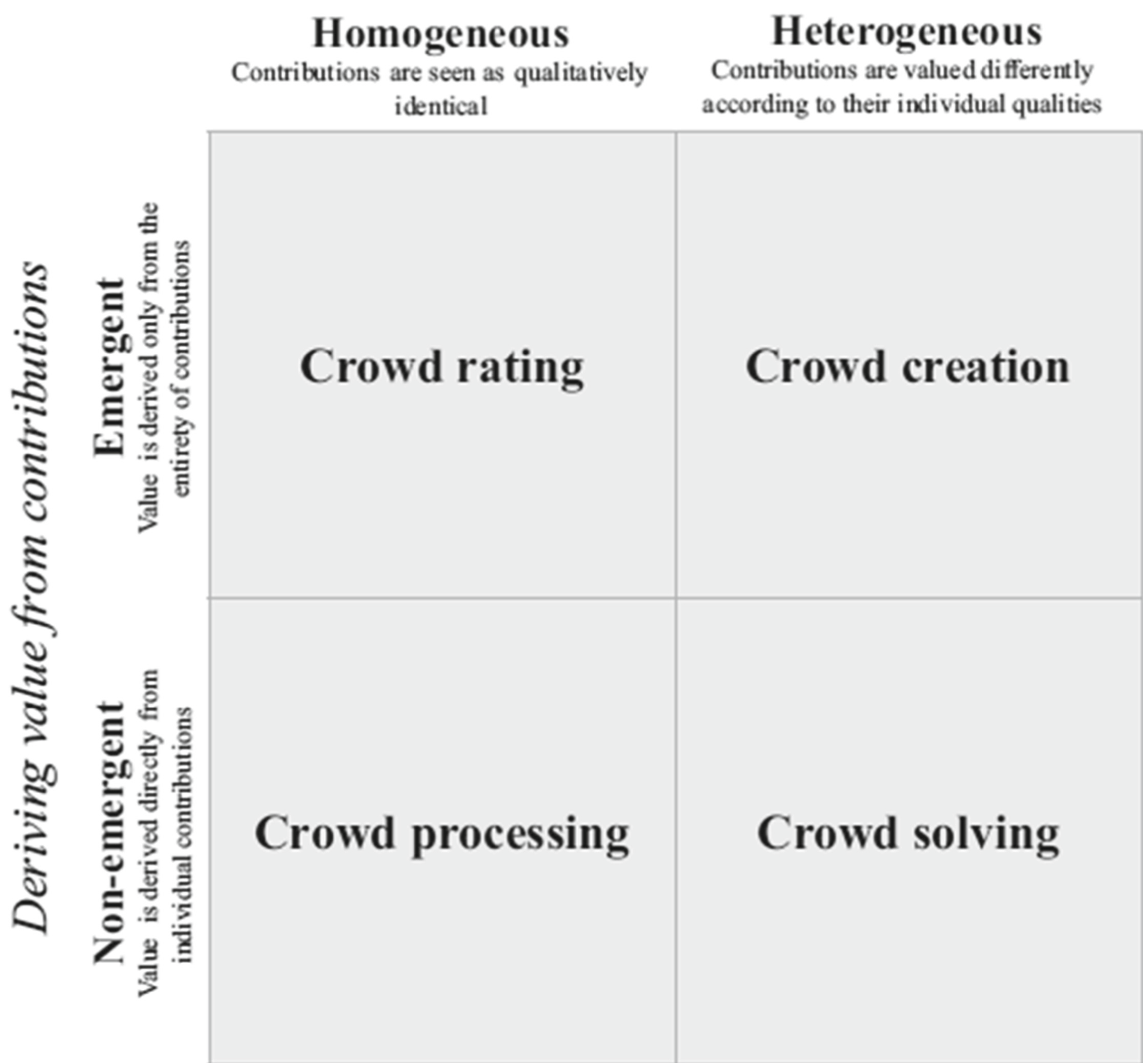
The authors argue that the foundation of modern crowdsourcing lies in Participatory Ergonomics—the degree to which individuals are involved in controlling their work activities—and the "human feeling" that drives online communities.
The Problem: Why Do Many Crowdsourcing Efforts Fail?
Despite the hype, many organizations fail to leverage the crowd effectively. The authors identify several critical "pitfalls":
- Improper Planning: Overwhelming the organization with unstructured data.
- Lack of Accountability: Not following through with the crowd’s input, which destroys trust.
- The Boundary of Creativity: The crowd often excels at general tasks but struggles with specialist tasks due to a lack of contextual knowledge.
Methodology: A Multi-Dimensional Analysis
The researchers didn't just look at citations; they looked at the pulse of the topic across the web. Using tools like VOSviewer and CiteSpace, they mapped the "burst" of research interest and social media engagement.
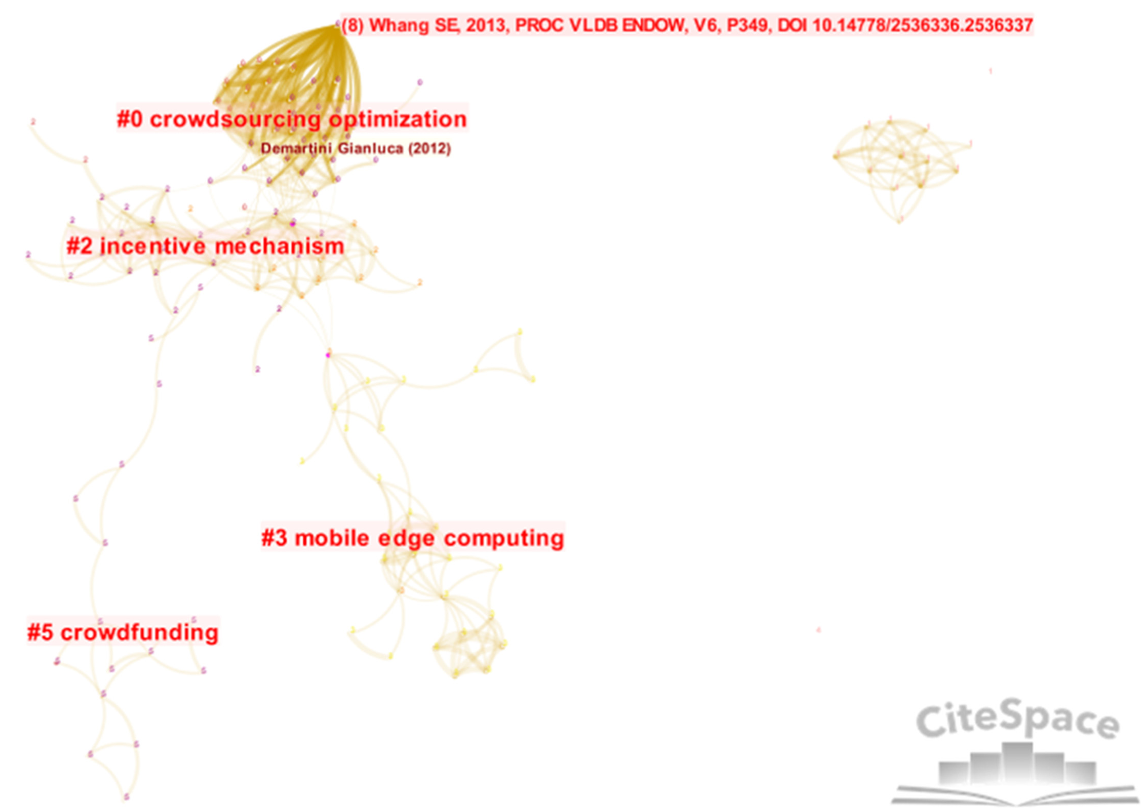
Key findings from the bibliometric data show:
- Growth: A massive uptick in publications starting in 2008, peaking at over 2,000 papers per year in 2019.
- Subject Diversity: While Computer Science dominates (38.1%), significant interest has emerged in Medicine, Business, and Environmental Sciences.
- Social Impact: On Twitter, crowdsourcing topics reached an "influence" (follower sum) of 18.1 million, proving its relevance far beyond academia.
Industry Deep-Dives: Where the Crowd Wins
The review highlights several high-stakes applications:
1. Healthcare & COVID-19
Crowdsourcing became a critical crisis response tool. In oncology, initiatives like the COVID-19 and Cancer Consortium (CCC19) used Twitter to gather real-time data from 90+ cancer centers globally, drastically shortening the time required to understand how the virus affected immunocompromised patients.
2. Transportation & Smart Cities
Applications like Waze and Strava are cited as prime examples of crowdsourced data gathering that reduces costs for government officials and transit planners. By analyzing bike routes from Strava, planners can predict ridership and justify public transit infrastructure without expensive manual surveys.
3. Disaster Management
In places like Padang, Indonesia, social media provides "informal leaders" (even if they are teen girls with digital authority) who can disseminate life-saving information faster than traditional government channels.
Deep Insight: The HCI Factor
The future of crowdsourcing is effectively a problem of Human-Computer Interaction (HCI). The authors emphasize that "collective intelligence" is only possible when the technology enables social interaction and motivation. Success factors include:
- Control: Knowing when to open internal structures.
- Policing: Protecting the platform from malicious/fake data.
- Engagement: Ensuring the ease of access is balanced with high-quality task design (Structure, Organization, Style).
Conclusion
The reach of crowdsourcing is limited only by imagination, but its implementation requires a shift toward "Open Culture" and a rigorous understanding of socio-technical systems. As the line between human effort and machine learning blurs, crowdsourcing will continue to transform from a "task-based" tool into a "knowledge-based" ecosystem.