
Beyond the Screen: How to Truly Reach "Hard-to-Reach" Populations in Tech Research
Reaching Hard-To-Reach Populations: An Analysis of Survey Recruitment Methods
This paper evaluates six survey recruitment strategies to identify the most effective methods for engaging socially disadvantaged, "hard-to-reach" populations. Through a comparative analysis, it establishes that in-person onsite recruitment is the superior approach for reaching low-income individuals, significantly outperforming digital-first methods like M-Turk and social media.
TL;DR
Technology is only as inclusive as the data it's built upon, yet the voices of the most disadvantaged are often missing. This research from the University of Michigan proves that while platforms like Amazon Mechanical Turk are cheap, they fail to reach low-income groups. Instead, in-person onsite recruitment remains the most effective—if more expensive—way to bridge the data gap for marginalized communities.
The "Digital Echo Chamber" Problem
Most HCI (Human-Computer Interaction) researchers rely on "convenient" sampling: social media ads, email lists, or M-Turk workers. However, this creates an inherent Inductive Bias. If you use a digital platform to recruit people for a study on digital literacy, you are automatically excluding those who lack the very access you're trying to study. This leads to "predictive inequality," where AI systems and urban services (like Mobility-on-Demand) are optimized for those who are already tech-savvy and affluent.
Methodology: A Cost-Benefit Analysis of Visibility
The researchers deployed a Qualtrics survey across six distinct channels to see which one could penetrate "hidden" populations in low-resourced areas of Michigan. They tracked:
- Response Rate: How many people actually completed the survey.
- Cost-Effectiveness: The price tag per "valid" response.
- Demographic Accuracy: The average household income of the respondents.
The Recruitment Landscape
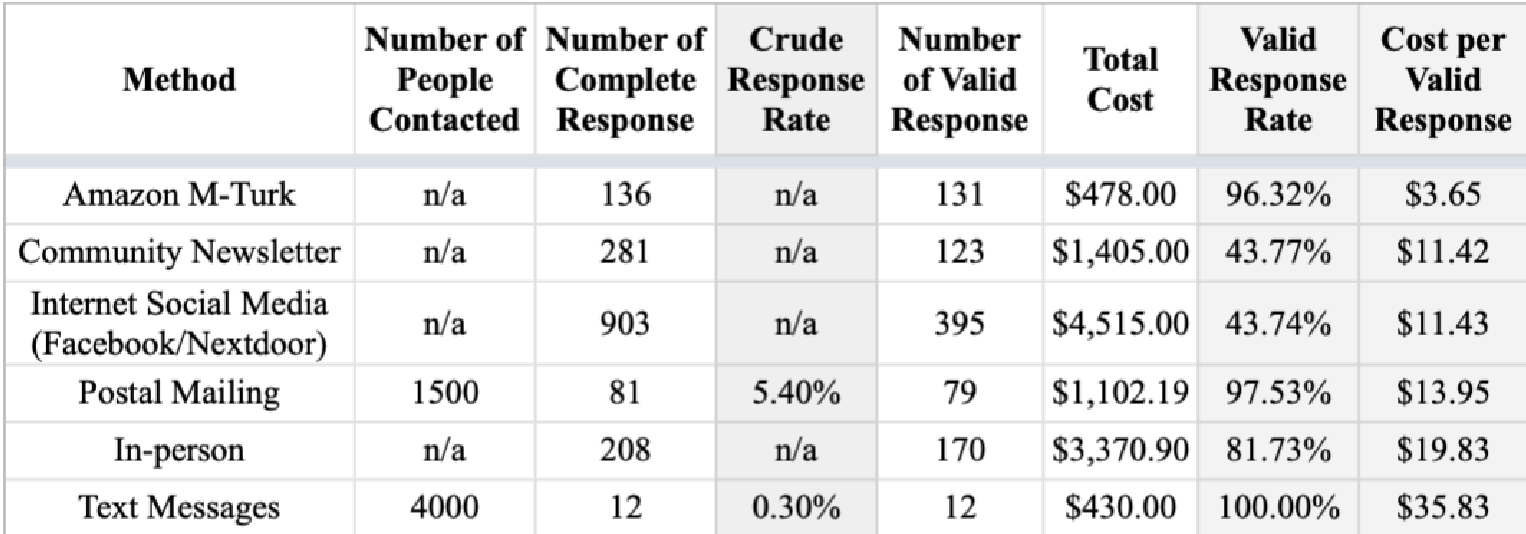 Figure 1: Comparison of recruitment methods by cost and validity.
Key Insights: The Price of Inclusion
The results reveal a stark trade-off between efficiency and equity.
- M-Turk is a Demographic Mirage: While Amazon M-Turk offered the lowest cost (56,240). It targets "professional" survey-takers, not the marginalized.
- The Power of Physical Presence: In-person recruitment at libraries and non-profits reached participants with an average income of just $19,690. By meeting people in physical spaces, researchers bypassed the barriers of digital literacy and trust.
- The Intrusiveness of Texting: Text messaging had an abysmal 0.3% crude response rate, resulting in a high cost of $35.83 per valid response. People often perceive unsolicited texts as spam, making it an unreliable tool for sensitive research.
Reaching the Target: Income Benchmarks
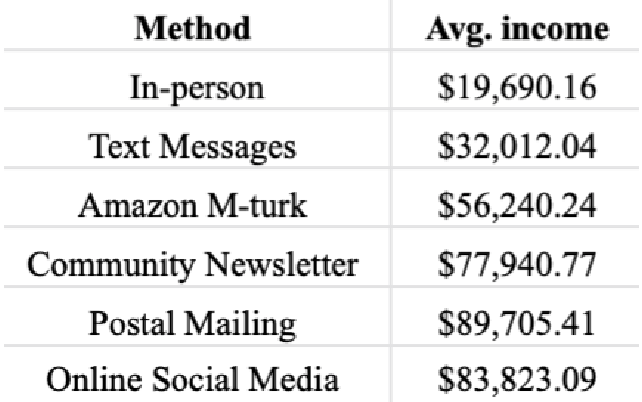 Figure 2: In-person and Text methods were clearly superior at reaching low-income demographics.
Critical Analysis: Why In-Person Wins
The success of in-person recruitment isn't just about the lack of a digital barrier; it's about Human Agency and Trust.
- Digital Gatekeeping: Online platforms require devices, data plans, and technical comfort.
- Contextual Trust: A research assistant at a local library provides a level of legitimacy that a Facebook ad cannot.
- Accessibility: In-person methods allow researchers to assist those who might struggle with the survey interface itself.
Conclusion: A Call for Inclusive Methodology
The paper concludes with a vital directive for the HCI and AI communities: Do not optimize for cost at the expense of representation. If our goal is to build technology that serves everyone, we must be willing to invest in time-consuming, community-based methods.
Future research should look into Hybrid Models—combining the scale of digital distribution with the targeted precision of community-based participatory research (CBPR). For the next generation of "More Inclusive Technologies," the most valuable data won't be found on a server, but on the street.