
Reactive Crowdsourcing: Bringing Active Logic to the Human-in-the-Loop Pipeline
Reactive Crowdsourcing
This paper introduces "Reactive Crowdsourcing," a novel framework for fine-grained control of human computation tasks using an Event-Condition-Action (ECA) rule-based engine. By modeling tasks as compositions of elementary operations, the authors enable dynamic adaptation of system behavior based on real-time data from performers and results.
TL;DR
Researchers from Politecnico di Milano have developed a framework that treats crowdsourcing not as a static queue of tasks, but as a reactive execution environment. By using Event-Condition-Action (ECA) rules, the system can automatically detect spammers, re-plan failing tasks, and optimize for either speed or precision in real-time, effectively "controlling the crowd" through programmable logic rather than manual oversight.
The "Black Box" Problem in Crowdsourcing
Traditional crowdsourcing is often a "post and pray" endeavor. You upload a batch of tasks to a platform like Amazon Mechanical Turk (AMT), wait for results, and then realize 30% of your data is junk because of spammers or ambiguous instructions.
The technical bottleneck? Current platforms lack fine-tuned control. If you want to change your strategy midway (e.g., "if two people disagree, send the task to an expert"), you usually have to write complex, imperative code using low-level APIs. There is no high-level abstraction for the meta-logic of a crowd task.
The Core Innovation: The Control Mart
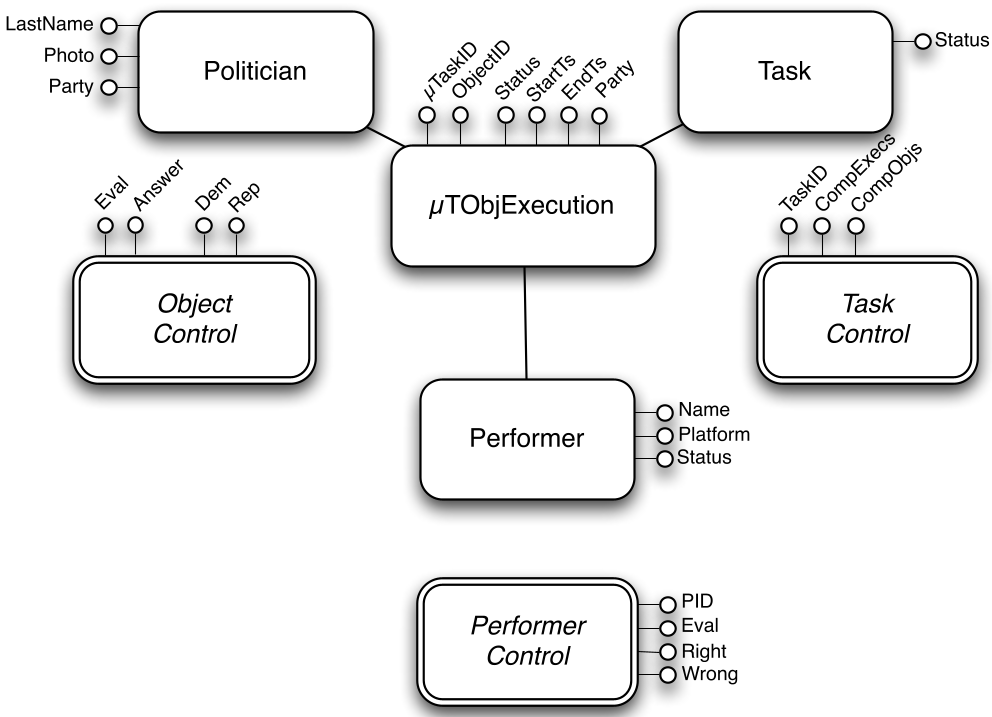
The authors solve this by introducing a Control Mart. Drawing inspiration from data warehousing "fact tables," they create a structured environment where every interaction is logged across three dimensions:
- Objects: The items being processed (e.g., images to classify).
- Performers: The human workers.
- Tasks: The high-level goals.
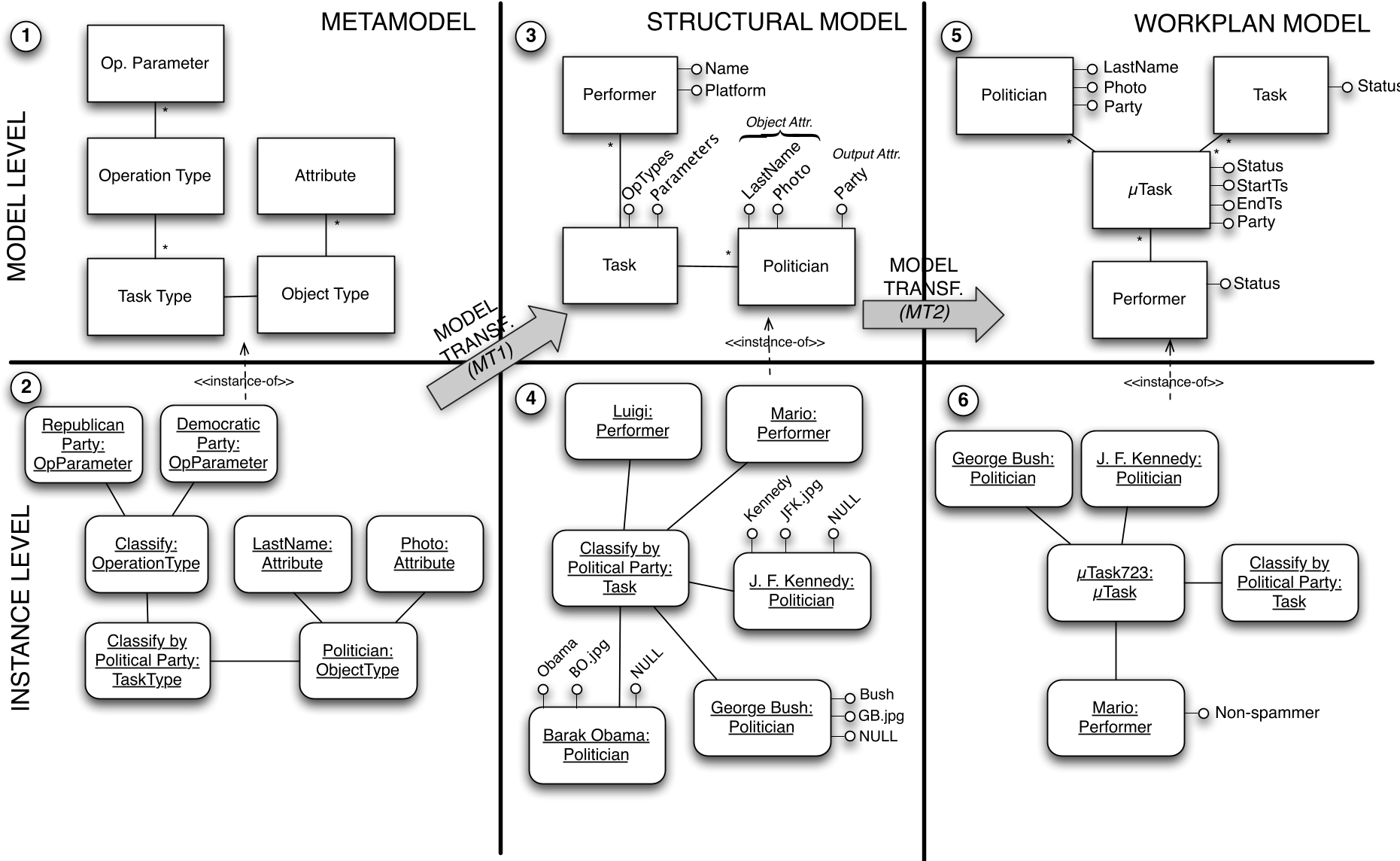
By transforming abstract task definitions into this relational model, the system can monitor "events" (like a task completion) and trigger "rules."
Methodology: Active Rule Programming
The heart of the paper is the Reactive Rule Language. Instead of hard-coding logic, designers write rules like:
- Spammer Detection: "IF a worker’s error rate exceeds 50% after 10 tasks, THEN tag them as a spammer and invalidate all their previous work."
- Dynamic Re-planning: "IF three workers provide different answers for the same image, THEN create two more micro-tasks for that specific image."
Formalizing Stability
A major challenge with rule-based systems is the danger of infinite loops (Rule A triggers Rule B, which triggers Rule A). The authors provide a formal Precedence Graph (PG) to ensure that logic propagates logically—from execution to control, and finally to results—guaranteeing that the system will always reach a termination state.
Experimental Insights: Quality vs. Cost
The team tested their platform, CrowdSearcher, on several real-world tasks, including classifying the political affiliations of Italian MPs.
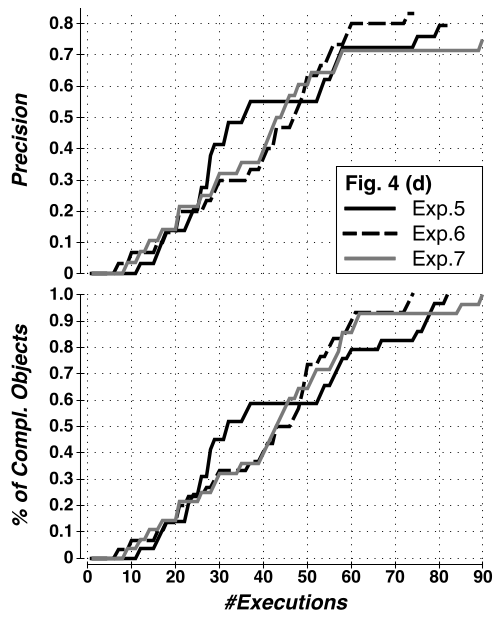
The results revealed the "Early Policy" vs. "Late Policy" trade-off:
- Exp.2 (Early Policy): Closed tasks as soon as three people agreed. This was fast but risky.
- Exp.3 & 4 (Two-stage Re-planning): These rules were more "patient," only closing tasks after verifying agreement across multiple stages. This achieved a high precision of 80%, demonstrating that reactive rules can effectively filter out the "noise" of the crowd.
Critical Analysis & Conclusion
Takeaway
The shift from imperative scripts to declarative reactive rules is a game-changer for industrial-scale crowdsourcing. It allows researchers to experiment with different "control policies" (like different majority thresholds or spammer definitions) by simply swapping out a few lines of rule code without rebuilding the entire application.
Limitations & Future Work
While the ECA framework is powerful, writing these rules still requires significant domain expertise. The next frontier in this research will likely involve automated rule discovery—using machine learning to "learn" the optimal control rules based on early task performance, further reducing the burden on the human requester.
By treating human intelligence as a dynamic, queryable resource, "Reactive Crowdsourcing" paves the way for more reliable and efficient social computation.