
Empowering the Rural Traveler: Why RTPI Needs Community, Not Just Data
Developing a Real Time Passenger Information System for Rural Areas
This paper presents a Real-Time Passenger Information (RTPI) system tailored for rural environments, focusing on mitigating the impact of public transport disruptions. Utilizing a co-design methodology involving 52 interviews and 7 focus groups, the researchers developed a multi-channel solution including a smartphone application and an SMS-based service.
TL;DR
In rural areas, transport disruption isn't just an inconvenience—it's a systemic reality. This paper moves beyond urban-centric "Where is my bus?" apps to develop a co-designed information ecosystem. By integrating SMS-based community chats and crowdsourced passenger data, the researchers address the "digital divide" in rural Scotland and England, turning isolated passengers into a resilient, self-supporting network.
Background: The Urban Bias in Transport Tech
Most Real-Time Passenger Information (RTPI) systems assume a "perfect" environment: ubiquitous 4G/5G, high-frequency services, and robust digital literacy. In rural regions, these assumptions fail spectacularly. With request-only stops, sparse populations, and unreliable mobile signals, traditional RTPI often leaves passengers in the dark.
The authors argue that the lack of information in these areas leads to "exaggerated perceptions of travel time" and high levels of uncertainty. For a rural dweller, missing the last bus of the day isn't just a 15-minute delay; it can mean being stranded for the night.
The Hidden Weapon: Kinship Networks
One of the paper's most profound insights is the role of Kinship Networks. When formal systems fail, rural passengers turn to:
- Strong Ties: Family, close friends, and colleagues.
- Weak Ties: Other passengers or local community members who share travel patterns.
The researchers observed that during the 2010 heavy snowfall in the Scottish Borders, travelers survived the disruption not because of official operator updates, but through "friend-of-a-friend" networks sharing information about local snowplows.
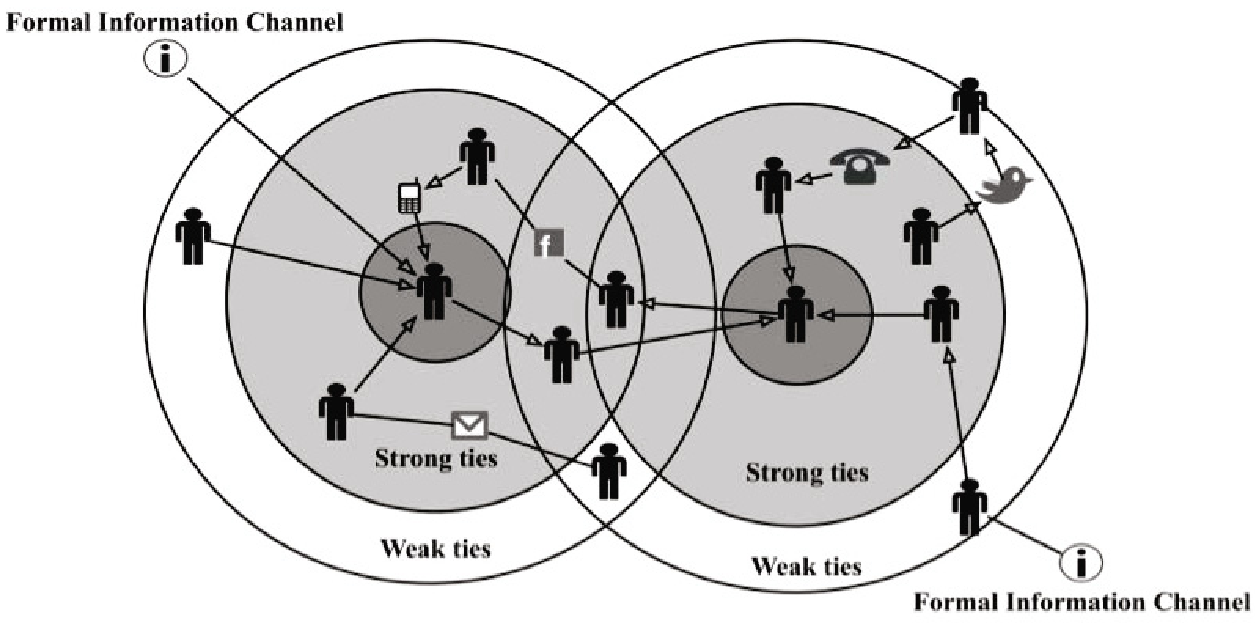 Fig 1: The interplay between formal channels and informal kinship networks during disruption.
Methodology: Co-Design for Real-World Resilience
Instead of building an app in an ivory tower, the team engaged in a rigorous co-design process involving 52 interviews and 7 focus groups in remote areas like the Island of Tiree. This led to a "multi-channel" philosophy:
- Smartphone Apps: For those with data access to validate and crowdsource bus locations.
- SMS Services: Critical for 2G-only areas, enabling ad-hoc group chats for passengers facing the same disruption.
- Community Displays: Public screens for non-personalized info at rural hubs.
The "Loose Fit" Solution
The resulting system is not just a digital timetable. The participants designed an SMS service that initiates discussions among localized users. If a train is cancelled, the system facilitates an ad-hoc community where strangers can organize car-shares.
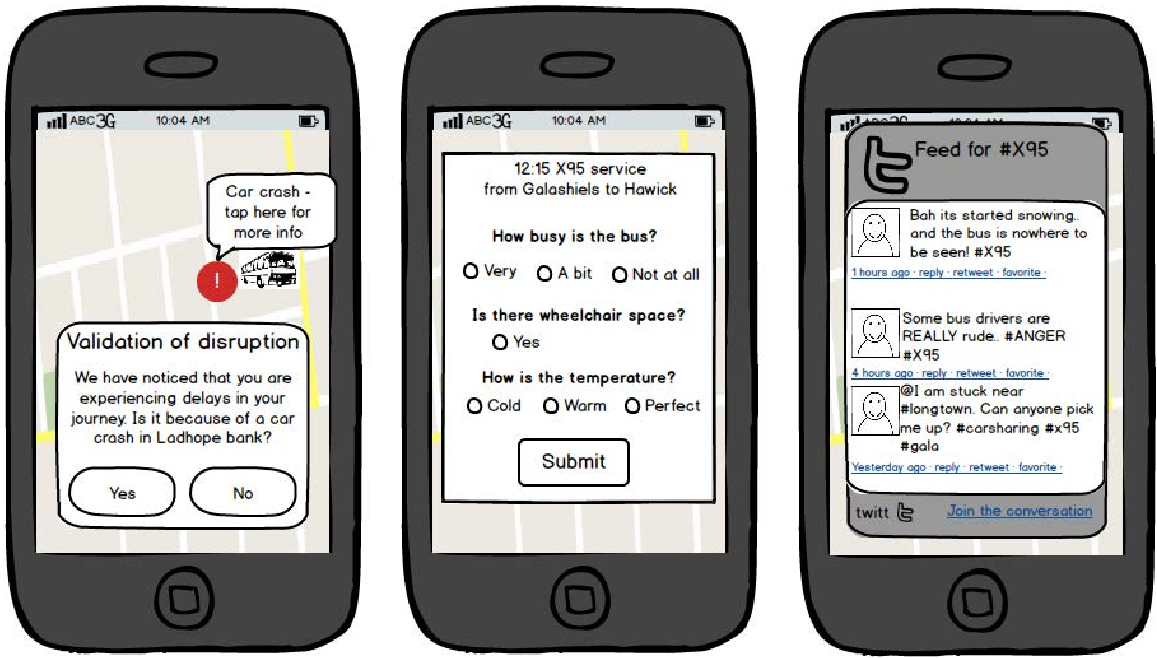 Fig 2: Mock-ups showing user-driven updates and integration with social media platforms like Twitter.
Critical Insight: Who is Most Vulnerable?
The paper highlights that disruption is experienced differently by everyone. While a seasoned rural traveler might stock food for weeks in anticipation of high winds, specific groups remain highly vulnerable:
- Families with young children who cannot wait in the cold.
- Tourists who lack "local knowledge" and kinship ties.
- The mobility-impaired who depend entirely on public transport.
Conclusion: A New Paradigm for Rural Tech
The core takeaway is that information is a social currency. For RTPI to work in rural areas, it must do more than broadcast data—it must facilitate cooperation. By allowing users to validate info, leave comments, and communicate via SMS, the system bridges the gap between official schedules and local reality.
Future Outlook: The project aims to integrate these "social" features into the GetThere RTPI system, moving toward a "Wizard of Oz" style study to see how these interactions change long-term travel behavior.