
Real-Time Teleconsultation: Synchronizing High-Resolution Medical Expertise Across the Wire
Real-time teleconsultation with high-resolution and large-volume medical images for collaborative healthcare
The paper presents a real-time medical teleconsultation system designed for collaborative healthcare, enabling synchronous manipulation of high-resolution and large-volume medical images (MR, CT, CR). The system utilizes a unique bidirectional remote control technology and a dual-channel communication model to achieve sub-10ms latency in limited-bandwidth environments.
TL;DR
This paper introduces a specialized teleconsultation system that allows radiologists and physicians at different locations to collaborate in real-time. By utilizing a custom bidirectional remote control technology and a hybrid TCP/UDP communication model, the system achieves near-instantaneous synchronization (latency <10ms) of cursor movements and image manipulations (zoom, window/level) for large-volume DICOM images, even over bandwidth-constrained networks.
Background: The Gap in Teleradiology
Traditional "Simple Teleradiology" involved merely sending a static image for remote interpretation. However, "Complex Teleradiology"—or Teleconsultation—requires two experts to look at the same 3D volume (MR/CT) or high-res CR image simultaneously.
The authors identified that off-the-shelf application-sharing tools (like Microsoft NetMeeting) were inadequate because:
- Protocol Latency: Standard TCP-based sharing introduces "jumpy" cursor movements.
- Resolution Mismatch: If an expert has a 2K monitor and the referring doctor has 1080p, mouse coordinates don't align.
- Lack of Medical Context: Generic tools don't understand DICOM headers or medical image processing pipelines.
Methodology: The Architecture of Synchronicity
The core innovation lies in the Discrete Event Interpreter and the Hybrid Communication Model.
1. Key vs. Advisory Events
To solve the latency-vs-reliability trade-off, the system categorizes user inputs:
- Key Events (TCP): Commands that change the final state (e.g., opening a new patient, finishing a measurement). These require 100% arrival guarantee.
- Advisory Events (UDP): High-frequency transitory updates (e.g., intermediate cursor positions during a drag, real-time window/level sliding). These are sent via UDP to ensure the "illusion of presence" with zero lag. Out-of-order UDP packets are handled via sequence counters and "frame" markers tied to the last Key Event.
2. Resolution Independence
Rather than sending screen coordinates (e.g., "mouse at pixel 500,500"), the system transmits image-relative coordinates. Combined with continuous zoom (instead of fixed 2x/4x factors), this allows two doctors on entirely different hardware to see the exact same anatomical region highlighted.
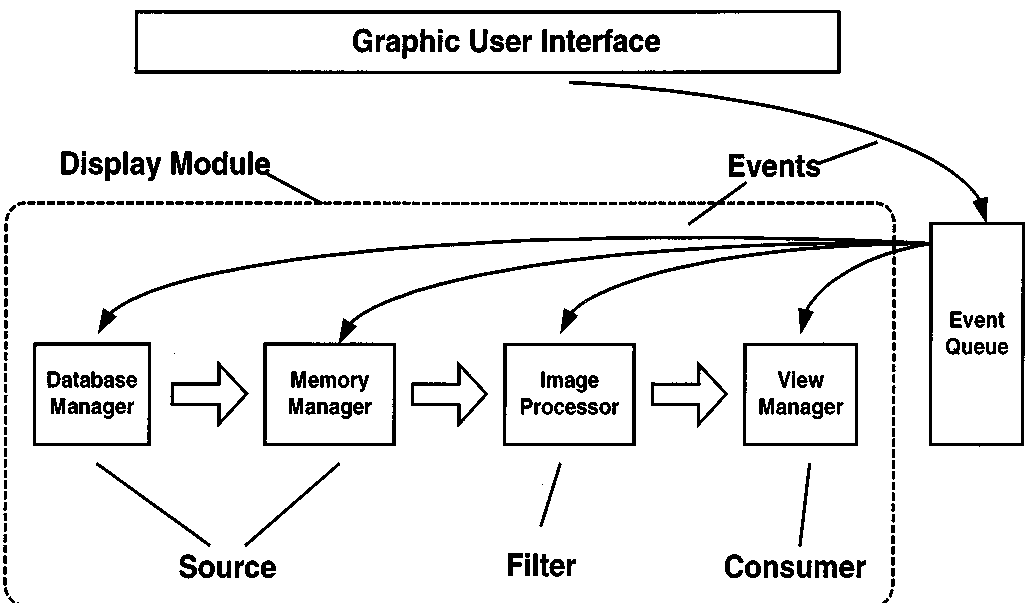 Figure 1: The Image Processing Pipeline driven by synchronized events.
Experiments & Clinical Results
The system was deployed between the UCSF Medical Center and Mt. Zion Hospital.
- Speed & Latency: In lab tests using a 100BaseT LAN, the system achieved a remote cursor delay of <10ms, rendering the lag unperceivable to the human eye. In contrast, NetMeeting lag exceeded 250ms.
- Clinical Efficacy: For a typical session of 4-6 patients (approx. 200 MR images), the preparation and "authoring" phase took roughly 15-20 minutes, mostly automated. The actual consultation matched the speed of in-person reviews while eliminating travel time between hospital sites.
 Table 1: DICOM transfer speeds observed in clinical WAN settings (UCSF to Mt. Zion).
Critical Insight: Why This Matters
The genius of this system isn't just in "moving images faster," but in synchronizing the interpretation process. By recognizing that the act of diagnosis is a flow of "advisory" visual feedback culminating in "key" decisions, the authors created a protocol that mirrors a radiologist's cognitive workflow.
Limitations and Legacy
While groundbreaking for its time, the system required a pre-loading "authoring" phase, which is a bottleneck in emergency (STAT) cases. Modern systems have moved toward zero-footprint web viewers, but the fundamental logic of separating state-critical events from visual telemetry remains a gold standard in remote medical collaboration.
Conclusion
This system proved that cost-effective, real-time teleconsultation is possible by optimizing the software logic rather than just throwing more bandwidth at the problem. It paved the way for modern collaborative healthcare where distance no longer dictates the quality of a second opinion.