
Reanimating Cultural Heritage: Merging Museum Curatorship with Social Media Mashups
Reanimating Cultural Heritage through Service Orientation, Workflows, Social Networking and Mashups
This paper introduces the DISPLAYS architecture and the "Digital Heritage Resource" (DHR) system, which leverages Web 2.0 mashups and RESTful web services to integrate official museum collections (via the ARCO system) with user-generated content from social networks like Facebook, YouTube, and Flickr. The goal is to innovate digital curatorship by allowing source communities, specifically in post-conflict Sierra Leone, to "reanimate" cultural artifacts through personal narratives and 3D visualizations.
TL;DR
The paper presents a paradigm shift in digital heritage from static, museum-controlled databases to a dynamic, user-driven ecosystem. By integrating the ARCO (Augmented Representation of Cultural Objects) system with Web 2.0 staples like Facebook, YouTube, and Flickr, the authors enable communities—specifically those in Sierra Leone—to participate in "digital repatriation." This is achieved through a Service-Oriented Architecture (SOA) that mashes up professional museum data with community-generated media in interactive 3D environments.
Background: Beyond the Museum Walls
Digital curatorship has long been a top-down process. Systems like ARCO were designed for museum officers to manage collections (ACMA tool) behind a firewall. However, cultural heritage belongs to communities, not just institutions. The authors argue that for artifacts to be truly "alive," they must be reconnected to the social fabric and cultural narratives of their people. This requires a transition from isolated "Digital Libraries" to "Digital Heritage Resources" (DHR) that prioritize social networking and knowledge exchange.
The Problem: The Curatorial Gap
Existing solutions often fail because:
- Administrative Barriers: Allowing community members direct access to museum databases poses security and integrity risks.
- Contextual Loss: Without community input, digital objects remain "silent" representations without their intended cultural meaning.
- Static Interaction: Standard web layouts don't provide the "play" or immersion necessary for exploring shared heritage.
Methodology: The "DISPLAYS" Architecture
The core of the solution is the DISPLAYS (Digital Library Services for Playing with Shared Heritage) framework. It moves away from a monolithic application toward a Service-Oriented Architecture (SOA).
1. The Multi-Layer Data Model
The architecture is built on five pillars:
- Content Creation: Data generation.
- Archival Services: Information storage.
- Exposition Services: Transforming information into knowledge.
- Presentation Services: Displaying the knowledge.
- Interaction Services: Facilitating "Play" and user engagement.
2. The Mashup Logic
Instead of building a new social network, the authors use RESTful Web Services to pull data from existing platforms.
- Facebook acts as the "shared interest" hub where discussions happen.
- YouTube and Flickr serve as the "user-generated content" repositories.
- ARCO provides the high-fidelity professional museum data.
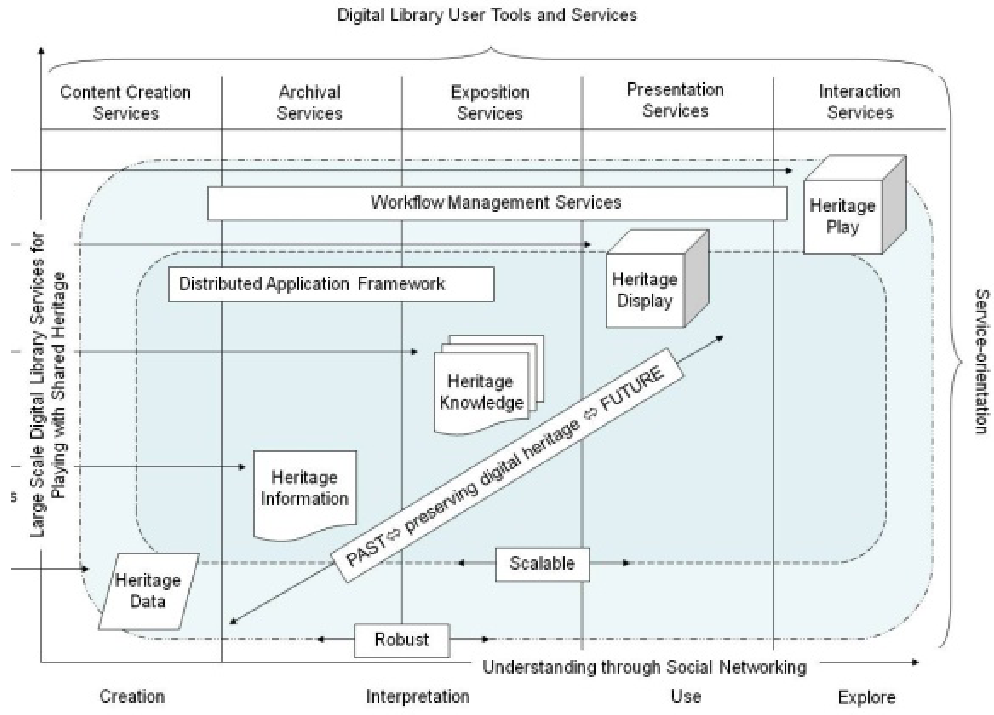 Figure 1: The DISPLAYS services architecture illustrating the workflow from content creation to interaction.
Implementation: Bringing Objects to Life
The authors showcased a prototype where a user searches for a heritage site (e.g., the Parthenon). The system automatically:
- Queries Flickr for images and YouTube for videos.
- Locates the site on Google Maps.
- Injects this media into a 3D Virtual Cube or gallery space.
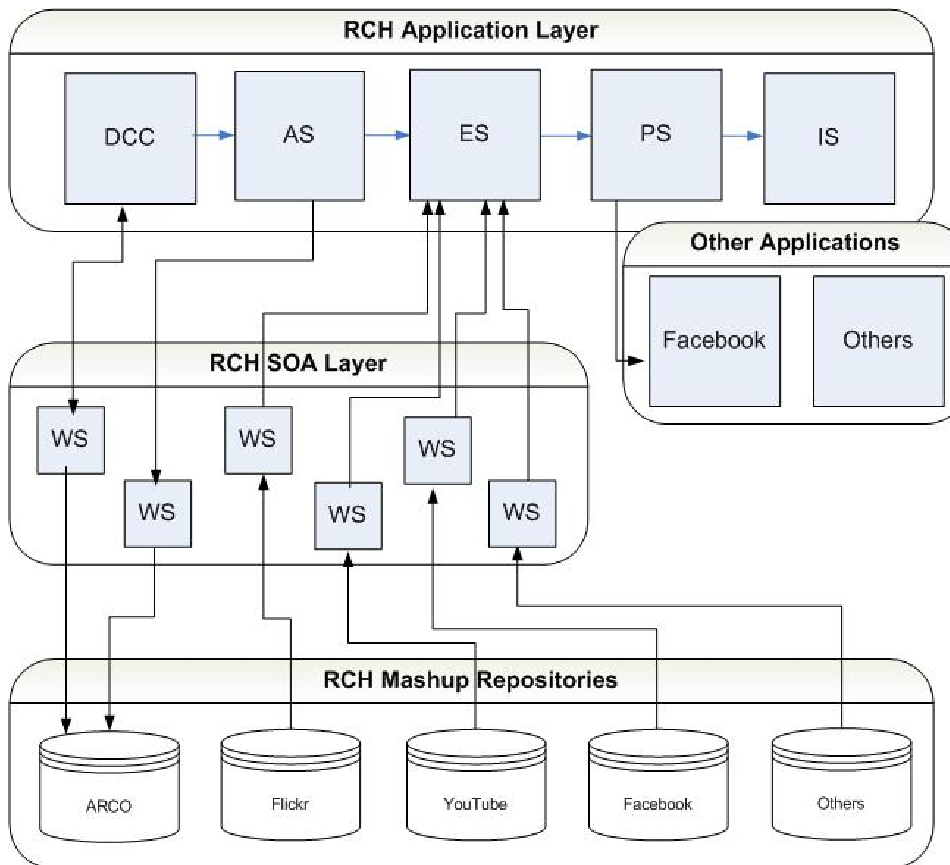 Figure 2: The Service Oriented Architecture (SOA) workflow connecting the DHR user interface with disparate repositories.
Users can "drag and drop" heritage items onto the surfaces of 3D objects, creating a personalized exhibition that can be saved and shared via a dedicated Facebook application. This creates a "Knowledge Network" where professional metadata and community memories coexist.
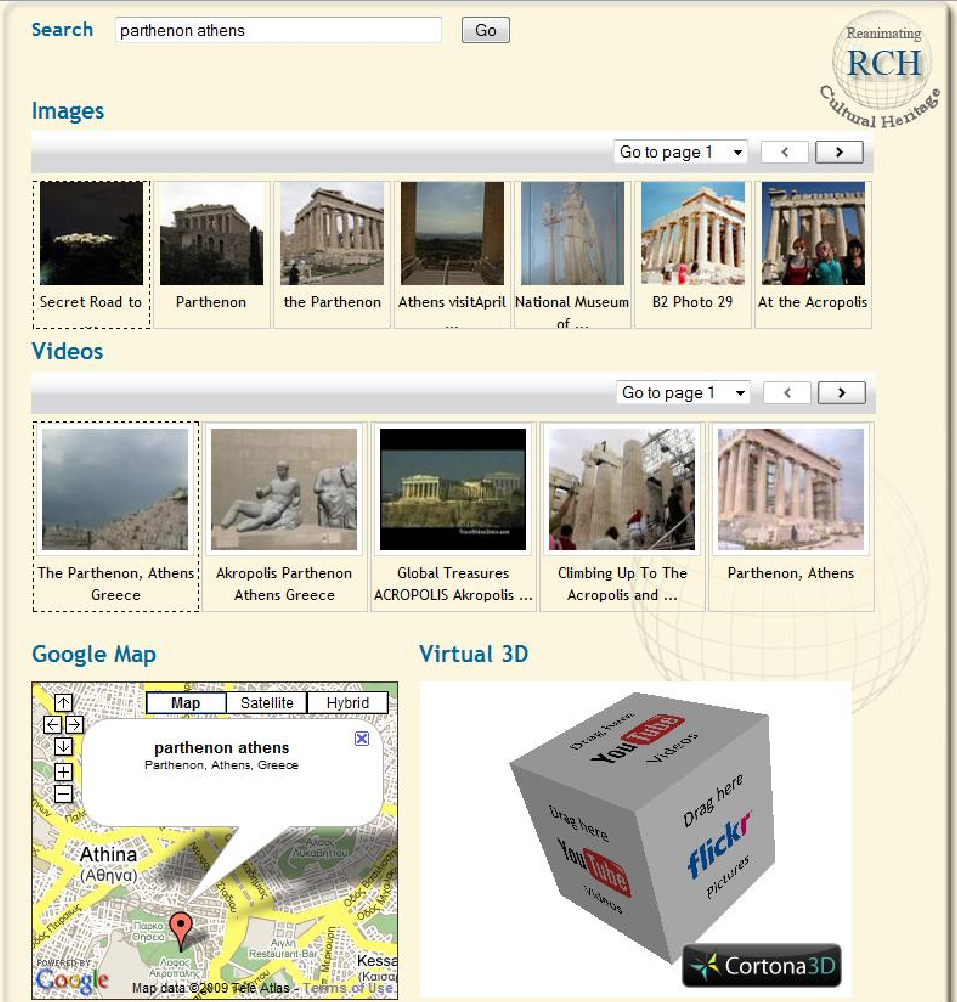 Figure 3: Early prototype showcasing the mashup of media galleries, maps, and a 3D visualization tool.
Critical Analysis & Future Outlook
Takeaways
The brilliance of this work lies in its Service Orientation. By not trying to "replace" Facebook or Flickr, the researchers leverage the existing habits of users. The modularity of the RESTful services means that as new social platforms emerge, they can be integrated into the heritage workflow without rebuilding the entire system.
Limitations
- Data Persistence: If a user deletes a video from YouTube, the virtual exhibition loses that content unless the museum "copies" it for preservation.
- Complexity: Relying on third-party APIs makes the system vulnerable to API changes (a classic challenge of Web 2.0 mashups).
Conclusion
This study provides a roadmap for the "Digital Repatriation" of culture. By allowing communities in Sierra Leone and beyond to curate their own digital narratives using familiar social tools, we move from a world of "captured objects" to one of "shared heritage."