
Reciprocal Crowdsourcing: Creating Living Game Worlds via Blockchain-Enabled Cooperation
Reciprocal Crowdsourcing: Building Cooperative Game Worlds on Blockchain
This paper introduces "Reciprocal Crowdsourcing," a decentralized cooperative model leveraging blockchain to build trustworthy and cooperative game worlds. The authors developed "Cell Evolution," a blockchain-based game on the Nebulas chain, where players contribute individual cell data to collectively shape a global game environment.
TL;DR
The paper introduces Reciprocal Crowdsourcing, a framework that shifts the paradigm of data collection from centralized exploitation to decentralized cooperation. By using blockchain and smart contracts, the authors created Cell Evolution, a game where players' individual efforts merge into a shared, permanent world state. The results show that giving users ownership of their data leads to significantly higher retention (63%+) and more authentic datasets compared to traditional crowdsourcing.
Problem: The Trust Gap in Crowd Intelligence
Crowd intelligence is vital for AI, yet most platforms fail due to three critical flaws:
- Insufficient Motivation: Rewards are often too small to keep workers engaged long-term.
- Data Sabotage: Without transparency, workers may submit "noise" to earn quick rewards.
- Centralized Manipulation: Participants rarely trust the platform owners, who can change rules or hide data at will.
The authors argue that the missing ingredient is Ownership. In current systems, you are a worker; in a Reciprocal system, you are an owner.
Methodology: The Three Pillars of Reciprocal Crowdsourcing
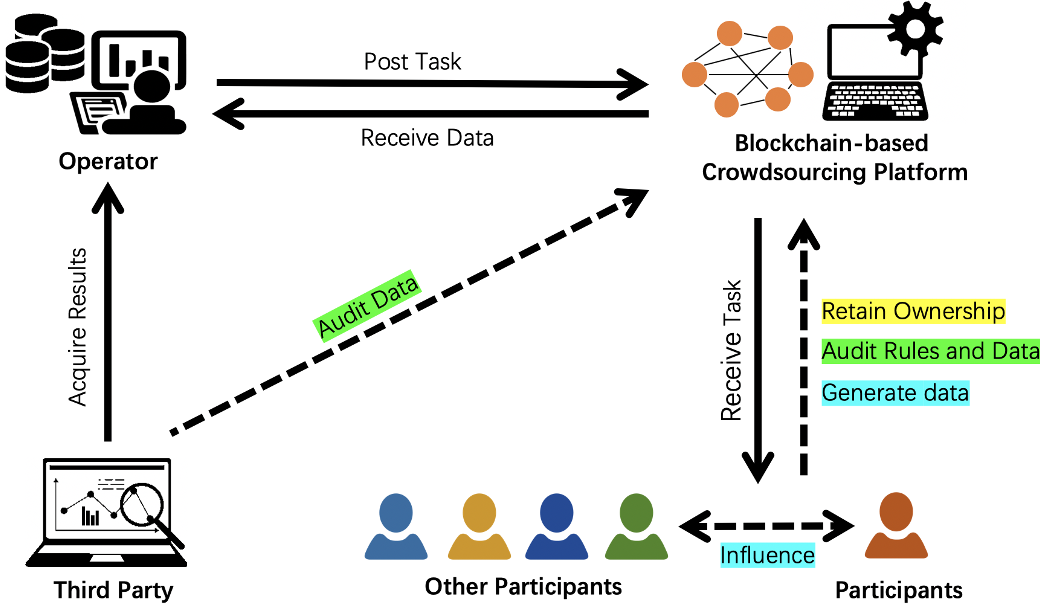
The authors propose a conceptual framework (see Figure 1) that bridges the gap between initiators and participants.
1. Permanent Ownership
Unlike traditional games where items vanish if a server shuts down, assets in this model are tied to a permanent blockchain address. This allows for Asset Portability—other developers can build new games that recognize your existing assets, increasing their intrinsic value.
2. Radical Trust (Smart Contracts)
Rules are not hidden in a server; they are etched into smart contracts. Players can verify exactly how their "Cell" data influences the world's survival. This transparency eliminates the "platform vs. user" adversarial dynamic.
3. Emergent Cooperation
In the Cell Evolution game, every player's "Fusion" (uploading data) affects the global environment. Players can act as "Guardians" (optimizing for survival) or "Destroyers" (uploading toxic cells), turning crowdsourcing into a living social experiment.
Case Study: Cell Evolution
The game requires players to balance Adaptability, Repproductivity, and Survivability.
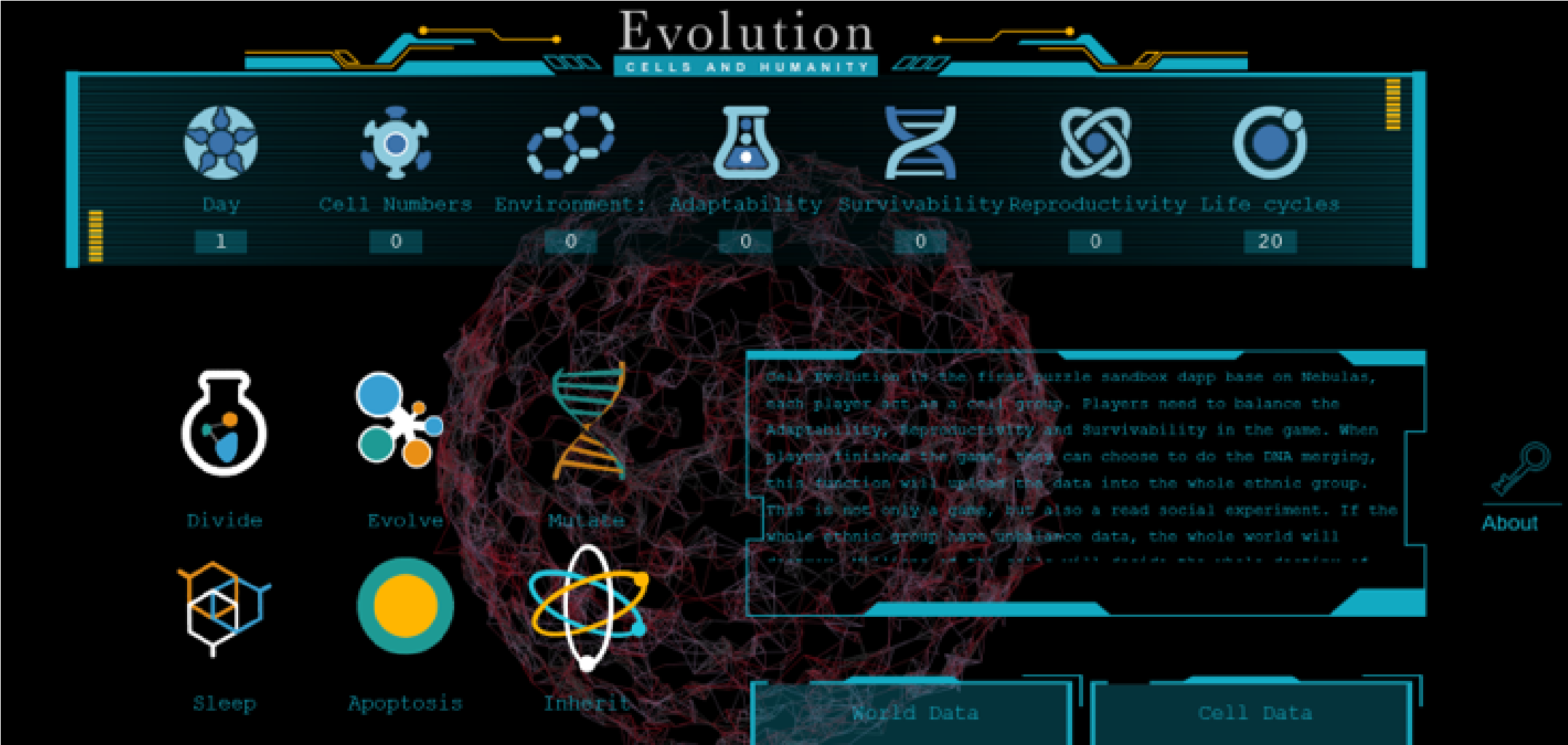
Cell Evolution implements these concepts by allowing players to "sacrifice" or "fuse" their cell's DNA into the world's collective soul. The resulting world data (as shown in the table below) becomes a rich, auditable dataset of human strategic behavior.
| World Data Field | Impact |
|---|---|
| World Adaptability | Determines success rate for all new players |
| External Environment | Hardness level based on previous fusions |
| World Survival Day | The collective "score" of the crowd |
Results & Insights
The experiment tracked 331 players and 1,684 cell groups.
- Polarized Performance: Most cells survived less than 15 days, but an "Elite" group pushed past 90 days, mirroring distribution patterns in complex social systems.
- High Engagement: Despite having to pay "Gas" fees (real value) to upload data, nearly 2/3 of players participated multiple times. This is a massive victory for crowdsourcing motivation.
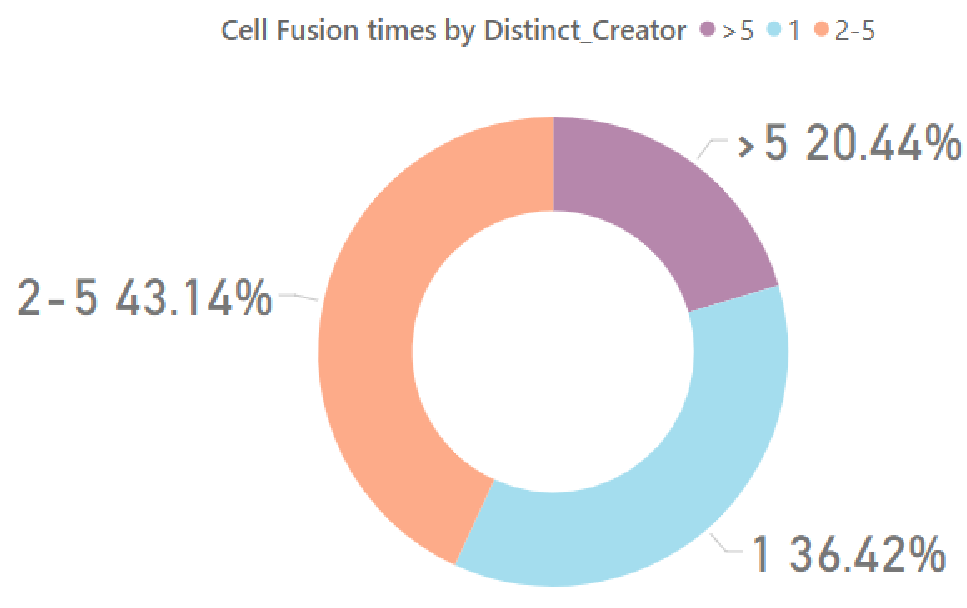
The resulting 147 unique worlds (visualized in Figure 8) offer a template for "Small Society" modeling that is more organic and authentic than synthetic data generated by current neural networks.
Critical Analysis & Future Outlook
The paper successfully demonstrates that Blockchain is not just about finance; it is about social architecture.
Strengths: The transition from extrinsic (money) to intrinsic (impact/ownership) motivation is a significant leap for the field of crowd intelligence.
Limitations: The study notes the difficulty in quantifying these motivational effects. Additionally, high gas fees on certain blockchains could act as a barrier to entry for more massive scaling.
Takeaway: Future AI training platforms should stop viewing users as "labelers" and start viewing them as "co-owners" of the model's evolution. This research provides the technical and social blueprint for doing exactly that.