
The Self-Disclosure Spiral: How Social Media Rewires Our Openness
The reciprocal effects of social network site use and the disposition for self-disclosure: A longitudinal study q
This longitudinal study examines the reciprocal relationship between Social Network Site (SNS) use and the psychological disposition for self-disclosure. Utilizing structural equation modeling on a two-wave panel of 488 users, it establishes a "reinforcing spiral" where SNS use and disclosure tendencies mutually enhance each other, mediated by social capital.
TL;DR
Is Facebook changing your personality, or are you just using it because of who you are? According to this longitudinal study, the answer is "both." Researchers Sabine Trepte and Leonard Reinecke demonstrate a reciprocal loop: people prone to sharing use social media more (Selection), and high usage makes people even more prone to sharing (Socialization)—but only if they feel rewarded with Social Capital.
Academic Context: This paper marks a shift from "simple effects" models to dynamic, longitudinal models in media psychology, positioning Social Network Sites (SNSs) as environments that actively socialize users toward higher transparency.
Problem & Motivation: The Chicken or the Egg?
Communication scholars have long debated whether social media attracts "open" individuals or if the platforms themselves force us to become more open. Previous studies were often cross-sectional, providing a snapshot but failing to show the direction of change over time.
The authors' core insight was that the lack of non-verbal cues in digital spaces requires users to "over-disclose" to maintain relationships. This behavior isn't static; it is driven by a reinforcing spiral. If you share and receive support (Social Capital), you are socialized to share more.
Methodology: Mapping the Spiral
The researchers conducted a two-wave panel study with 488 participants over six months. They focused on three pillars:
- SNS Use Frequency: How often users engage.
- Disposition for Self-Disclosure: The internal willingness to share deep thoughts (e.g., "My deepest feelings").
- Bonding Social Capital: The perceived emotional support and resources gained from the network.
The team used Structural Equation Modeling (SEM) to test cross-lagged effects, essentially checking if T1 (Wave 1) variables could predict T2 (Wave 2) changes.
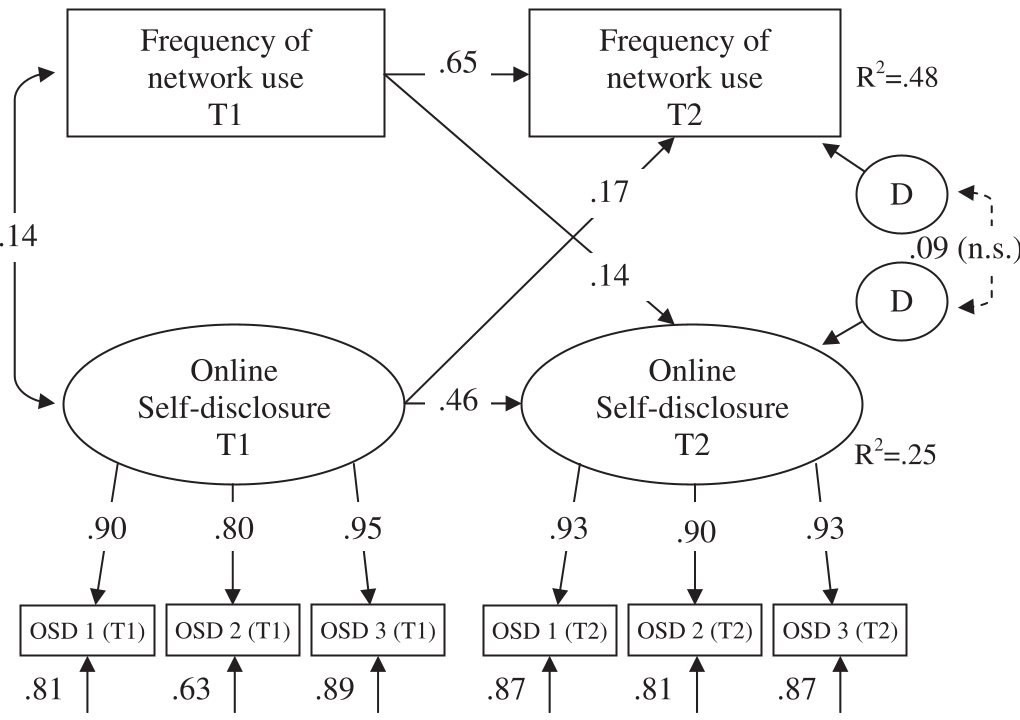 Figure 1: The two-group structural equation model comparing High vs. Low Social Capital groups.
Key Results: Reward or Bust
The findings were striking in their specificity:
- The Selection Effect: Users with a high initial disposition for disclosure used SNSs more frequently six months later (β = .17), but only if they were part of the "High Social Capital" group.
- The Socialization Effect: Frequent SNS use increased the internal disposition to disclose over time (β = .14), again, exclusively for those receiving social rewards.
- The "Cold" Group: For users who did not gain social capital, the spiral never started. Their usage did not change their personality, and their personality did not drive increased usage.
 Table 1: Descriptive statistics showing the high baseline of SNS use (Mean = 5.70 on a 6-point scale) and the correlation between variables.
Critical Analysis & Conclusion
This study offers a sophisticated look at why "digital natives" seem more comfortable with public intimacy. It isn't just a generational preference; it's a socialized adaptation.
Takeaway
Social media platforms act as "psychological workshops." By providing immediate social capital (likes, comments, support) in exchange for personal data, platforms effectively train the user's psyche to value disclosure over privacy.
Limitations & Future Work
- Sample Bias: The study used a German sample with high baseline usage (74.7% daily users), which might represent "power users" more than the general public.
- Measurement: Usage was measured by a single item (frequency), which doesn't capture the quality of interaction (e.g., scrolling vs. posting).
- Emerging Tech: Modern AI-driven algorithms (like TikTok's For You Page) might accelerate this spiral even faster than the Facebook/StudiVZ-era networks studied here.
Ultimately, Trepte and Reinecke prove that self-disclosure isn't just something we do on social media—it's something social media does to us.