
Recognizing Sentiment in the Classroom: How ITSPOKE Deciphers Student Emotions
Recognizing student emotions and attitudes on the basis of utterances in spoken tutoring dialogues with both human and computer tutors
This study investigates the automatic recognition of student emotional states (negative, neutral, positive) in spoken tutoring dialogues using the ITSPOKE system. By integrating acoustic-prosodic features and lexical data, the researchers achieved significant improvements in emotion prediction accuracy across both human-human and human-computer interaction corpora.
TL;DR
Researchers at the University of Pittsburgh have bridged the gap between affective computing and educational technology. By analyzing how students speak (prosody) and what they say (lexicon), the ITSPOKE system can now predict whether a student is frustrated, confident, or neutral with accuracy levels reaching up to 79%, paving the way for computers that "care" about student success.
Background: The Affective Gap in Tutoring
Human tutors are masters of nuance; they don't just hear an answer—they hear the hesitation in a student's voice. Traditional Intelligent Tutoring Systems (ITS) are "tone-deaf," treating every "I don't know" the same way. This paper addresses the core motivation that learning is intrinsically emotional. If a system can't tell the difference between a confident "Zero" and a confused, questioning "Zero?", it can't provide the right pedagogical scaffolding.
Methodology: The Anatomy of a Student Turn
The researchers didn't just look for keywords. They dissected student speech into 12 distinct acoustic-prosodic features and merged them with lexical items (the actual transcript).
1. Feature Extraction
- Acoustic-Prosodic: Fundamental frequency ( for pitch), RMS amplitude (energy), duration of the turn, and "prepause" (the silence before a student speaks).
- Lexical: A "bag-of-words" approach tracking terms like "um," "uh," and physics-specific terminology.
- Identifiers: Tracking the specific student and problem to account for individual personality quirks.
2. The Machine Learning Pipeline
The study employed AdaBoostM1 (Boosted Decision Trees) to classify turns. Crucially, they compared two perspectives:
- Agreed Data: Turns where two human annotators agreed on the emotion.
- Consensus Data: All turns, including "borderline" cases resolved by discussion.
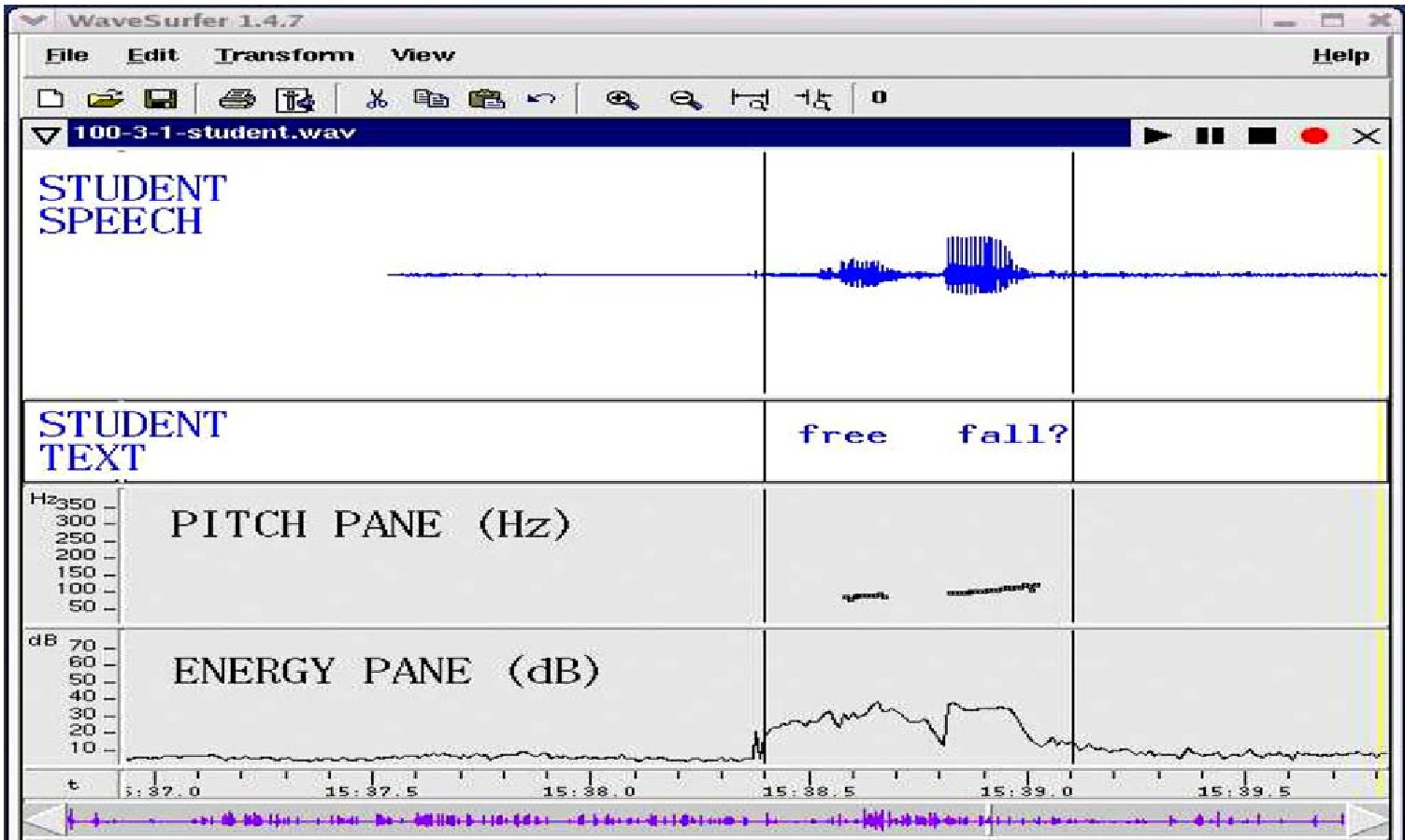 Fig 1: Visualization of pitch and energy contours used for feature extraction.
Key Results: What Makes a Negative State?
The study revealed a fascinating hierarchy of signals:
- Temporal Features are King: "Duration" was the single most powerful prosodic predictor. Specifically, longer student turns and longer pauses before acting were high-probability indicators of a Negative state (uncertainty or confusion).
- Lexical Power: In human-human dialogues, "hedging" words like uh and well were strong emotion markers. Interestingly, in human-computer dialogues, these vanished, replaced by domain-specific words (e.g., increase, gravity).
- The "Ideal" vs. The Real: Prediction was significantly easier in human-human dialogues (79%) than human-computer ones (68%), likely because students are more expressive with other humans.
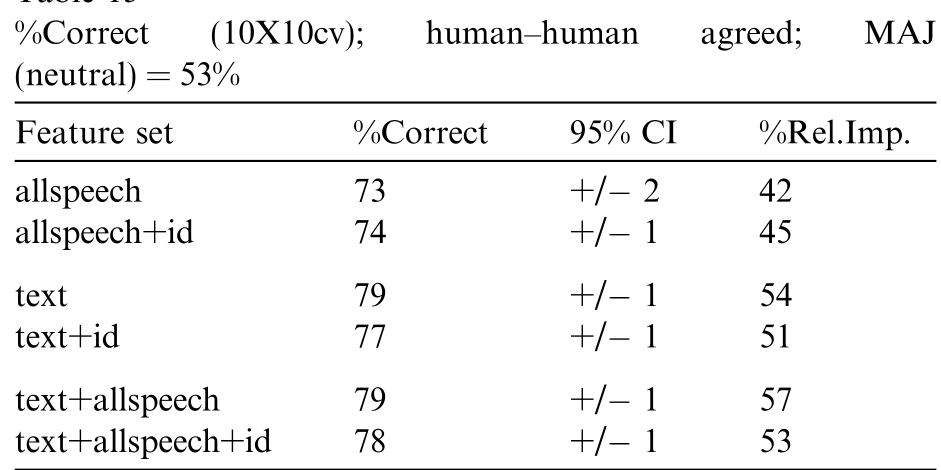 Fig 2: Comparison of feature sets (Acoustic vs. Lexical) for the Human-Human corpus.
Deep Insight: Why Lexical Features Outperform Prosody
A standout finding was that Lexical features (Text) often outperformed Acoustic features. While we might think "tone" is everything, the specific words a student chooses to hedge or grounding phrases (yeah, ok) provide a crystalline map of their internal certainty. Even when the speech recognizer (ASR) made errors, the lexical model remained surprisingly resilient.
Conclusion and Future Outlook
This work proves that emotion recognition is feasible in tutoring, but it highlights a critical challenge: Domain Dependence. A frustration-detector for a travel agent system won't work for a physics tutor because "the way" and "the words" used to express confusion are task-specific.
The Next Frontier: The authors are now moving toward "Adaptation"—the system's ability to not just see the emotion, but to respond to it—perhaps by offering more encouragement when it detects the specific acoustic signature of confusion.