
Seeing Connections: Revolutionizing Friend Suggestions via Face Recognition
Recommending New Links in Social Networks Using Face Recognition
The paper introduces an experimental algorithm for social network link recommendation utilizing face recognition on shared photos (e.g., from Flickr and Facebook). It automates friend suggestions by identifying unknown faces in images where a known user is present, achieving a 40% success rate in finding new valid contacts without generating false positives.
TL;DR
New users on social networks often face the "cold start" problem—having too few connections to enjoy the platform. This paper proposes a remedy by moving beyond text-based suggestions. By analyzing photos on services like Flickr and identifying users through face recognition, the authors' algorithm suggests new, highly relevant contacts with a surprising 0% error rate in their tests.
Academic Positioning: This work represents an early-stage experimental bridge between Computer Vision (CV) and Social Network Analysis (SNA), focusing on "Visual Social Context" rather than traditional metadata.
The Problem: The Inefficiency of Textual Links
Current recommendation engines predominantly "read" your profile: your hometown, your alma mater, or your email contact list. However, these often lead to "wrong" suggestions—people you might know of, but aren't actually friends with.
The authors argue that images contain dormant social data. If you are in a photo with Person B, there is a high physical-world probability that you know them, even if you share no mutual text-based interests.
Methodology: From Pixels to Social Links
The system follows a multi-stage pipeline designed to minimize computational overhead while maximizing accuracy.
1. The Recognition Architecture
The authors explored a "Two-Service" model (using WaldBoost for detection and Betaface for recognition) but ultimately found that a single complex service (Betaface) was more efficient for data transfer when faces were present.
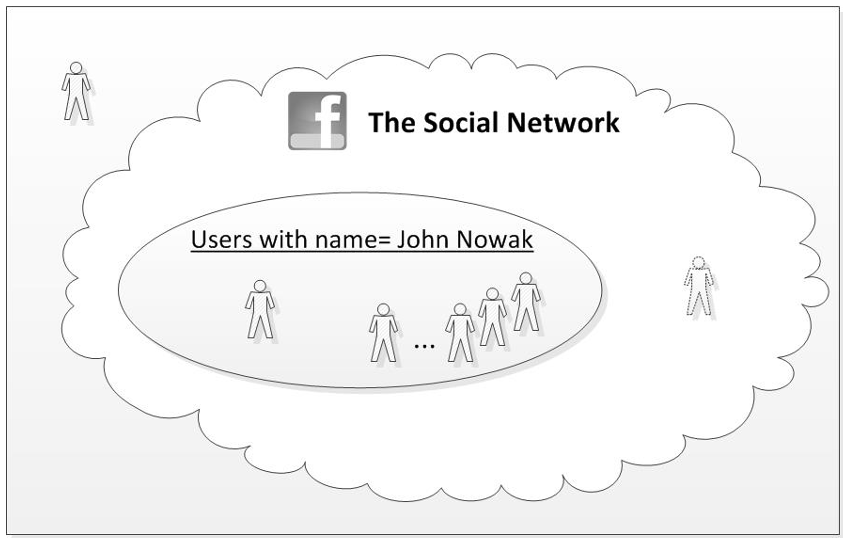 Fig 1: The strategy of narrowing the search space from the entire Facebook population to a specific subset based on image tags.
2. The Logic Flow
- Identification: The system identifies User A (the app user) in a photo.
- Extraction: It detects an unknown Face B in the same photo.
- Verification: It checks User A's current friend list. If Face B isn't there, it searches the social network using names found in the photo's metadata/tags.
- Matching: It compares the detected Face B with the profile pictures of the search results.
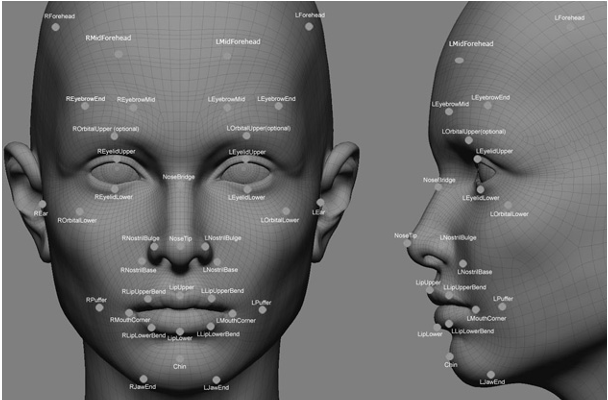 Fig 2: Critical facial points used by recognition algorithms to ensure identity matching.
Experimental Insights
The research tested two main variables: the robustness of the face recognition service and the effectiveness of the suggestion algorithm.
Performance Metrics
- Recognition Robustness: The Betaface service reached a 58% success rate. It struggled significantly with "sharp angles" (profiles) but was remarkably resilient to varying lighting conditions.
- Link Accuracy: Out of 20 test images, the algorithm found 10 potential new contacts. It correctly identified and suggested 4 of them.
| Metric | Result |
|---|---|
| Correct Suggestions | 4 |
| Incorrect Suggestions | 0 |
| Latency per Image | 2-5 Seconds |
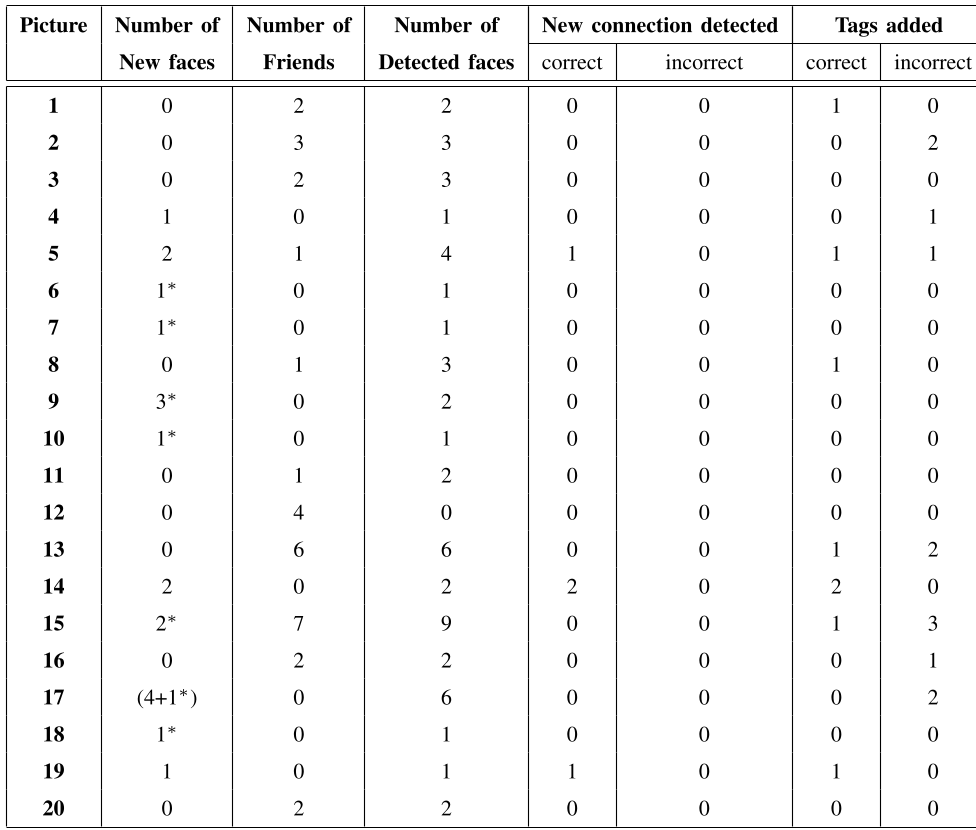 Table 1: Detailed breakdown of detection vs. correct identification across 20 test cases.
Critical Analysis & Future Outlook
Why it works: By limiting the search set to names found in tags (Fig 1), the algorithm avoids the "needle in a haystack" problem of searching billions of faces globally.
Limitations:
- The "Profile" Problem: Current algorithms fail when faces aren't looking directly at the camera (situations 9-11 in the paper).
- Legal Hurdles: Automated face recognition faces strict regulatory scrutiny (GDPR/EU law), which currently limits real-world deployment.
- Tag Dependency: The system currently relies on the presence of names in metadata to narrow the search.
Takeaway: This research proves that visual co-occurrence is a "gold mine" for social graphs. As face recognition moves toward 3D modeling and better pose invariance, these "Visual Friend Suggestions" will likely outperform current text-based models in accuracy and relevance.