
CP-SMA: Solving the Cold-Start Problem in City-Scale Social Event Recommendations
Recommending Venues Using Continuous Predictive Social Media Analytics
This paper introduces Continuous Predictive Social Media Analytics (CP-SMA), a framework combining deductive and inductive stream reasoning to recommend venues during city-scale events. By integrating semantic user profiling (U-Sem) with Statistical Unit Node Set (SUNS) matrix factorization, the system produces high-quality venue recommendations even when initial preference data is extremely sparse.
TL;DR
Predicting where people will go during a massive, week-long city event is a nightmare for traditional AI because previous years' data is useless and current data is too sparse. The Continuous Predictive Social Media Analytics (CP-SMA) system solves this by combining real-time "Social Listening" with semantic "Visitor Modeling" and a robust matrix factorization method (SUNS) that thrives on sparse data.
The Dynamic Event Dilemma
Imagine the Milano Design Week: 500,000 visitors, 1,000+ events, and hundreds of temporary venues. Traditional recommendation engines die here for three reasons:
- Data Obsolescence: Last year's "hot" venue might be a parking lot this year.
- Semantic Flux: A bar might suddenly become a high-tech showroom for 5 days.
- The Sparking Link Problem: In the first two days, you have almost zero visitor-history. How do you recommend a venue to "Alice" if she has only checked in once?
Methodology: Deductive + Inductive Reasoning
The researchers proposed a dual-layered approach to handle the "stream" of social data (primarily Twitter/Foursquare).
1. The Social Listener (Deductive)
The system uses a "Social Listener" to link tweets to physical venues using regular expressions and spatial bounding boxes. It filters "noise" (stop words, event-specific jargon) to identify which venues are currently trending.
2. The Visitor Modeler (Semantic Enrichment)
Instead of just looking at event check-ins, the Visitor Modeler (VM) crawls the user's history and uses DBpedia Spotlight to extract semantic interests (e.g., "stylish tablets," "modern lighting").
3. The Recommender (Inductive)
The core is the Visitor-Venue Recommender (VVR). It uses SUNS (Statistical Unit Node Set), a matrix factorization approach. Unlike standard SVD, SUNS uses regularization to prevent overfitting and handles the high-dimensional, sparse matrix of visitors and venues more gracefully.
 Figure 1: The CP-SMA architecture showing the flow from social streams to semantic profiles and final recommendations.
Experimental Breakthroughs
The team tested their system against several baselines:
- Random: A basic sanity check.
- MostTalked: Recommending only what is popular right now.
- SVD: Standard Singular Value Decomposition.
Performance Highlights:
- Robustness: As shown in the performance graphs, SUNS's accuracy (nDCG@all) continued to improve as the number of latent variables increased, while SVD's performance peaked early and then crashed due to sensitivity.
- Early-Stage Success (Day 3): Even with only 50% of the event data available, the combination of SUNS + Visitor Profiles + MostTalked provided the most accurate predictions. This proves that global popularity ("MostTalked") is a vital fallback when personal data is sparse.
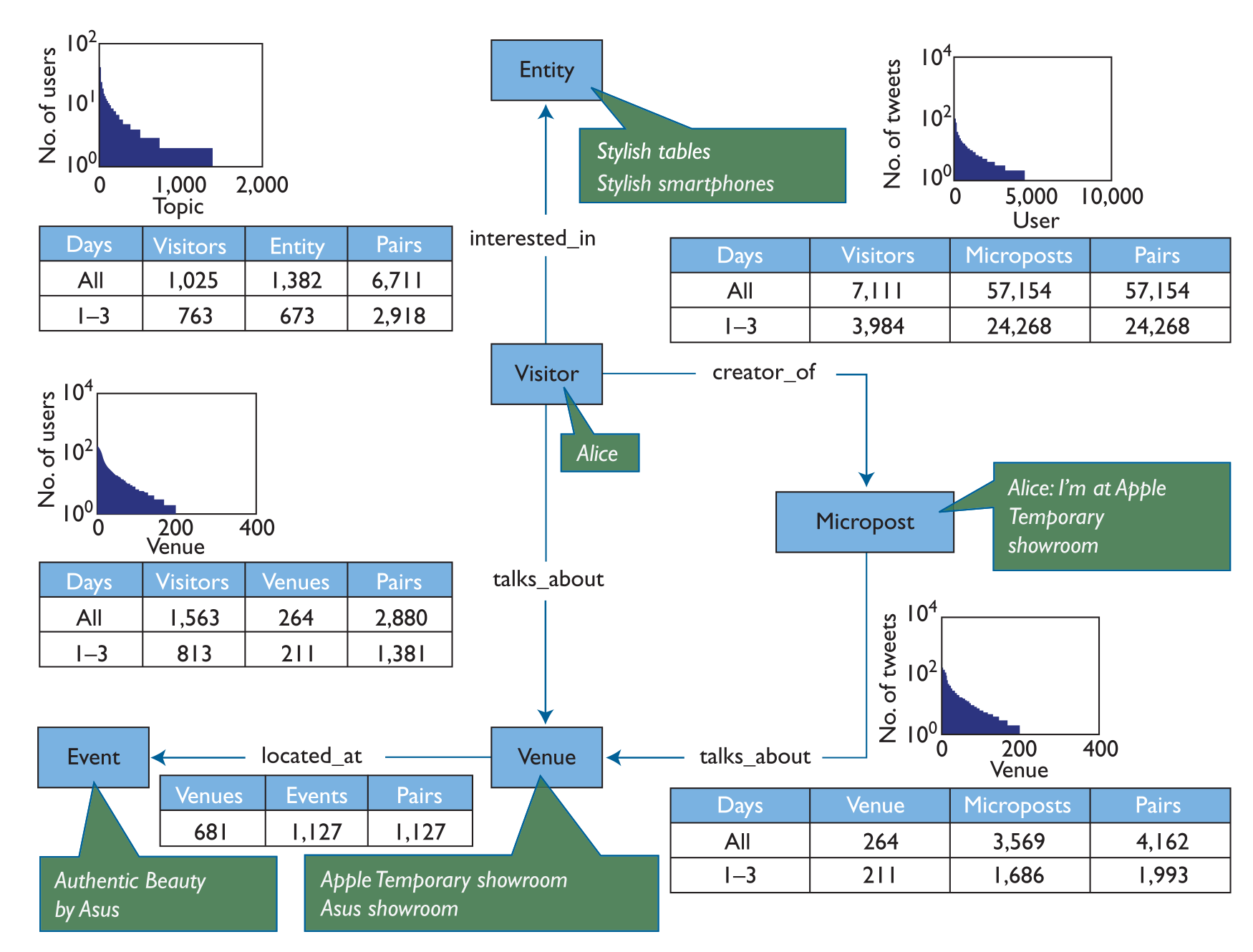 Figure 2: Performance (nDCG@all) comparison. SUNS Pro shows superior stability and accuracy compared to standard SVD as the model complexity increases.
Critical Insights & Takeaways
The brilliance of CP-SMA lies in its hybrid nature. It doesn't just rely on raw numbers; it treats the "visitor-venue" relationship as a living graph.
- Why SUNS? Standard matrix factorization often fails when the matrix is 99% empty. SUNS's inductive bias allows it to "generalize" from the few links it has by observing global trends.
- Semantic Power: By knowing Alice likes "electronics" (from her historical tweets), the system identifies the Asus showroom as a match even if no one else she knows has visited it yet.
Limitations & Future Work
The system still relies heavily on manual tuning for regular expressions in the Social Listener. Future iterations could benefit from Large Language Models (LLMs) to automate the mapping of colloquial social media posts to structured venue entities without human-defined rules.
Conclusion
CP-SMA demonstrates that for city-scale events, the key to recommendation isn't just "more data," but better context. By linking real-time social streams with deep semantic profiles, we can predict the pulse of a city in real-time.