
GALEN: Bridging the Abyss Between Formal Logic and Clinical Reality
Reconciling users' needs and formal requirements: issues in developing a reusable ontology for medicine
This paper presents the GALEN project's methodology for building large-scale, reusable medical ontologies using Description Logics (DL). It introduces the GRAIL representation language and a multi-layered architecture featuring "Intermediate Representations" and "Perspectives" to bridge the gap between formal logic and clinical utility.
TL;DR
Developing a reusable medical ontology is a "Grand Challenge" because formal logic is often incomprehensible to clinicians, while clinical needs are too messy for rigid logic. The GALEN project solves this by treating Description Logic as a hidden "assembly language." By using Orthogonal Taxonomies, Transitive Reasoning, and Natural Language Generation, they created a system that is both mathematically rigorous and practically useful for doctors.
The Paradox of Medical Knowledge
In medical informatics, we face a paradox: the more generic and "reusable" a representation is, the harder it is to use for any specific task.
Traditional medical coding systems like ICD-9/10 are often inconsistent. They rely on "human intuition" rather than explicit logic. For example, a "heart valve cusp" is anatomically a part of the "heart," but in many old systems, the hierarchy is so tangled that the software can't automatically deduce that a disorder of the valve is a disorder of the heart without hard-coding every possibility.
Methodology: The GALEN Strategy
The authors propose four pillars for a successful medical ontology:
1. Description Logic as "Assembly Language"
Clinicians shouldn't look at raw logic. GALEN uses Intermediate Representations—simplified interfaces that experts interact with—and Perspectives, which filter and transform complex logic into specific views for different applications (e.g., electronic health records vs. billing).
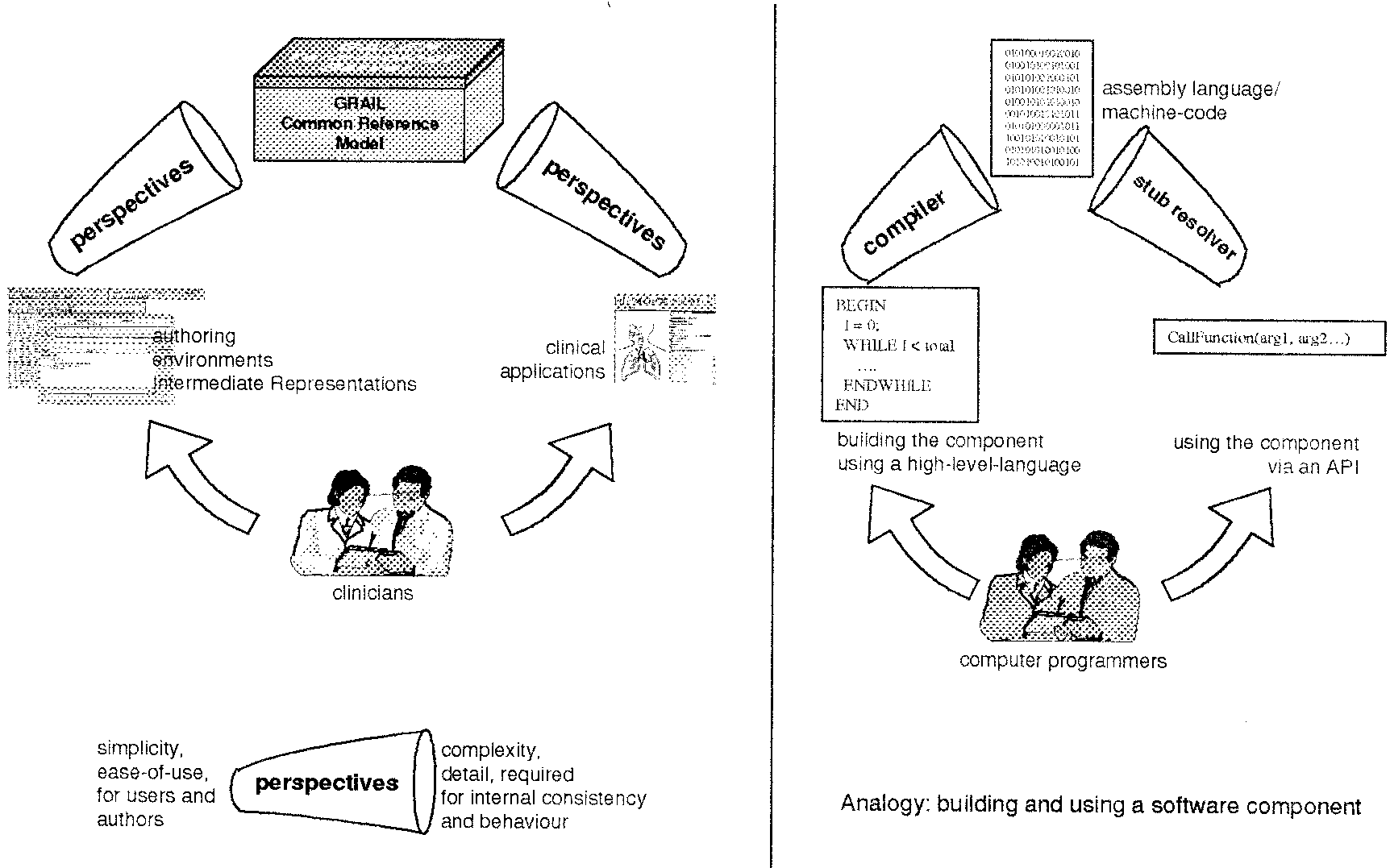 Figure 1: The architecture linking clinical experts to applications via intermediate representations and perspectives.
2. Natural Language Generation (NLG)
Since doctors don't read Description Logic, the system must generate human-readable English (or French, Dutch, etc.) from the codes. This isn't just for display; it's for Quality Assurance. If the logic says something nonsensical, it becomes immediately obvious when translated into a "pedantic" sentence like "Surgical reshaping of the ulna using a fixation device."
3. Orthogonal Taxonomies
To avoid the "tangled hierarchy" mess, GALEN enforces a rule: elementary concepts must be organized into separate, disjoint trees (e.g., Biology, Geography, Activities). Complex concepts are then built by linking these trees. This makes the ontology modular; you can update the "Anatomy" tree without breaking the "Social Roles" tree.
4. Handling Transitivity (Part-Whole Reasoning)
The most significant technical contribution is the handling of Transitivity. In medicine, if a patient has a "fracture of the distal radius," they have a "fracture of the radius." The logic must support this automatically. GALEN introduced the specialisedBy schema to allow relations to "propagate" through parts.
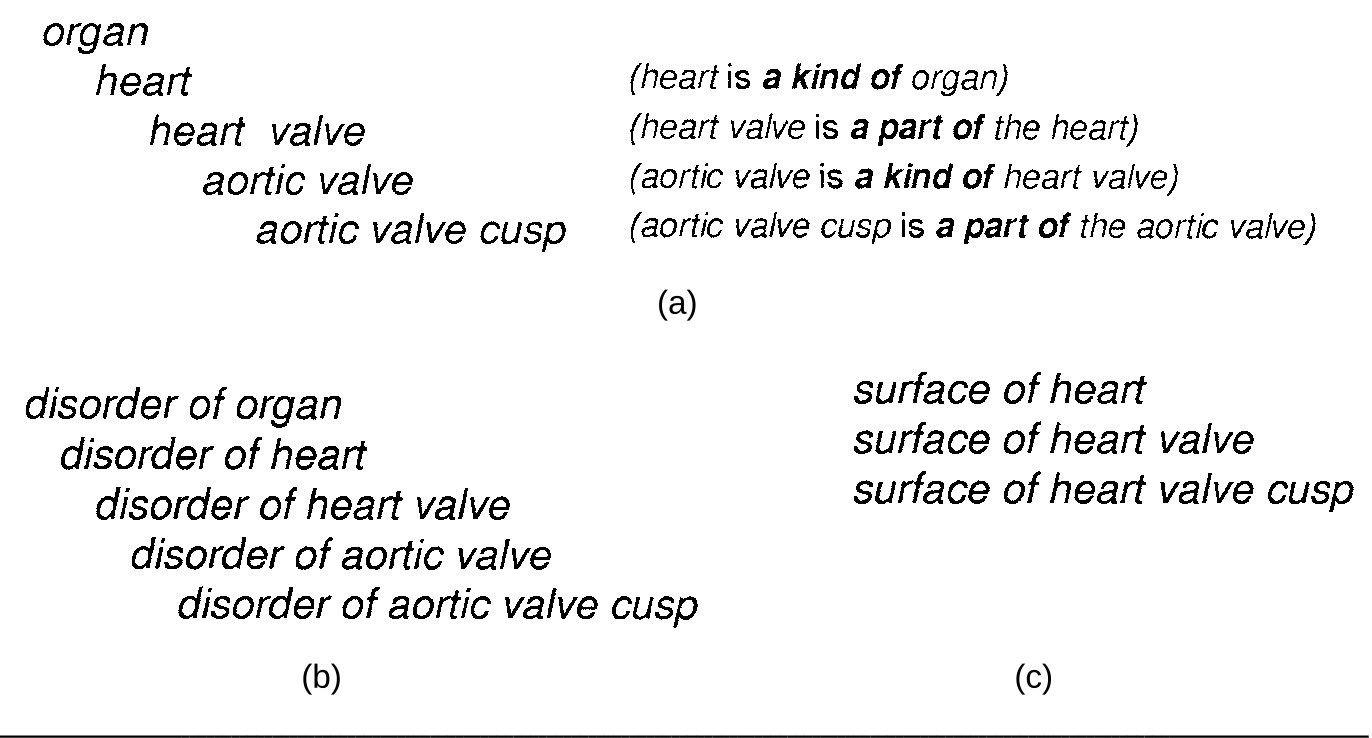 Figure 2: Distinguishing between Kind-of and Part-of hierarchies to ensure correct medical inference.
Experimental Evidence of Impact
The results of this structured approach were transformative for the project:
- User Training: Before the intermediate layer, it took "Druids" (specialized logic experts) 3-6 months to learn the system. After the change, experts could be productive in days.
- Error Detection: Using NLG, clinicians identified that 15% of candidate rubrics were ambiguous or incorrect.
- Interoperability: The system successfully mapped different European surgical classifications into a single Common Reference Model, proving that localized terminologies can coexist within a global semantic framework.
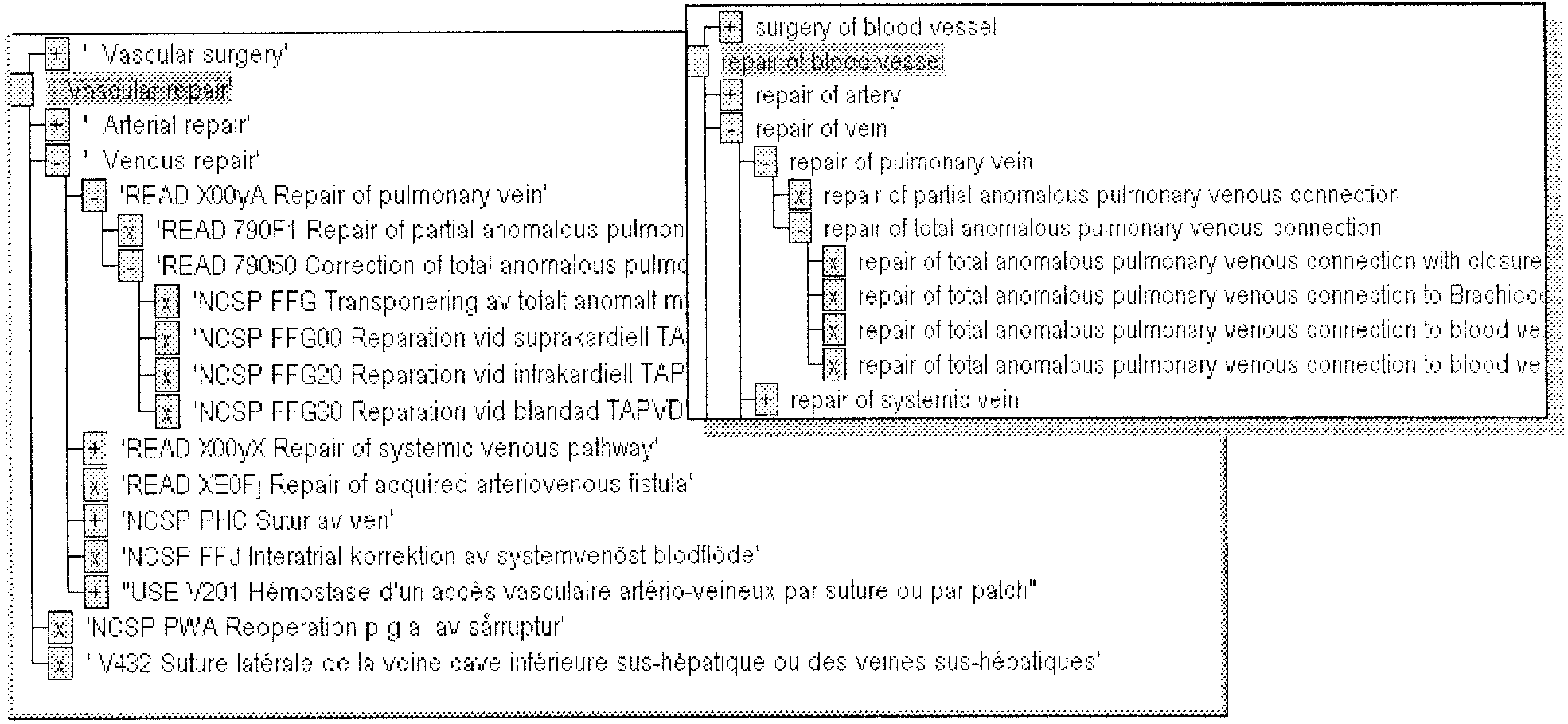 Figure 3: Example of mapping different international surgical codes to the GALEN reference model.
Depth Insight & Conclusion
The genius of the GALEN project is the realization that modularity requires explicitness. By forcing clinical knowledge into orthogonal taxonomies and using a logic (GRAIL) that understands the physical reality of transitivity, they escaped the maintenance nightmare of legacy medical systems.
Takeaway for the Future: As we build modern Knowledge Graphs and AI-driven medical systems, the "GALEN Contentions" remain relevant: 1) Keep the logic modular, 2) Never show raw logic to the end-user, and 3) Ensure your system understands that a part belongs to a whole.
While modern tools like OWL and Protégé have superseded GRAIL, the structural principles established here remain the gold standard for medical knowledge engineering.