
Crowdsourcing Schema Matching: Bridging Semantic Gaps with Entropy-Driven Logic
Reducing Uncertainty of Schema Matching via Crowdsourcing with Accuracy Rates
This paper introduces a crowdsourcing-driven framework to minimize the uncertainty of schema matching results. By leveraging Correspondence Correctness Questions (CCQs) and accounting for human worker accuracy, the authors propose "Single CCQ" and "Multiple CCQ" algorithms to adaptively select questions that maximize information gain (entropy reduction) within a fixed budget.
TL;DR
Schema matching—the process of finding correspondences between different database structures—is notoriously plagued by ambiguity. This paper presents a sophisticated framework that uses crowdsourced "Yes/No" questions to prune this uncertainty. By formalizing uncertainty reduction through Shannon Entropy and accounting for worker unreliability, the authors provide a scalable way to reach ground truth matching with minimal human intervention and budget.
The Core Challenge: Inherent Ambiguity
Even the most advanced AI matchers struggle with "Semantic Heterogeneity." A 'Name' field in Database A might split into 'First Name' and 'Last Name' in Database B. Traditional algorithms output a list of possible matchings with associated probabilities, but propagating this uncertainty into a production database makes queries exponentially slower and storage costlier.
The authors argue that neither DBAs (too expensive/busy) nor end-users (not expert enough) are ideal for resolving these conflicts. The solution? The Crowd.
Methodology: The Power of Single and Multiple CCQs
The authors break down complex schema maps into Correspondence Correctness Questions (CCQs). Instead of asking "Is this whole map right?", they ask "Does Attribute X in Source A map to Attribute Y in Source B?"
1. The Mathematical Intuition
The breakthrough in this paper is the proof that: Uncertainty Reduction = Entropy(Answers) - Entropy(Crowd's Noise)
This allows the system to prioritize questions where the current probability is closest to 0.5 (maximum uncertainty), while also factoring in the "hardness" of the question (Worker Accuracy).
2. Scaling Up: Multiple CCQ and Sub-modularity
Asking questions one-by-one is slow. Asking them in parallel is fast but risks redundancy. The authors solve this by treating the task as a monotone sub-modular function maximization problem. Since finding the absolute best set of questions is NP-hard, they utilize a greedy approximation with a performance guarantee of .
 Figure 1: Traditional schema matching ambiguity leading to multiple possible correspondences.
Pruning the Search Space
To make these computations feasible in real-time, the paper introduces several pruning rules.
- Rule 4.4: If a partition has only one matching left, skip it.
- Rule 4.7: Leverages the sub-modularity property to skip correspondences that are guaranteed to provide less information than the current "best" candidate.
Experimental Validation
Using datasets from real-world domains like "Hotel" and "Aviation" forms, the authors tested the system on Amazon Mechanical Turk (AMT).
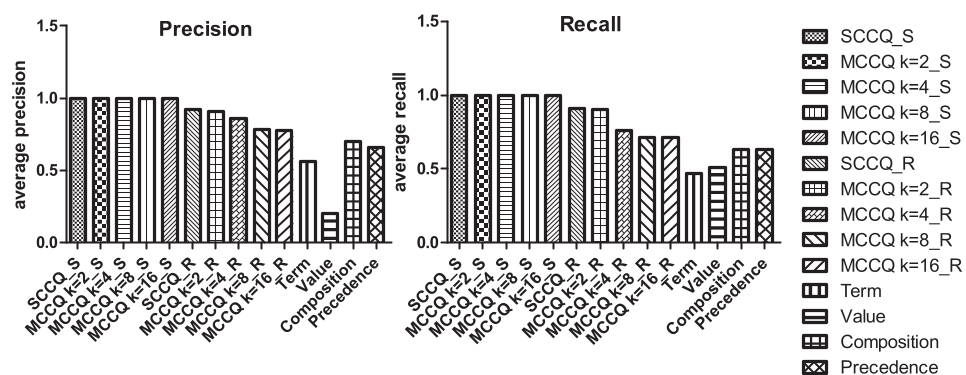 Figure 2: Uncertainty reduction of the SCCQ approach vs. Random selection. Note the rapid convergence to zero uncertainty.
Key Takeaways from Experiments:
- Precision/Recall: Reached over 90% with limited questions, outperforming machine-only methods by a wide margin.
- Budget vs. Time: If you have a tight budget, ask one question at a time (SCCQ). If you need it done now, ask them in batches (MCCQ), though the quality-per-dollar drops slightly.
Critical Insights
The true brilliance of this work lies in its handling of Worker Accuracy. Many crowdsourcing models assume workers are 100% correct or use simple majority voting. This paper dynamically adjusts the matching probabilities based on the estimated reliability of each worker, making it robust against "spammers" or low-quality feedback.
Conclusion
This research moves schema matching from a purely algorithmic problem to a dynamic, human-in-the-loop optimization task. By turning structural ambiguity into an entropy problem, it provides a clear roadmap for building self-correcting data integration pipelines.
Future Outlook: The next frontier is incorporating "Answer Rates"—predicting which questions the crowd will actually want to answer—to further reduce latency in real-time applications.