
Beyond Articulation: Why Relation Work is the Hidden Engine of Global Engineering
Relation work: Creating socio-technical connections in global engineering
This paper introduces the concept of Relation Work as a fundamental socio-technical activity required for global engineering collaboration. By studying "War Room" meetings between Denmark and India, the authors demonstrate how establishing connections between people and artefacts is a prerequisite for successful articulation work.
TL;DR
In the world of global engineering, simply having a plan isn't enough. This paper argues that Relation Work—the active effort to connect people and tools across distances—is the invisible prerequisite for any successful coordination. Without it, the sophisticated schedules and "War Rooms" of modern industry would collapse under the weight of geographical and technical disconnects.
Background: The Limits of Coordination
In a massive engineering project, such as building a cement factory, 300 engineers across Denmark and India must manage over 6,000 interdependent tasks. Traditionally, researchers used the term Articulation Work to describe the "work about work"—the scheduling and error recovery needed to keep things on track.
However, the authors of this study noticed something missing. Articulation work assumes everyone is already "connected." In global teams, that connection is constantly breaking. To fix it, engineers engage in what the authors call Relation Work.
The Core Insight: Relation Work vs. Articulation Work
While articulation work asks "Who does what and when?", Relation Work asks "Directly how do we connect these people and things right now so we can actually talk?"
The authors argue that Relation Work is the socio-technical "glue" that must be applied before articulation can even begin.
1. Connecting People to People: More Than Small Talk
In global "War Room" meetings, knowing a colleague’s name or local time is more than just courtesy. It builds mutual respect that prevents the "stereotypical othering" of remote teams.
- The Problem: Cameras often provide a limited field of view, leaving remote participants invisible.
- The Work: Constant "presence checks" ("Who is speaking?", "Who just arrived?") are fundamental efforts to reconstruct the social space.
2. Connecting People to Artefacts: Making the Invisible Visible
The "War Room poster"—a massive brown paper chart—is the heart of the project. But it’s a physical object in one room.
- The Work: Facilitators must perform the relation work of "reading the poster aloud" or physically pointing to stickers for the camera to ensure remote participants are "connected" to the data.
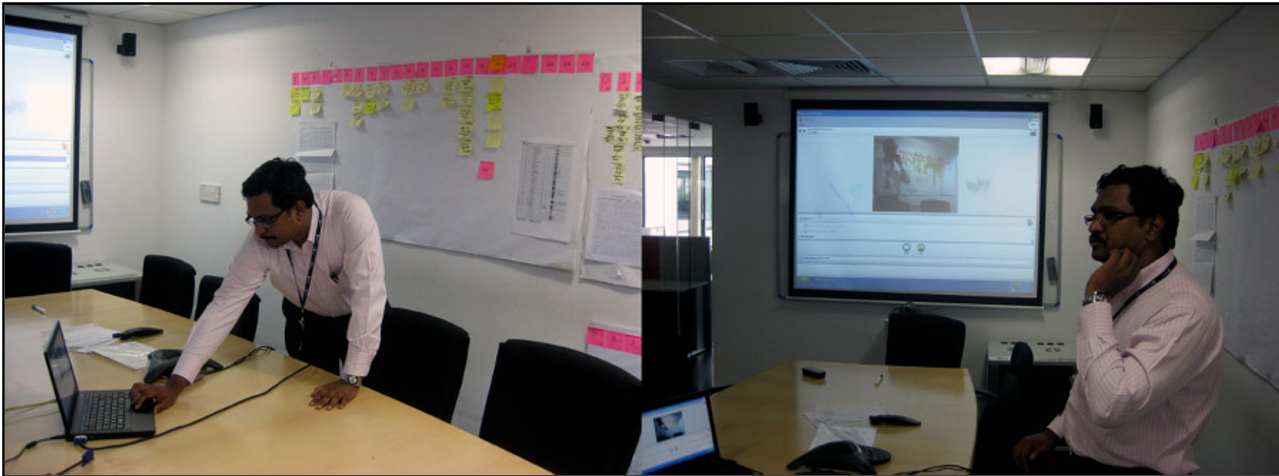 Figure 1: When technical links fail, Relation Work becomes highly visible as team members orchestrate alternative connections via mobile devices.
3. Connecting Artefacts to Artefacts: The Hybrid Bridge
Since physical posters are local but the team is global, engineers create "mirror walls" or digital tables to sync the physical stickers in Denmark with those in India. This maintenance of artefact symmetry is a heavy relational burden that digital-only tools often fail to simplify.
Impact and Results: The War Room Success
By focusing on these intense, 15-minute weekly sessions supported by relation work, the firm reduced the engineering phase of their projects from 52 weeks down to 15 weeks.
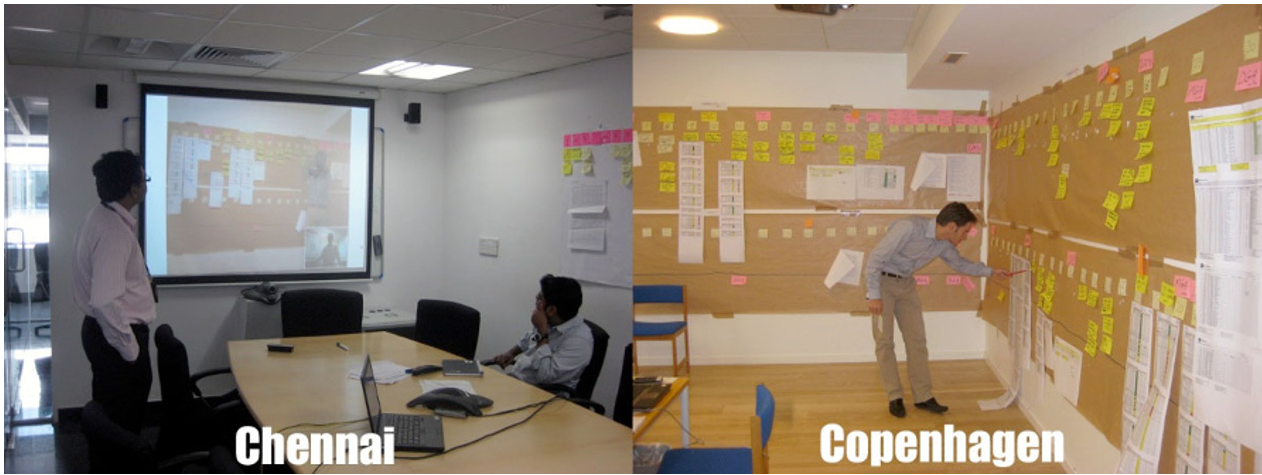 Figure 2: The physical act of making a local poster "audibly available" to a remote site is a classic example of bridging the gap between local artefacts and global participation.
Critical Insight: Relation Work as "Invisible Work"
The most profound takeaway is that Relation Work is often invisible. It only becomes "visible" when it fails—when a video call breaks, when a remote engineer forgets a task because they couldn't see the sticker, or when mistrust grows due to lack of rapport.
Limitations & Future Work
The paper primarily looks at a synchronous meeting (the War Room). A key challenge remains: how do we design tools that automate the "mirroring" of physical and digital artefacts without losing the tangibility that makes these engineering sessions so effective?
Conclusion
For the technical lead or product designer, this paper is a reminder that collaboration tools cannot just be "task trackers." They must be "connection builders." The future of global engineering lies in reducing the "overhead cost" of Relation Work, allowing experts to focus back on the engineering itself.