
beBee Recommender: Personalizing Professional Ties through Case-Based Reasoning
Relationship recommender system in a business and employment-oriented social network
The paper introduces a relationship recommender system designed for "beBee," a business and employment-oriented social network, utilizing Case-Based Reasoning (CBR) and Multi-Agent Systems (MAS). The system suggests both peer-to-peer professional connections and personalized job offers by calculating multi-factor affinity scores.
TL;DR
Researchers have developed a sophisticated recommendation engine for the business social network beBee. Unlike generic platforms, this system uses a Multi-Agent architecture and Case-Based Reasoning (CBR) to learn from every "Accept" or "Reject" action a user makes. The result? A system that doesn't just match keywords but evolves its understanding of your professional needs, achieving over 84% recommendation accuracy.
The Problem: The "One Size Fits All" Trap in Job Matching
Most job boards and professional networks use static filters. If you look for a job in "Marketing," you get Marketing results. However, this ignores the context: Are you willing to relocate? Do you despise certain software tools even if you have them on your resume? Is a specific university connection a "Strong Tie" or just noise?
The authors identify that professional networking is governed by varying tie strengths—Strong, Weak, and Absent. The challenge lies in converting Weak Ties (similar interests or skills) into Strong Ties (accepted connections) through highly relevant, context-aware suggestions.
Methodology: The "Brain" Behind the Matches
The system is built on a Virtual Organization (VO) of agents. Think of these as specialized digital employees working in the background:
- Interaction_VO: Handles the user interface and profile generation.
- Information_VO: Uses text mining to transform messy, unstructured job descriptions and resumes into structured "Dataframes."
- Recommendation_VO: The core engine that uses the CBR-BDI agent model to calculate affinity.
The Affinity Formula
Instead of a simple match, the system calculates a weighted vector considering factors like shared "Hives" (interest groups), colleagues, geographic location, and even content publication.
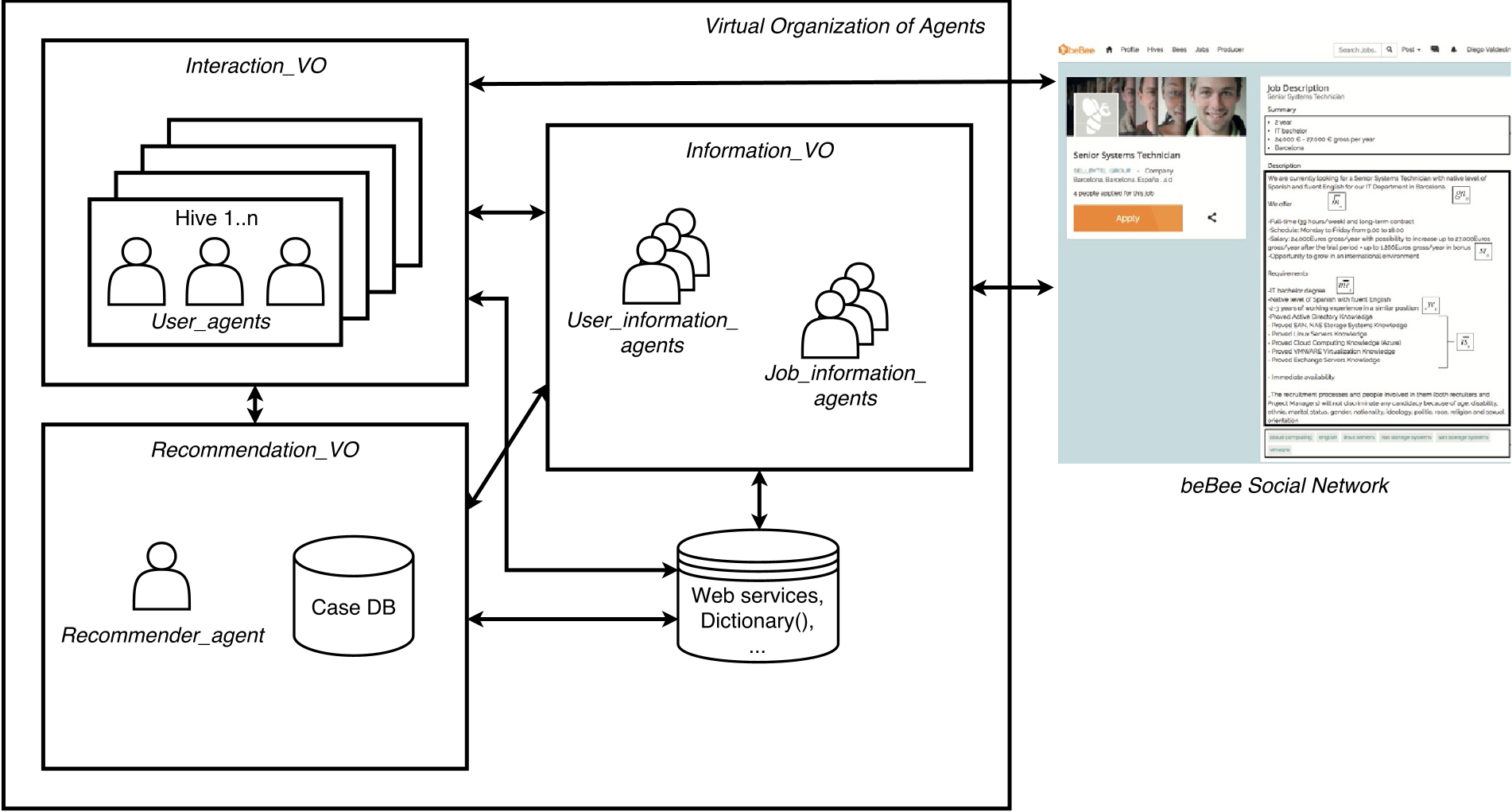 Figure 1: The Multi-Agent System (MAS) architecture integrated with beBee.
The Power of Case-Based Reasoning (CBR)
The "Secret Sauce" here is the CBR cycle: Retrieve, Reuse, Revise, and Retain.
- When the system suggests a job, it creates a Case.
- If the user rejects an offer because it's too far away, the CBR engine updates that specific user's Geographic Area (ga) weighting.
- Future suggestions will then prioritize local jobs for that specific individual, even if the global system default is different.
Experimental Results: Evolution is Key
The study evaluated two main tracks: User-to-User connections and User-to-Job matching.
User-User Success
Out of 17,073 recommendations, nearly 69% were accepted outright. When focusing on active users who interacted with the UI, the success rate hit 84.11%.
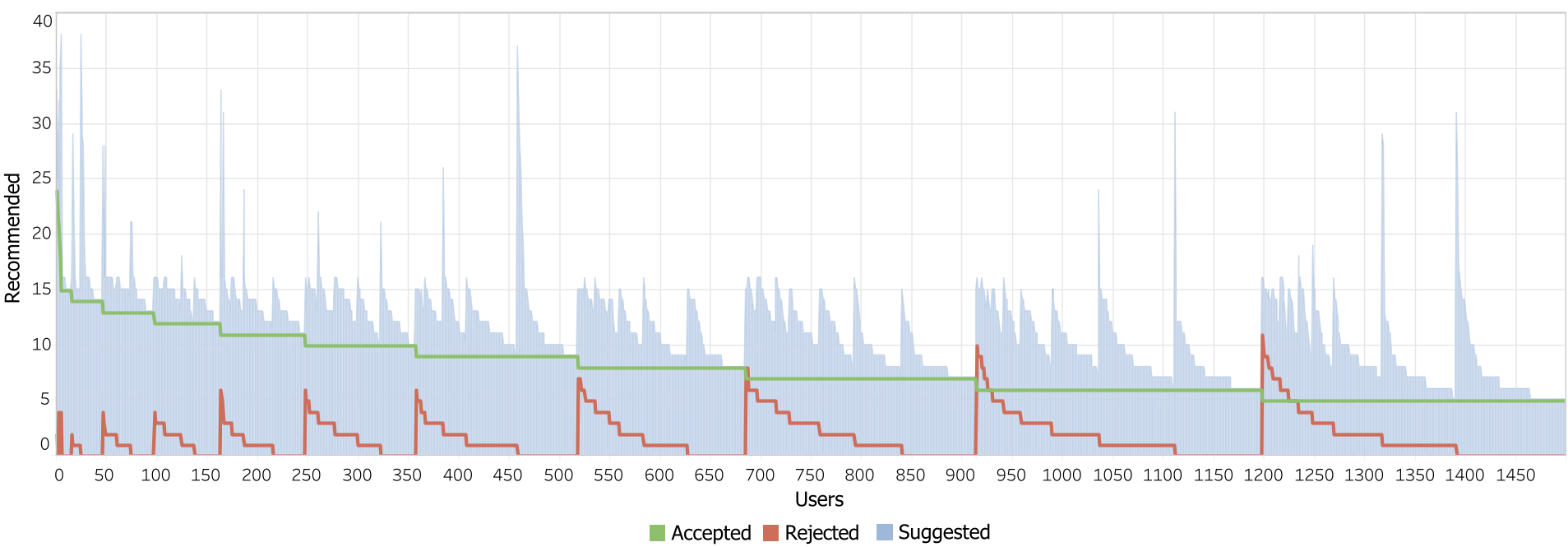 Figure 2: Distribution of accepted vs. rejected user connections.
Learning from Experience
The most impressive result was the learning curve. As shown in the table below, as users stayed with the system longer (moving from Quartile 1 to Quartile 4 of interaction history), the acceptance rate grew from 80.49% to 88.05%. This proves the CBR engine successfully "learned" individual preferences over time.
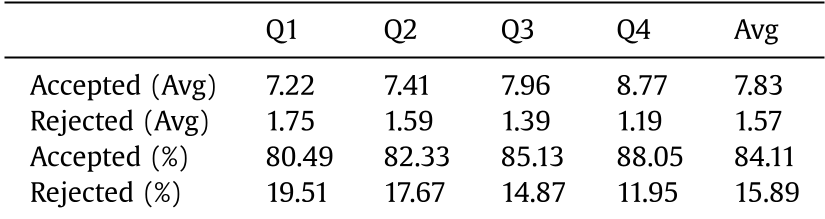 Table 1: Efficiency improvement as the system gathers more "Cases" per user.
Deep Insights & Takeaways
The brilliance of this work lies in its modular autonomy. By using Multi-Agent Systems, the authors created a platform where the recommendation logic can be easily updated or transferred to different industries without rewriting the core software.
Key Takeaways for the Industry:
- Context is King: A candidate's "unwanted skills" are just as important as their "required skills" for filtering.
- Feedback Loops Work: Recommender systems shouldn't be static; utilizing a memory of past rejections significantly lowers the "noise" in professional networking.
- Hybrid Intelligence: Combining text mining (to understand job descriptions) with CBR (to understand user behavior) produces a SOTA result for niche social networks like beBee.
Conclusion
This paper sets a strong precedent for how specialized social networks can compete with giants like LinkedIn by offering superior, localized, and personalized experiences. By focusing on the "Affinities" that actually drive professional relationships, the beBee system proves that AI is at its best when it learns to see the world through the user's eyes.