
Intelligent Relay Selection: Fusing Social Trust and Cluster Networks for D2D Communication
Relay Selection Based on Mobile Social Networks Integrated with Cluster Relationship for Device to Device Communications
This paper proposes a novel relay selection algorithm for Device-to-Device (D2D) communication by integrating mobile social networks with cluster relationships. The core method utilizes user location, social ties, and virtual private mobile network (cluster) attributes to identify optimal relay nodes, effectively increasing system throughput in 5G environments.
TL;DR
To address the lack of willingness and low efficiency in traditional D2D relaying, this paper introduces a multi-tier selection algorithm. By combining Mobile Location, Social Relationships, and Cluster Network attributes, the researchers have created a system that identifies reliable relay nodes even among "social strangers" who share organizational ties, leading to significant gains in system throughput and reduced detection overhead.
Background: The Trust Gap in 5G D2D
In the 5G era, Device-to-Device (D2D) communication is essential for spectrum efficiency. However, two-hop D2D relaying faces a "human" bottleneck: Trust. Most users are reluctant to act as relays for strangers due to security and battery concerns. While "Social-Aware" relaying helped, it often finds too few candidates if the user has a limited social circle.
The authors identify a critical insight: social relationship doesn't just mean "friendship"; it can be derived from Cluster Networks—virtual private groups like a campus network, a corporate cornet, or a family group.
Methodology: The Hierarchical Selection Engine
The proposed system model moves beyond simple SINR (Signal to Interference plus Noise Ratio) maximization. It employs a three-step filtering process:
- Physical Feasibility (Location Attribute): Ensures the relay is moving at a speed and direction that keeps it within the effective range during the transmission .
- Social Tie (ψ): Calculated using contact frequency () in cellular networks and mutual friends () in social networks.
- Cluster Relationship (c): If a user has a weak social tie but belongs to the same "Cluster" (e.g., a colleague or schoolmate), their "Willingness Value" () is boosted to a baseline threshold of 0.2.
Model Architecture
The interference model considers the reuse of uplink cellular resources, calculating the SINR for both the source-to-relay () and relay-to-destination () links.
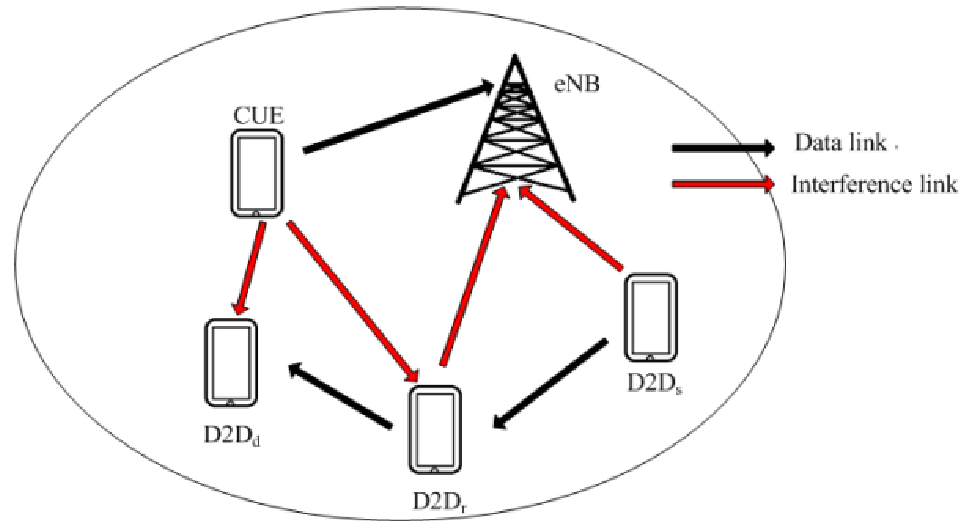 Figure 1: The two-hop interference model for D2D relay communication.
Performance and Experimental Insights
The researchers compared their algorithm against three baselines: location-based, purely social-based, and purely cluster-based selection.
1. Throughput vs. Social Thresholds
The "Cluster-Integrated" approach shows its greatest advantage when the social threshold is low. By converting strangers into "cluster-mates," the system increases the pool of willing relays, reducing the time spent probing (probing time ) for distant, high-quality nodes that might otherwise refuse the request.
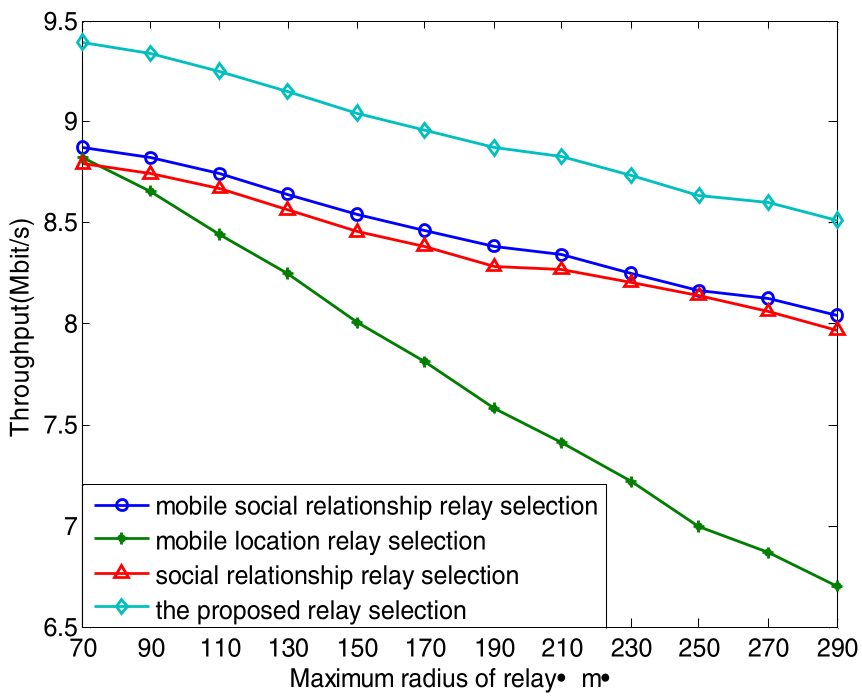 Figure 2: System throughput under different social relationship thresholds.
2. Impact of Node Density
As the number of idle nodes increases, the "Probing Cost" typically surges. However, the proposed method utilizes its "Restricted Attributes" to prune the candidate set quickly, preventing the throughput decay seen in location-only models.
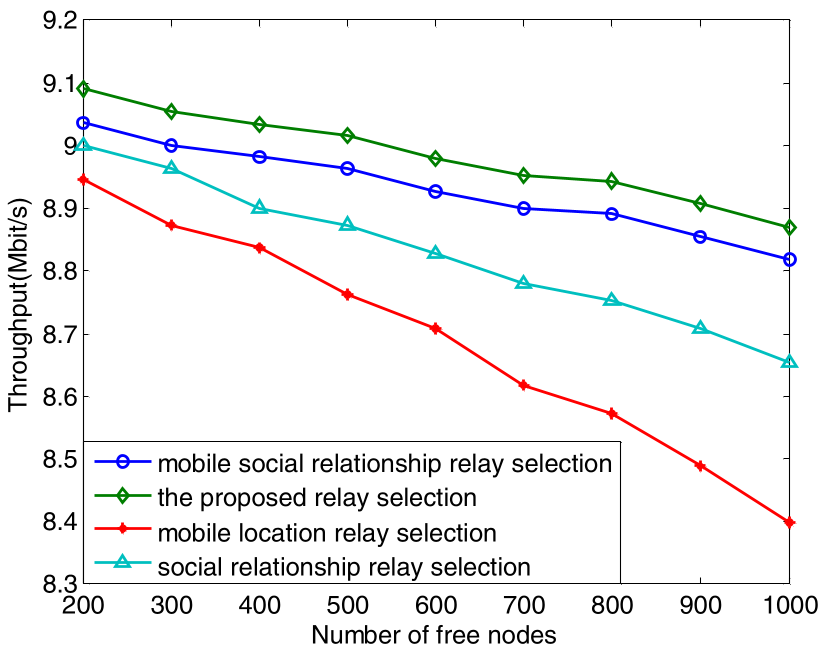 Figure 3: Throughput performance relative to the number of idle nodes.
Critical Insight & Conclusion
The genius of this work lies in its social-physical cross-layer design. By recognizing that "Cluster Networks" act as a proxy for trust in professional or academic environments, the authors solve the "sparse relay" problem without sacrificing security.
Limitations: The model assumes a constant probing time and does not yet account for the dynamic energy consumption of the relay node, which could further influence a user's willingness in real-world scenarios.
Future Outlook: This framework paves the way for "Context-Aware" networking where the network slice understands the organizational relationship between devices, making direct communication more seamless and ubiquitous.