
Reliable Relay: Bridging 5G mmWave Gaps with Social Trust
Reliable Relay: Autonomous Social D2D Paradigm for 5G LoS Communications
This paper introduces "Reliable Relay," an autonomous Social Device-to-Device (S-D2D) paradigm designed to solve line-of-sight (LoS) limitations in 5G mmWave networks. By fusing Social Internet-of-Things (SIoT) trust metrics with D2D relaying, the method establishes a decentralized and secure communication framework.
TL;DR
The inherent fragility of 5G mmWave signals—prone to blockage by even minor obstacles—creates significant coverage holes. This paper proposes a Reliable Relay scheme that utilizes the Social Internet-of-Things (SIoT) to turn nearby devices into trustworthy relays. By building a social-communication graph, the system achieves an 80% capacity gain and significantly higher data rates with minimal overhead.
The LoS Bottleneck in 5G
The move to millimeter-wave (mmWave) frequencies (3-300 GHz) is the cornerstone of 5G’s high data rates. However, mmWave is notoriously sensitive. A Line-of-Sight (LoS) signal has a pathloss of 20 dB/decade, but a blocked (NLoS) signal can drop by an additional 15-40 dB.
While Device-to-Device (D2D) communication has long been proposed as a solution, two major barriers remain:
- Centralization: Relying on the Base Station (BS) for relay selection causes high latency.
- Trust: Why should a user trust a random stranger's device to relay their private data?
Methodology: The Fusion of Social and Physical Networks
The authors introduce Social D2D (S-D2D), a paradigm that treats devices as social entities. The core innovation is the Trust Calculation Formula:
This formula combines:
- Centrality (): The structural importance of the device in the social network.
- Direct History (): Success of previous interactions.
- Indirect History (): Reputation based on common neighbors.
The Social-Communication Plane
Devices first form a connectivity graph via capillary communications (like Wi-Fi). Then, they layer a social graph on top of it. A "Reliable Relay" is only established if a link exists in both layers.
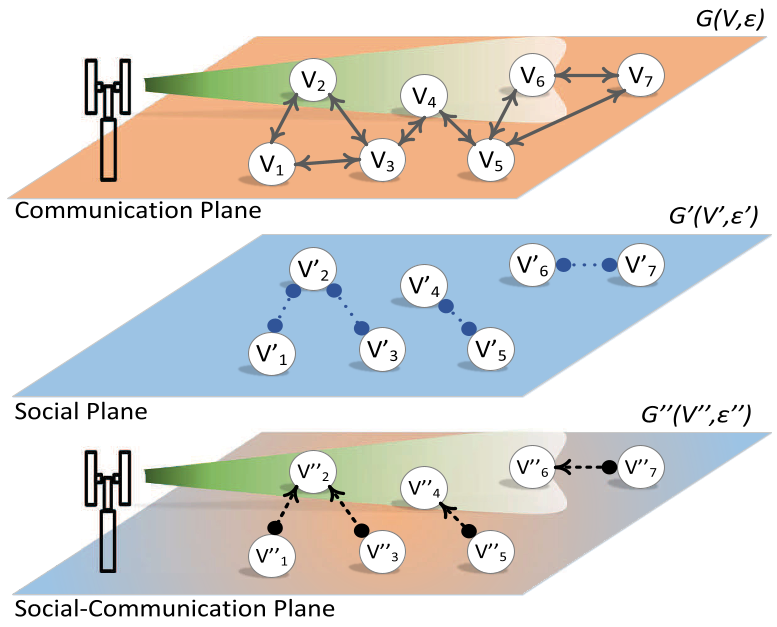 Fig 1: The dual-layer architecture ensuring both physical connectivity and social trust.
The protocol operates in two modes:
- Pro-active: Relays broadcast their availability to trusted "friends."
- Re-active: A device in outage requests help and selects the relay with the highest trust value .
Performance & Simulation Analysis
The researchers tested their model using NS3 simulations at 28 GHz. The results were categorized into five social scenarios, ranging from high-trust density to sparse social networks.
1. Capacity and Data Rate
The system showed a dramatic improvement in SINR. By aggregating devices through trustworthy relays, the overall interference in the uplink channel is reduced.
- Legacy Data Rate: ~0.06 Mbps
- Reliable Relay Rate: Up to ~0.25 Mbps
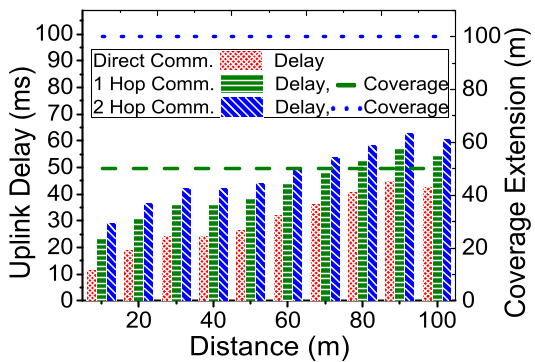 Fig 2: Comparison of capacity gain and data rates across different social scenarios.
2. The Trade-off: Delay vs. Coverage
"No lunch is free." Using a relay introduces a multi-hop delay. The simulations recorded an extra 10-15 ms of latency. However, for a user who would otherwise be in a complete dead zone, this delay is a negligible price for 100m of coverage extension.
Critical Insight & Conclusion
The genius of this paper lies in its Inductive Bias: it assumes that the social structures of human owners can be mirrored by their smart devices to solve technical networking problems.
Takeaways:
- Agility: Distributed relay selection is far more practical for 5G edge computing than centralized BS control.
- Integration: The authors provided a fusion formula (Eq 10 & 11) that allows this trust-based method to work alongside standard "max-min" and "max-link" relay selection schemes.
- Future Impact: This sets the stage for "Autonomous Trust" in 6G, where social relationships could dictate dynamic network slicing and resource allocation.
While the added delay is minimal, further research is needed to see how these social graphs hold up in high-mobility scenarios (like high-speed trains or fast-moving vehicles) where social proximity is fleeting.