
Deus Ex Machina: The Rise of Theomorphic Robots and the Synthesis of Faith
Religion and Robots: Towards the Synthesis of Two Extremes
This paper explores the intersection of robotics and faith, proposing the novel concept of "theomorphic robots"—machines designed with shapes that carry the identity of the divine. It introduces a comprehensive taxonomy for robot morphology that integrates religious factors and evaluates how these designs can enhance social acceptance and spiritual support.
TL;DR
Can a machine be "holy"? This paper challenges the secular bias in modern robotics by introducing Theomorphic Robots—automated entities shaped after the divine. By blending ancient automata traditions with modern HRI (Human-Robot Interaction), researchers Gabriele Trovato and colleagues provide a roadmap for designing robots that don't just "perform," but "mean" something to the believers who use them.
The Missing Link: Why Science Forgot Religion
For the last two centuries, science and religion have been treated as polar opposites. However, the authors argue that the history of robotics is actually rooted in faith. From Hero of Alexandria’s temple automata to the mechanical monks of 16th-century Spain, early "robots" were designed to inspire wonder and facilitate prayer.
The modern pain point is clear: Current social robots are too "robotic." They lack the cultural and spiritual "affordance" needed to connect with elderly users or specific religious demographics. When we strip a robot of its spiritual potential, we limit its ability to provide comfort in the most sensitive areas of human life: aging, ritual, and death.
Methodology: Transcending the Uncanny Valley
The core insight of the paper is the mapping of Angelology (souls without bodies) onto Robotics (bodies without souls). To merge these extremes, the authors propose a new taxonomy of robot morphology.
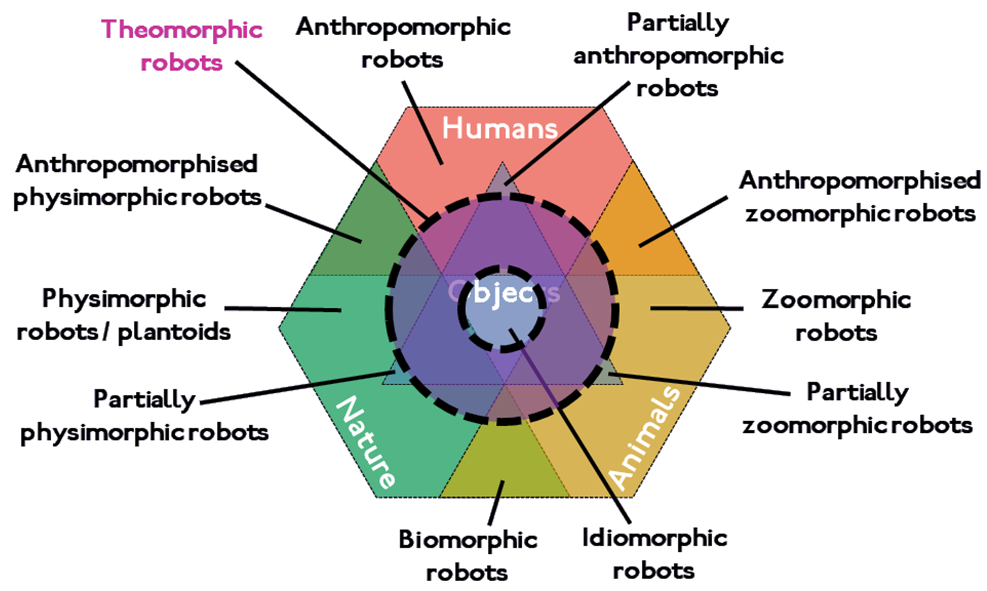
The 10 Commandments of Theomorphic Design
The authors define a "Theomorphic Robot" as one that carries the shape and identity of something supernatural. To make these machines feel "sacred" rather than "gadgety," they suggest:
- Skeuomorphism: Retaining the visual identity of existing sacred art (statues, talismans).
- Hiding the Machine: Visible wires or touchscreens break the "suspension of disbelief."
- Non-Logical Interaction: Using voice reverb, mystical light, and ritual touch instead of standard tablet interfaces.
- "Less is More": Too much movement can make a robot look like a toy. A still, "saintly" presence can be more powerful.
Case Studies: SanTO and DarumaTO-2
The researchers didn't just theorize; they built.
- SanTO: A robotic Catholic saint housed in a traditional niche. It answers questions using biblical passages and acts as a prayer companion.
- DarumaTO-2: Based on the Japanese Daruma doll, it uses the "open/closed eye" ritual to help elderly users track goals and provide companionship.
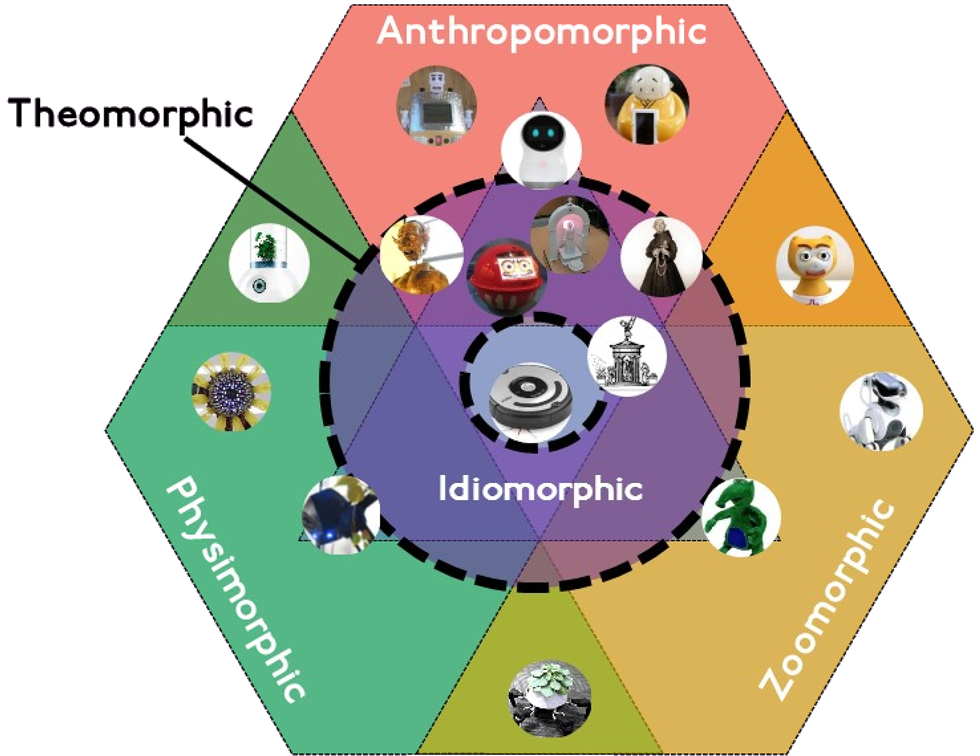
The experiment results were striking: elderly participants who were normally "tech-phobic" found the theomorphic forms intuitive. Because the robot looked like a familiar religious object, the anxiety of "using a computer" vanished, replaced by the comfort of a "talking talisman."
Ethical Depth: Deception or Devotion?
The paper doesn't shy away from controversy. Is a "robotic priest" deceptive? The authors argue no. Just as a printed Bible or a recorded mass is still considered a valid medium for faith, a theomorphic robot is a "vessel" for the divine essence.
The goal isn't to replace God with a machine, but to use the "Technology of Enchantment" to serve human wellbeing. As long as the robot follows ethical design standards (like those from the IEEE), its "holiness" is a tool for better health and social connection.
Critical Analysis & Future Outlook
This work is a vital bridge between anthropology and engineering. Its primary limitation is the subjectivity of sacredness; what feels "holy" to one person might feel "sacrilegious" to another, especially in iconoclastic religions like Islam or Judaism where depicting the divine is strictly prohibited.
Future Outlook: We are moving toward a world of "pluralistic robotics." We can expect robots that are not just generic assistants, but specialized "cultural agents"—machines that understand our prayers as well as our grocery lists.
Conclusion
"Religion and Robots" reminds us that technology hasn't replaced the sacred; it has simply provided a new body for it. In the design of theomorphic robots, we see a future where the coldest machines can offer the warmest spiritual support.