
Facebook in the Smart-Mobile Age: Moving Beyond Socializing to Digital Pedagogy
Remodeling the educational usage of Facebook in smart-mobile age
This paper presents an extended Structural Equation Model (SEM) to evaluate the educational usage of Facebook in the "smart-mobile age." By integrating "Mobility" and "Interactivity" as new variables into the existing Mazman-Usluel framework, the study validates how mobile access influences student adoption and pedagogical application.
TL;DR
While Facebook was born on the desktop, its educational potential today is driven by the smartphone. This research updates the classic educational adoption models by proving that Mobility and Interactivity are the missing links in explaining why students are finally integrating social media into their academic workflows. The study finds that while social relations still drive the purpose of use, the educational value is unlocked through mobile-specific interactive features.
Problem & Motivation: The Desktop Legacy
For years, educationists have tried to "force" Facebook into the classroom with mixed results. Early models, like the one proposed by Mazman and Usluel (2010), focused heavily on Social Influence and Perceived Usefulness. However, these models were developed in an era where "logging on" was a deliberate act at a desk.
The authors argue that the "Smart-Mobile Age" has changed the Inductive Bias of the platform. We no longer just "visit" Facebook; we carry it. This shift creates a different psychological and functional relationship with the tool—one that prior SOTA (State of the Art) models failed to capture.
Methodology: The Extended SEM Model
The researchers didn't just add mobile phone usage as a footnote; they integrated it as a structural component. They proposed an extended model where:
- Mobility (anywhere/anytime access, camera integration) predicts Adoption.
- Interactivity (push notifications, real-time chatting) predicts Educational Usage.
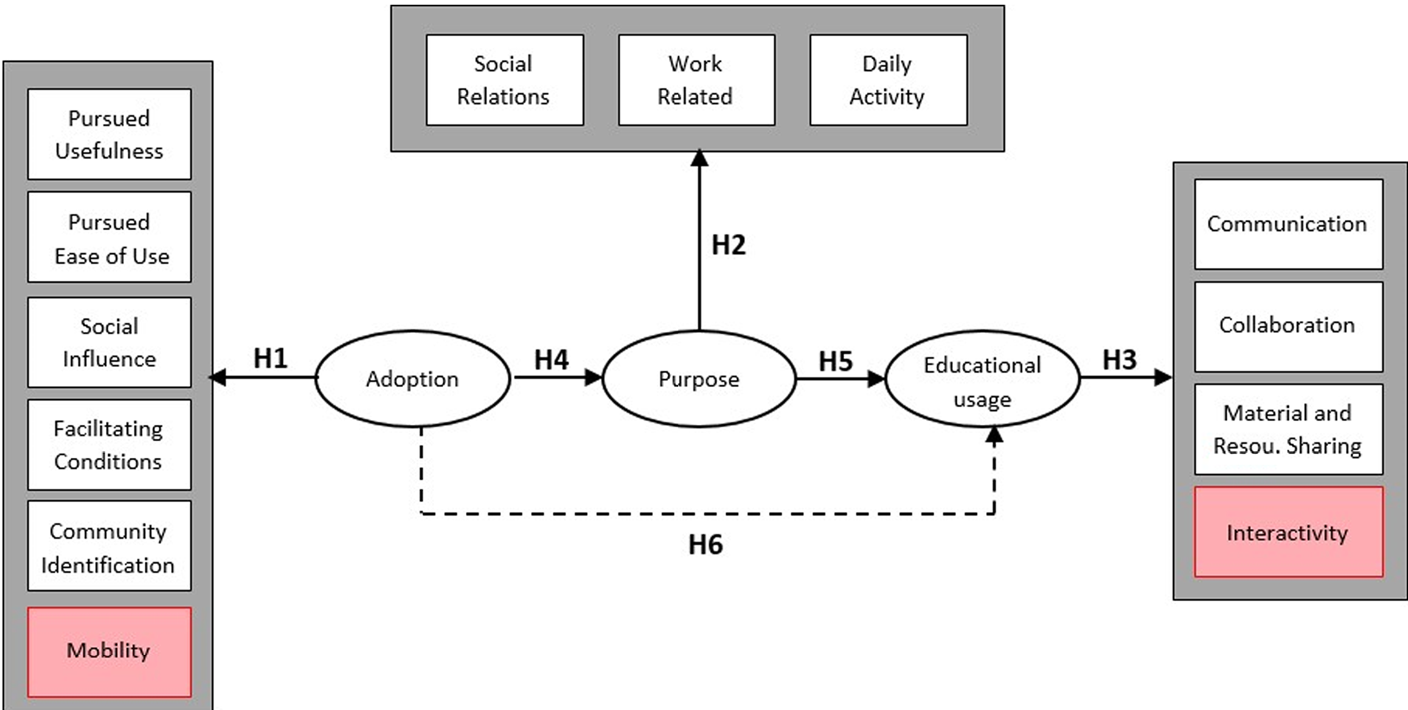 Figure 1: The structural framework showing the integration of Mobility and Interactivity.
The study utilized a sample of 510 undergraduate students and applied Structural Equation Modeling (SEM) to validate the path coefficients between these latent variables.
Key Insights: What Actually Drives Adoption?
The results from the Path Analysis (Table 5 in the paper) provide a fascinating look at modern student priorities:
- Community Identification is King (0.77): Students adopt Facebook primarily because they feel a sense of belonging to groups.
- The Power of Mobility (0.61): Being able to snap a photo of a lecture slide and share it instantly ("Mobility") is a significant driver of adoption, even more so than the external "Social Influence" (0.47) that previous studies emphasized.
- Adoption ≠ Education: Interestingly, the link between simply adopting Facebook and using it for education is weak (0.43). However, the link between the Purpose of use and educational usage is much stronger (0.65).
 Table 2: Standardized Path Coefficients showing the statistical significance of each variable.
Experiments & Results
The model's fit results were exceptional, with a CFI of 0.99, far exceeding the standard threshold of 0.90.
- Communication & Collaboration: Both showed the highest coefficients (0.87) under the "Educational Usage" umbrella.
- The Mobility Catalyst: The data suggests that mobile devices help execute the extended framework by providing a "Comparative Advantage" over PCs—specifically through the ability to handle rich multimedia and "anytime" notifications.
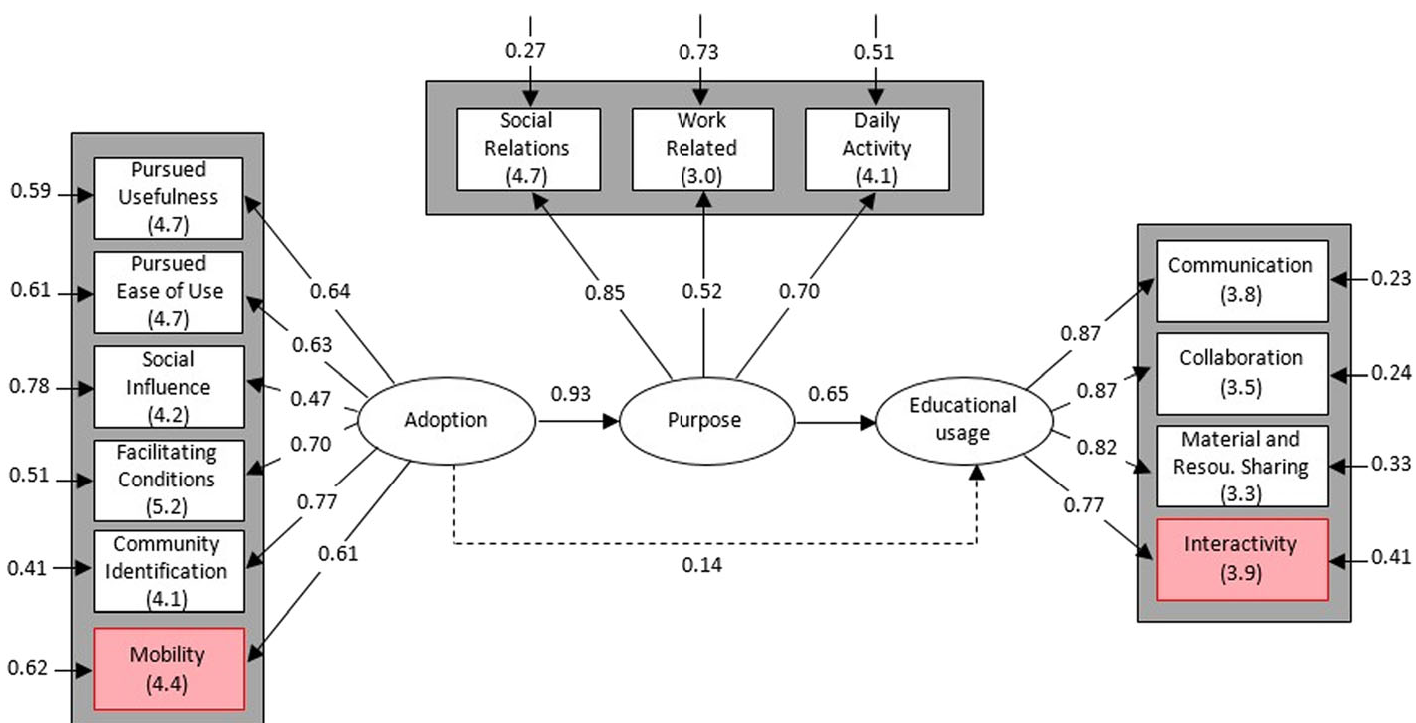 Figure 2: The final validated model with standardized coefficients.
Critical Analysis & Future Outlook
The core takeaway is clear: Educational usage is an extension of social purpose, not a standalone adoption. If a student is already using Facebook to identify with a community, they are far more likely to pivot that behavior toward academic group work.
Limitations:
- Privacy Concerns: Despite high adoption, 6% of students still cite privacy as an inhibitor, and 10% believe Facebook is strictly personal.
- Teacher-Student Hierarchy: The study notes that students still prefer friending peers over teachers, suggesting a "safe space" barrier that educators must navigate carefully.
The Future of Digital Pedagogy:
This research suggests that universities should stop trying to build "clunky" proprietary LMS mobile apps that mimic desktops and instead lean into the existing Interactivity of social networks. By leveraging "Mobile-first" features, educators can move from passive reading to a more "Interactive Digital Pedagogy."