
Remote Pair Collaboration: Are We Leaving Women Behind in Virtual Labs?
Remote Pair Collaborations of CS Students: Leaving Women Behind?
This study investigates gender dynamics in remote pair programming among Computer Science students using a large-scale survey (n=107) and semi-structured interviews. The researchers analyzed how gender compositions (same- vs. mixed-gender) affect coordination, communication, and collaboration, identifying significant behavioral disparities and perceived biases.
TL;DR
Remote pair programming has become the "new normal" for CS students, but is it an equal playing field? A new study reveals that women in mixed-gender remote pairs often feel dominated, frequently interrupted, and judged by their gender. Meanwhile, men report higher levels of rudeness and negative feedback when paired with other men. This research highlights the urgent need for gender-aware collaborative tools to prevent remote environments from reinforcing existing tech-industry biases.
The "Remote" Reality and the Gender Gap
In theory, pair programming—splitting roles into a "driver" (writer) and a "navigator" (reviewer)—boosts code quality and morale. However, the move to remote settings has stripped away the subtle nonverbal cues and social buffers present in physical classrooms. The authors of "Remote Pair Collaborations of CS Students: Leaving Women Behind?" argue that these virtual barriers don't affect everyone equally. They set out to map how gender influences the three pillars of software development: Coordination, Communication, and Collaboration.
Methodology: Analyzing the Digital Interaction
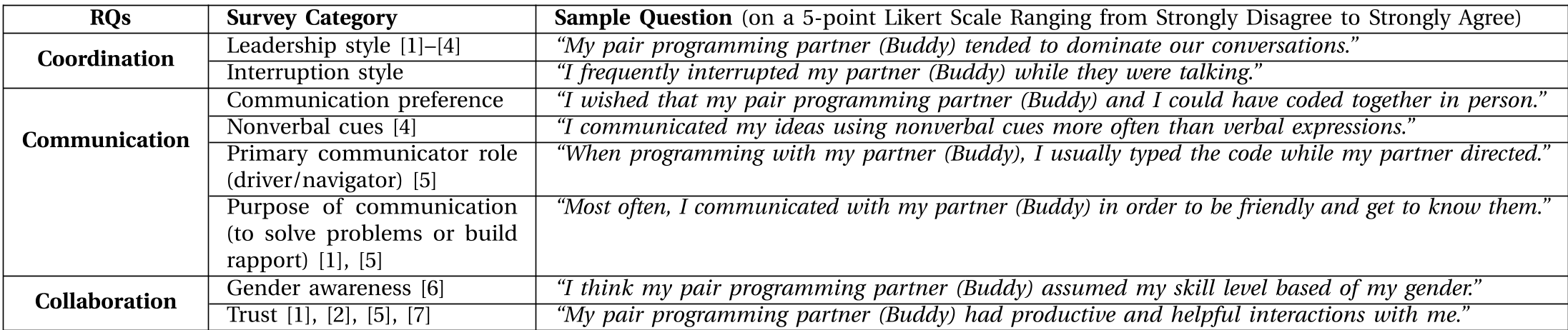
The researchers developed a comprehensive survey by adapting validated scales from psychology and management. They categorized interactions into four groups based on the respondent's gender and their partner's perceived gender (WW, WM, MW, MM).
Key Findings: Coordination & Interruption
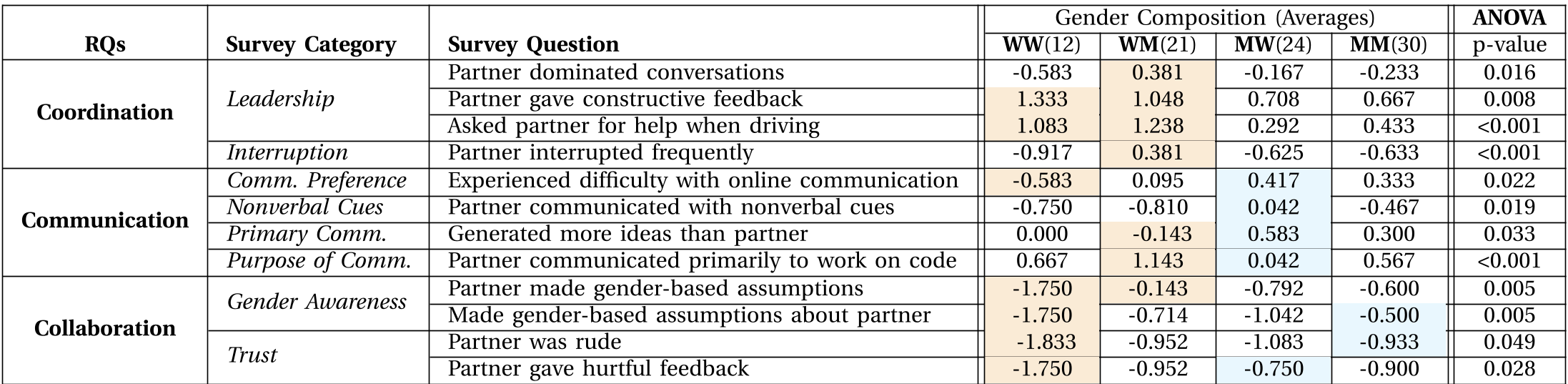
The statistical results (ANOVA) revealed a stark contrast in how pairs coordinate:
- Dominance in Conversation: Women participants reported feeling significantly more dominated by men partners (WM) than by women partners (WW). Qualitative interviews supported this, with participants noting that men often "perceived themselves to have more experience" and took an authoritative leadership role.
- The Interruption Factor: Women were interrupted the most by men partners. Conversely, men reported that they rarely felt interrupted, regardless of who their partner was.
Communication Hurdles and Perceptions
Remote tools (Zoom, Slack) often filter out nonverbal cues like body language and facial expressions, which are vital for building rapport.
- Nonverbal Cues: Interestingly, men perceived more nonverbal cues from women partners than women did from men. This suggests a potential "expressiveness gap" that remote platforms exacerbate.
- Idea Generation: In mixed-gender pairs, both men and women reported that men generated more ideas. However, interviews suggested this was often tied to perceived experience levels rather than actual skill, highlighting a potential self-efficacy gap among women students.
Collaboration: Trust and Assumptions
- Gender Bias: Women felt men partners were significantly more likely to make assumptions about their coding skills based on gender.
- Rudeness vs. Empathy: Men reported that their male partners were ruder and gave more negative feedback than female partners. The study suggests that women's tendency toward higher empathy helps maintain a more "polite" and psychologically safe environment in WW pairings.
Comprehensive Results Summary
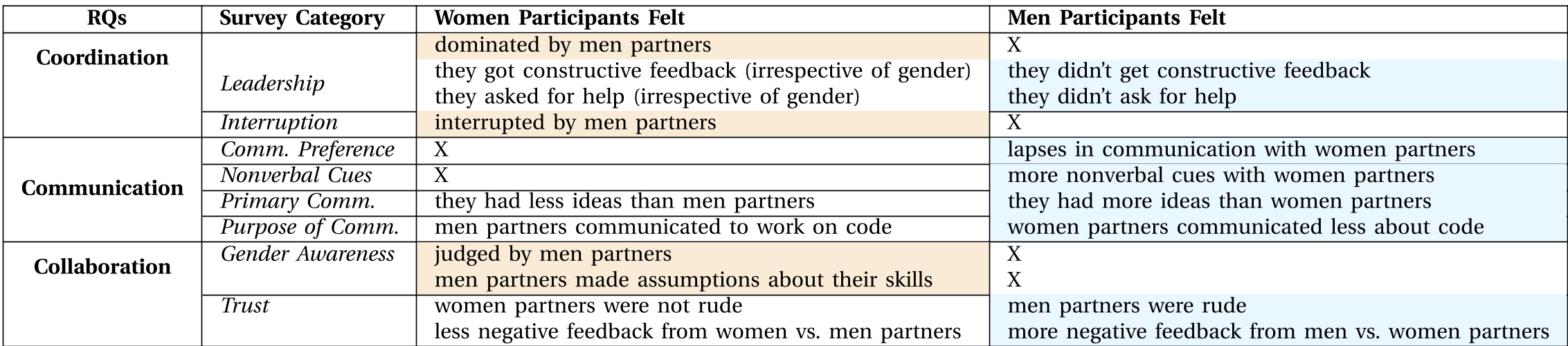
The following table illustrates the "pain points" identified for each gender in the study:
Depth Perspective: Why This Matters for the Future
The findings suggest that simply providing a "screen share" tool isn't enough to foster an inclusive CS education. The authors propose four critical interventions:
- Facilitator Agents: AI bots that monitor conversation balance and flag interruptions or "dominating" behavior in real-time.
- Gender-Inclusive IDEs: Integrating whiteboards and design tools directly into the coding environment to reduce the cognitive load of switching between apps, which currently hinders role-switching.
- Pedagogical Emphasis: Intentional syllabus design that highlights equity can demonstrably reduce gender bias in student partnerships.
- Hardware Parity: Remote environments make troubleshooting hardware "30 billion times more difficult" (as one interviewee put it), a gap that disproportionately affects those with less prior exposure to hardware tinkery.
Conclusion
This paper serves as a wake-up call for the Global Software Development (GSD) community. As remote collaboration becomes a permanent fixture of tech work, we must ensure our digital tools and educational frameworks actively mitigate, rather than amplify, gender stereotypes. The "invisible" friction in remote pairs is real—and it's time we start coding for inclusion.