
Scaling Semantic Integrity: Relational Database Strategies for Collaborative Ontologies
Representation and validation of domain and range restrictions in a relational database-driven ontology maintenance system
This paper introduces a modified Ontology Abstract Machine (OAM) model integrated into a Relational Database-Driven Ontology Maintenance System (RDBOM). It specifically focuses on implementing and validating domain and range restrictions within a collaborative, multi-user web environment to ensure semantic integrity.
TL;DR
Maintaining data integrity in massive, community-curated ontologies like AmphibAnat is a logistical nightmare. This paper presents a solution by modifying the Ontology Abstract Machine (OAM) to formally encode domain and range restrictions. By implementing these constraints within a Relational Database-Driven Ontology Maintenance System (RDBOM), the authors provide a framework that prevents "semantic rot" in real-time during multi-user editing.
Problem & Motivation: The Chaos of Community Curation
In scientific domains—such as amphibian anatomy—ontologies are too large for a single expert to manage. While tools like Protégé exist, they are often designed for single-user environments or require heavy, offline reasoning cycles to detect errors.
The authors identify a critical gap: when dozens of users contribute data, how do you prevent someone from asserting that a "Leg" has a "Related Synonym" that is actually an "Image" rather than a "Term"? In standard OWL/OBO files, such an assertion might be accepted and only flagged later by a reasoner. In a dynamic database environment, we need a "gatekeeper" that understands relationship boundaries at the moment of entry.
Methodology: The 7-Tuple OAM
The core innovation is the transition from a 5-tuple to a 7-tuple Ontology Abstract Machine. The original model defined nodes, relationships, and roots, but lacked the "rules of engagement" for those relationships.
The authors add:
- : Defines which classes are allowed to be the source of a specific relationship.
- : Defines which classes are allowed to be the target of a specific relationship.
Architecture of the OAM
The model distinguishes between Base relationships (), which form the structural backbone (like is_a or part_of), and Extended relationships (), which add descriptive metadata.
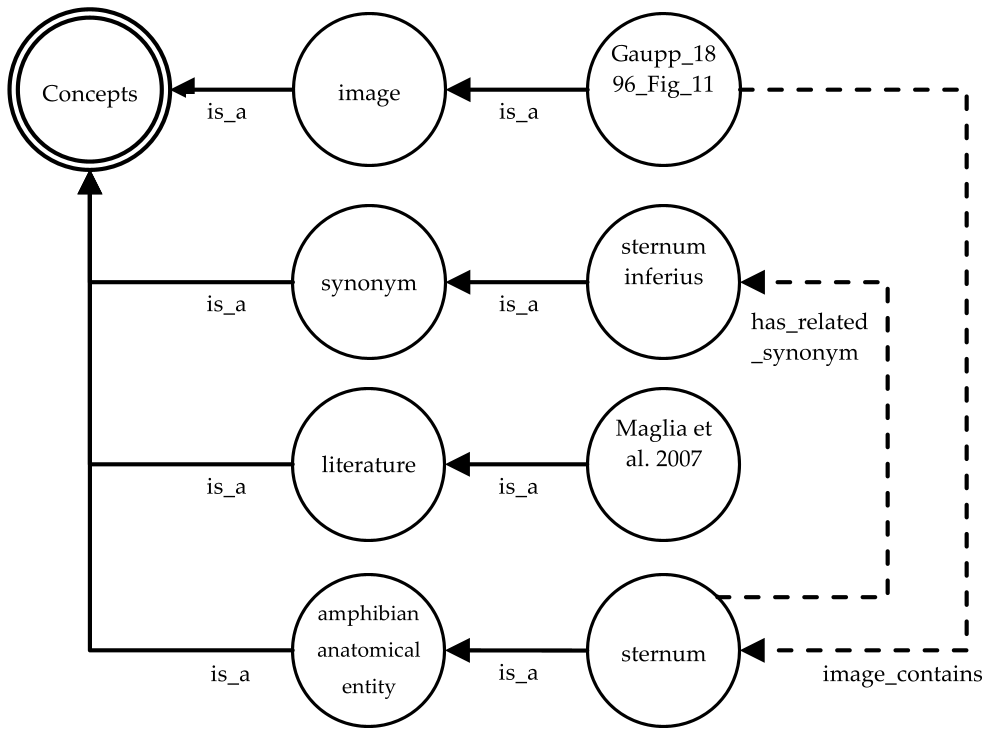 Figure 1: A graphical representation of the OAM. The validation logic traverses this graph 'upwards' to verify if a node belongs to the required domain/range class.
Why not use SQL Triggers?
The authors make a strategic design choice: Application logic over Database Triggers.
- Complexity: SQL triggers are difficult to manage for complex hierarchical lookups (checking if a node is a sub-class of a sub-class).
- Flexibility: Sometimes restrictions must be temporarily broken (e.g., during a major branch move). Application logic allows for tiered permissions where administrators can bypass checks that would otherwise block a database transaction.
Experiments & Results: Real-world Validation
The system was tested using the AmphibAnat project. In a multi-user setting, the system successfully flagged violations. For example, if a user tried to link a anatomical term to a literature reference using a "has_synonym" relationship (which expects another term), the system would block the action.
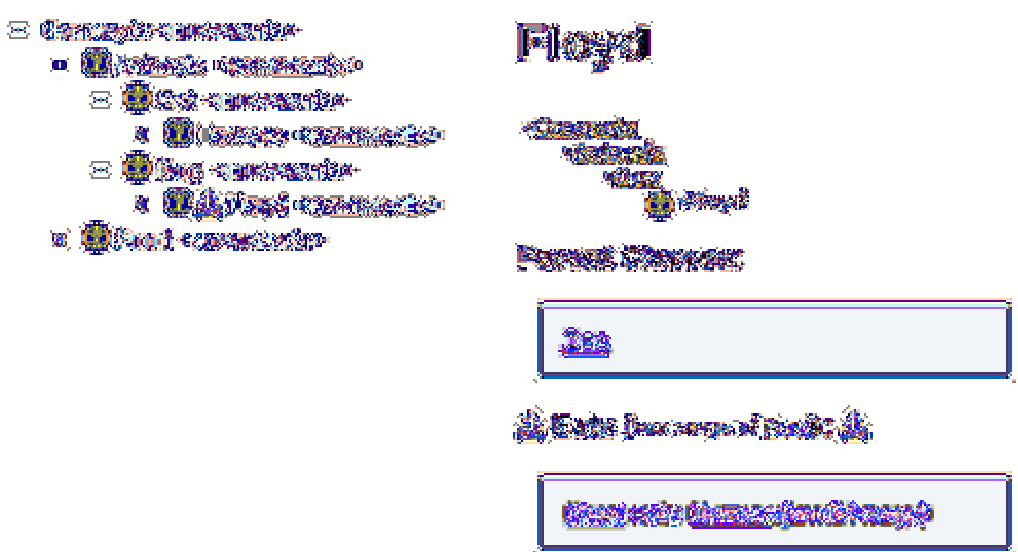 Figure 2: The RDBOM user interface. Notice how the system identifies specific restriction violations (e.g., Range violations) within the tree view, allowing curators to rectify inconsistencies immediately.
Critical Analysis & Conclusion
Takeaway
The paper proves that relational databases (RDBs) are not just "dumb storage" for ontologies. By layering an Abstract Machine model (OAM) on top of the RDB, we achieve the best of both worlds: the concurrency and scalability of SQL with the semantic rigor of Description Logics.
Limitations & Future Work
- Restriction Scope: This work focuses specifically on domain/range. It does not yet address more complex constraints like transitive properties or cardinality (e.g., an organism can only have one "head").
- Reasoning Lag: While application-side validation is faster for simple checks, complex global consistency checking still requires integration with heavy-duty reasoners like Pellet.
Ultimately, this research serves as a blueprint for building "Editor-First" knowledge management systems where data integrity is a first-class citizen in the user workflow.