
Curricular Social Networks: Reimagining Education Beyond Simple Interaction
Representing Students Curriculum in Social Networks
The paper introduces a novel educational social network framework specifically designed around a "Curricular Structure" rather than traditional social media interactions. It leverages Cloud Computing and Web Services to integrate official educational legislation, academic objectives, and personal learning environments (PLEs) into a unified digital workspace.
TL;DR
This research moves beyond the "Facebook for classrooms" model by proposing a social network where the Academic Curriculum is the central axis. By integrating Cloud Computing with structured educational legislation, the authors create a system where every social interaction (post, share, or chat) is directly mapped to specific learning objectives, competences, and evaluation criteria.
Background & Motivation: The Gap in Educational Tech
In the current EdTech landscape, we see a dichotomy:
- Social Platforms: Great for sharing experiences but lack formal structure.
- LMS (Learning Management Systems): Rigid and often disconnected from the fluid, social nature of modern learning.
The authors argue that social networks in education must obey the "normative of the scholar organization." They identify a critical missing link: the ability to align social tools with the official curriculum mandated by law.
Methodology: The Architecture of a Curricular Network
The proposed system is built on a three-tier logic that separates administrative social data from pedagogical content.
1. Social & Administrative Layer
This layer handles the "Social Structure"—the groups, timetables, and hierarchy of the school. It functions as an e-government framework, prioritizing data privacy and legal compliance.
2. The Curricular Workspace (PLE 2.0)
This is where the magic happens. The system uses Software for Edition Integration (SEI). Unlike standard cloud storage, these are "Cloud containers" that allow students to work offline and sync automatically (similar to the Dropbox model), housing the business logic needed for educational activities.
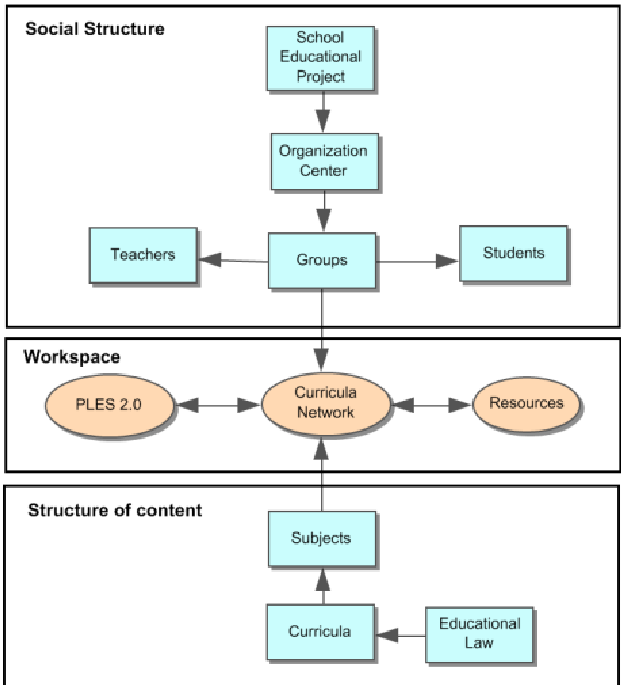 Figure 1: The holistic organization showing how the Curriculum and Legislation drive the Social Network.
The "Curricular Object" Approach
The core innovation is the decomposition of subjects into Curricular Objects. Instead of just "uploading a file," a teacher creates an activity that is programmatically linked to:
- Official Objectives: Derived from the cycle/phase of the course.
- Evaluation Criteria: Automated or semi-automated metrics for success.
- Content Contextualization: Mapping concepts to student-acquired knowledge.
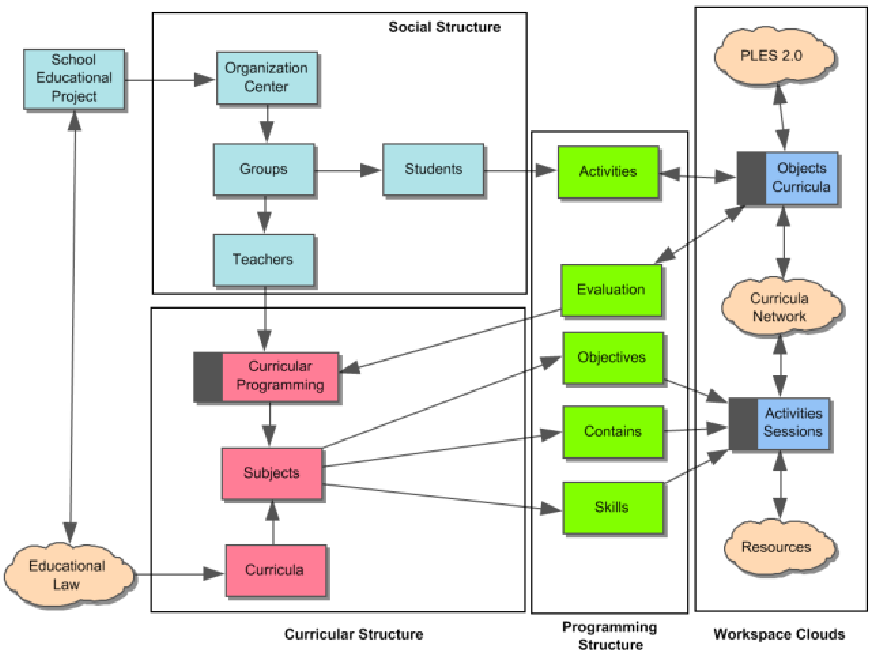 Figure 2: The interaction between Social Structure and Curricular Structure through Web Services.
Experimental Case Study: Drag-and-Drop Pedagogy
The paper presents an Interactive Graphical User Interface (IGU) where teachers can manage their "Teacher's Program." A notable feature is the use of Drag-and-Drop events to map subjects (like Mathematics) onto a dynamic timetable, which then populates the students' workspaces with relevant educational objects.
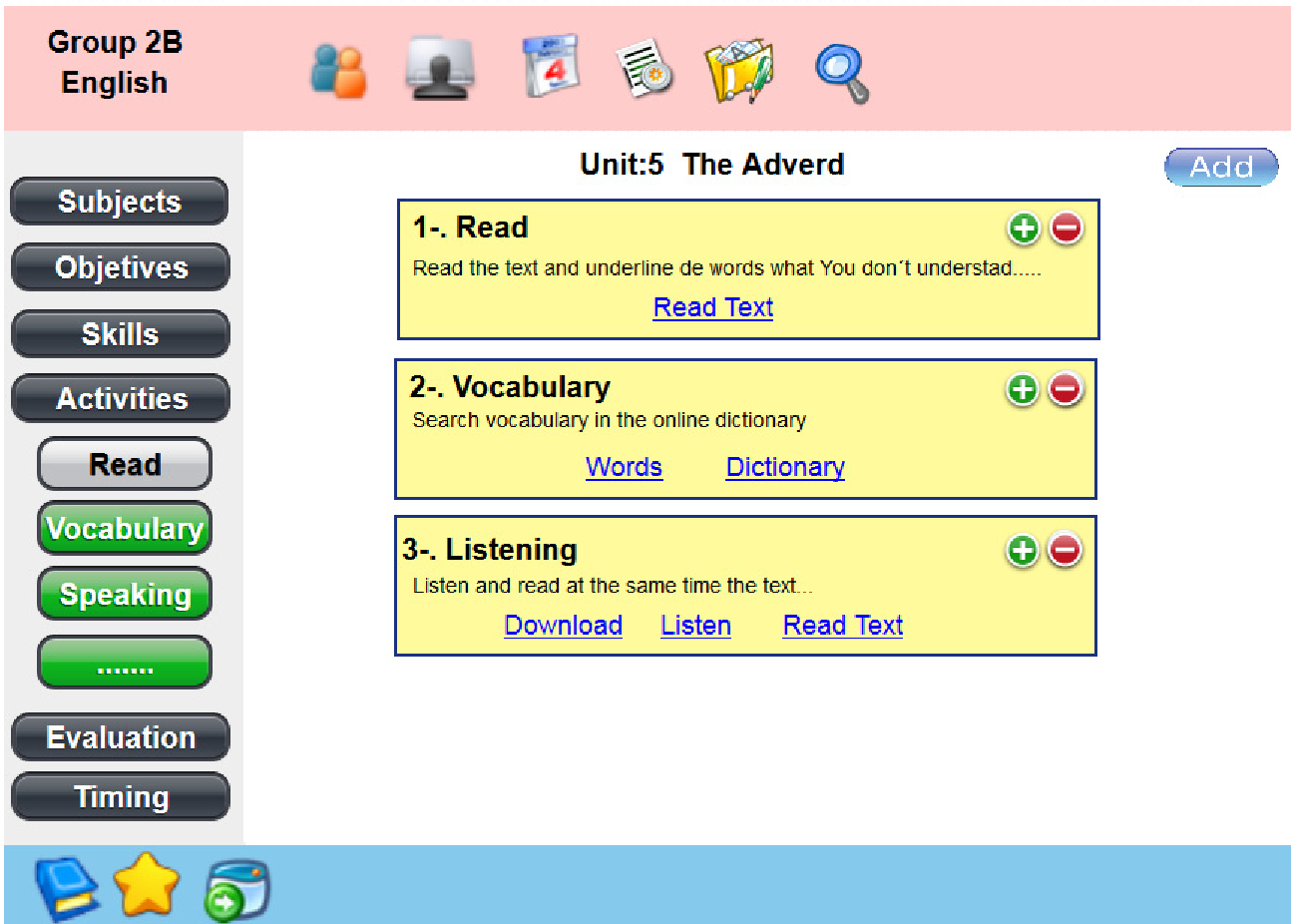 Figure 3: Prototype of the teacher's interface for defining didactic units and activities.
Critical Insight & Conclusion
The true breakthrough of this work is the definition of the "Curricular Relation." In this paradigm, social networking is not about "friendships"—it is about the interaction between actors (Teacher, Student, Administration) mediated by the curriculum.
Limitations
- Implementation Complexity: Scaling a system that must adapt to the "legislative changes" of different countries is a massive data-mapping challenge.
- User Friction: Transitioning teachers from familiar social tools to a highly structured "Curricular Logic" environment requires a significant shift in digital literacy.
Final Takeaway
By treating academic activities as Cloud Objects with built-in evaluation logic, this framework paves the way for a more integrated, legally-compliant, and pedagogically sound approach to digital schooling.