
The Physics of Influence: Strategic Reputation Cascading in Social Networks
Reputation Cascade Model over Social Connections in Online Social Networks
This paper introduces a probabilistic and game-theoretic framework to model reputation cascading in Online Social Networks (OSNs). By defining "Local Reputation" and "Probability of Cascade" (PoC), the authors enable agents to strategically select connections that maximize both their current standing and potential viral influence.
TL;DR
In the digital economy, reputation is currency. This paper moves beyond static "star ratings" to propose a Reputation Cascade Model. It frames social networking as a strategic game where users choose friends not just for who they are, but for how far they can spread your name. By balancing Local Reputation with Probability of Cascade (PoC), the model predicts higher-value social connections than those actually made by humans in real-world datasets.
Motivation: Beyond Local Status
Why do we join certain circles? Most reputation models assume we seek "Local Reputation"—the average esteem our immediate friends hold for us. However, this ignores the network effect. A group might highly respect you, but if that group is an "isolated hole," your influence dies there.
The authors argue that rational agents are "self-interested" and "strategic." They don't just want to be liked; they want their reputation to cascade—to move virally through word-of-mouth recommendations.
Methodology: The Math of Social Strategy
The core of the paper lies in quantifying two distinct forces:
- Local Reputation (LRep): The arithmetic mean of how your current friends rank you.
- Probability of Cascade (PoC): A probabilistic measure of the likelihood that joining a new friend will result in your profile being recommended to 's friends and beyond.
The Cascade Game
To model this, the authors utilize an Extensive Form Game with Imperfect Information.
- Players: The "Evaluator" (you) and the "Target" (the potential friend).
- Actions: You can choose between Local Reputation (LR) (increasing status) or Reputation Cascade (RC) (recommending the other to your network).
The "Game Tree" below illustrates the payoffs of these interactions, where agents must decide to accept or reject friendships based on predicted future cascades.
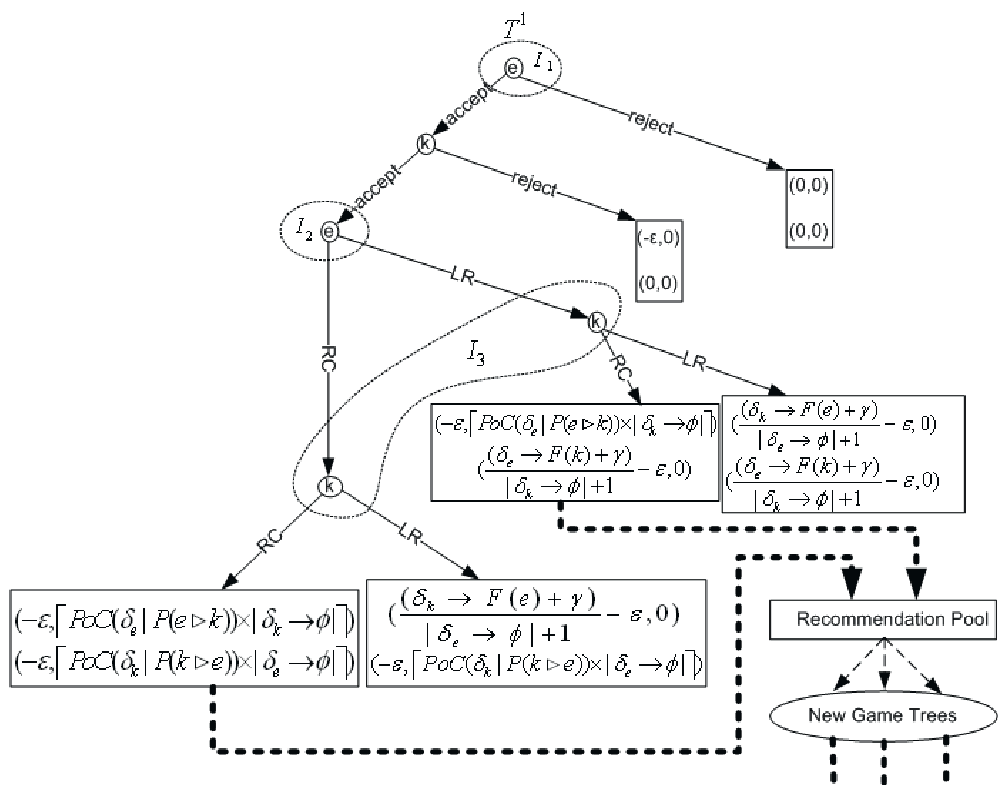 Figure 1: The decision logic of a one-shot interaction between agents.
Experimental Insights: Better Than Reality?
The authors tested their model against the Epinions dataset—a platform where trust and reputation are explicitly captured.
Key Findings:
- Human Myopia: Real users are generally bad at picking friends who maximize their long-term influence.
- Performance Gap: The model’s suggested agents consistently provided higher reputation growth than the agents users actually chose in the real world.
- Viral Efficiency: Because the model explicitly optimizes for PoC, it identifies "connectors" that humans often overlook.
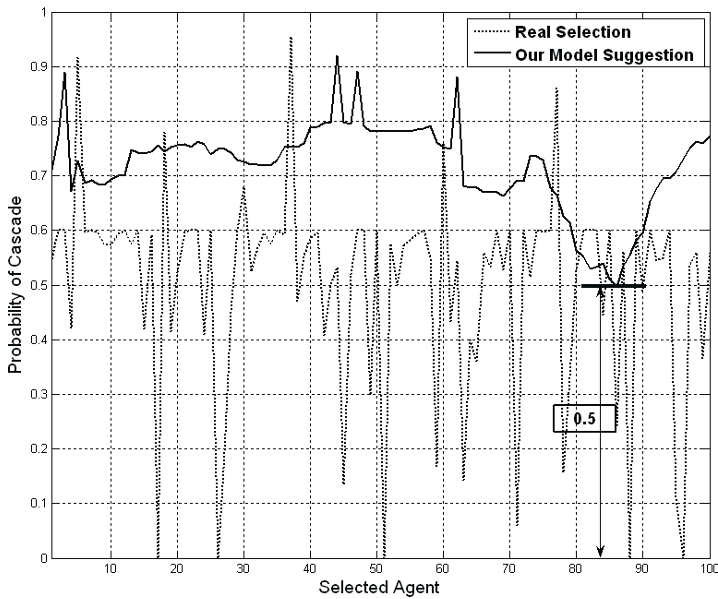 Figure 2: The Model's suggested selections vs. actual user choices in Local Reputation gain over time.
Critical Analysis & Future Outlook
The beauty of this model is its Inductive Bias toward propagation. It treats a social connection as a gateway rather than a destination.
Limitations:
- Computational Complexity: Calculating PoC across a massive network with millions of nodes is non-trivial and may require more efficient approximation algorithms (like those seen in modern Graph ML).
- Binary Friendship: The model assumes bidirectional friendship, which doesn't perfectly capture the "Follow" dynamics of platforms like X (Twitter) or Mastodon.
Future Impact:
This work lays the groundwork for Automated Influence Maximization. Imagine a LinkedIn or Twitter recommendation engine that doesn't just suggest "People you may know," but "People who will maximize your professional reach."
Conclusion
By fusing game theory with social network analysis, Gomrokchi et al. provide a rigorous framework for understanding how reputation travels. It proves that in the world of OSNs, it’s not just about what people think of you, but where those people sit in the architecture of the crowd.