
Decoding Digital Authority: A Taxonomy and Implementation of Influence Estimation in Social Networks
Reputation Mechanisms in on-line Social Networks: The case of an Influence Estimation System in Twitter
The paper introduces a comprehensive taxonomy for reputation systems in Online Social Networks (OSNs) and proposes the Twitter Influence Computer (TIC). TIC is a novel system designed to estimate the real-time influence of users and hashtags by analyzing microblogging social actions such as retweets, likes, and content novelty.
TL;DR
In the digital age, reputation is no longer just a 5-star rating; it is "Influence." This paper establishes a systematic taxonomy for reputation systems across social platforms and introduces TIC (Twitter Influence Computer)—a tool that quantifies the authority of users and hashtags by balancing social engagement with content novelty and consistency.
Problem & Motivation: Beyond the Star Rating
Traditional reputation systems were built for transactional trust (e.g., "Will this eBay seller ship my item?"). However, in Online Social Networks (OSNs), the goal has shifted. We now need to identify influentials—nodes that can activate actions in others.
The authors argue that existing systems are fragmented. A system for Yelp (reviews) doesn't work for Flickr (photos) or Twitter (microblogs). There is a critical need for a design framework that categorizes how reputation is assessed (targets), what information is used (social links vs. metadata), and how it is displayed (ranks vs. statistics).
Methodology: Engineering Influence
The researchers propose the Twitter Influence Computer (TIC), which moves away from static follower counts to look at active engagement. The heart of the system is the Influence Score of a Tweet (I(t)), calculated through four dimensions:
- Recognition: Number of Retweets (Inlinks).
- Preference: Number of Likes.
- Novelty: High outlinks (referencing others) suggest low novelty; multimedia suggests high novelty.
- Eloquence: Adjusted by the length of the tweet.
Mathematically Balancing Flow
The model introduces the concept of Influence Flow, representing the net gain of authority. If a tweet merely "borrows" content (high outlinks), its influence "leaks." TIC uses a weighted formula to calculate this:
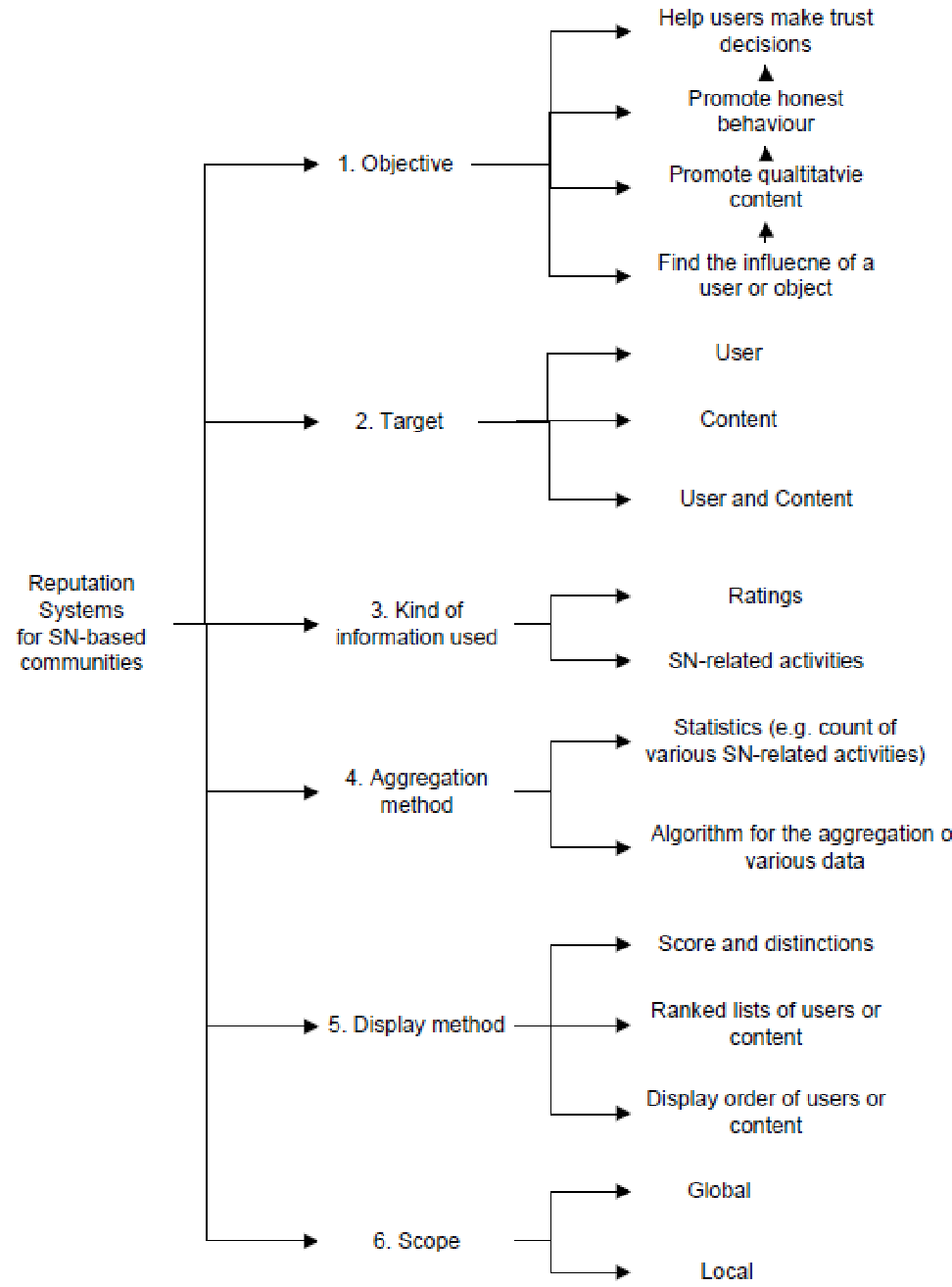 Figure 1: The proposed taxonomy for Reputation Systems in SN-based Communities.
Crucially, TIC rewards consistency. A user isn't influential just because they had one viral hit; the system calculates the ratio of "influent tweets" to "total tweets," favoring those who systematically capture the community's attention.
Experiments & Results
The authors validated TIC against Klout, a former industry benchmark for social influence.
- User Correlation: While Klout scores are relatively static over time, TIC scores are more volatile and sensitive to current activity. This makes TIC superior for identifying "real-time" influencers.
- Hashtag Validation: The system was tested on historical high-impact hashtags like
#PrayForParisand#LoveWins. These scored an average of 1009.5, significantly higher than random control hashtags, confirming the model’s accuracy in identifying societal discourse peaks.
 Equation: The core influence calculation aggregating weighted social actions.
Critical Insight: The "Leaking Influence" Paradox
One of the most interesting aspects of the TIC model is the treatment of outlinks (). In many SEO-based models, links are seen as a positive. In the context of microblogged influence, however, the authors treat excessive outlinks as a reduction in novelty (borrowed authority). This creates a fascinating trade-off: to be influential, one must contribute original content rather than just acting as a "router" for others' ideas.
Conclusion & Future Outlook
This work provides a logical blueprint for building reputation engines tailored to different social contexts. While currently limited by the Twitter API's short-term data windows (20 most recent tweets), the underlying framework—balancing recognition, preference, and novelty—remains highly relevant for modern Social Identity (SocialFi) and Marketing Analytics.
Future iterations could benefit from Sentiment Analysis; currently, a tweet that is "hated-retweeted" (ratioed) might still gain high influence scores, a limitation that modern NLP could easily solve.