
Argumentation in Social Networks: Moving Beyond Five-Star Ratings
Research opportunities for argumentation in social networks
This paper explores the integration of Argumentation Schemes Theory to formalize and structure online discussions and customer reviews within business-oriented social networks. Using Amazon as a primary case study, the authors propose a framework where qualitative user opinions are mapped to stereotyped reasoning patterns (e.g., Expert Opinion, Inconsistent Commitment) to improve transparency and decision-making.
TL;DR
This seminal work argues that the future of social commerce lies not just in what users think, but why they think it. By applying Argumentation Schemes Theory, the authors provide a roadmap for transforming chaotic online comments into structured, machine-readable reasoning patterns. This approach enhances trust, clarifies disagreements, and turns social networks into powerful decision-support systems.
Problem: The Transparency Gap in Social Web 2.0
While platforms like Amazon and TripAdvisor have revolutionized consumer feedback, they suffer from a "black box" problem. We see high ratings and low ratings, but the underlying reasoning is often buried in thousands of unstructured text reviews.
The authors identify two critical failures in current social networks:
- Lack of Justification: Recommender systems suggest products based on collaborative filtering (people like you bought this) but rarely explain the logic behind the recommendation.
- Ambiguity in Conflict: When users disagree in a comment thread, there is no objective way to measure who has the stronger argument, leading to "eristic" (purely confrontational) dialogue rather than constructive deliberation.
Methodology: Formalizing Human Intuition
The core of this paper is the application of Argumentation Schemes—stereotyped patterns of human reasoning. Instead of treating a review as a mere string of text, the authors view it as a logical construct consisting of premises and conclusions.
The Power of Critical Questions (CQs)
Every argumentation scheme comes with a set of "Critical Questions." For example, if a user posts a review based on their background (Argument from Expert Opinion), the system can automatically suggest questions such as:
- Is this user truly an expert in this specific domain?
- Is their assertion consistent with other experts?
This shifts the interaction from "I disagree with you" to "Your argument fails because of [Specific Logical Flaw]."
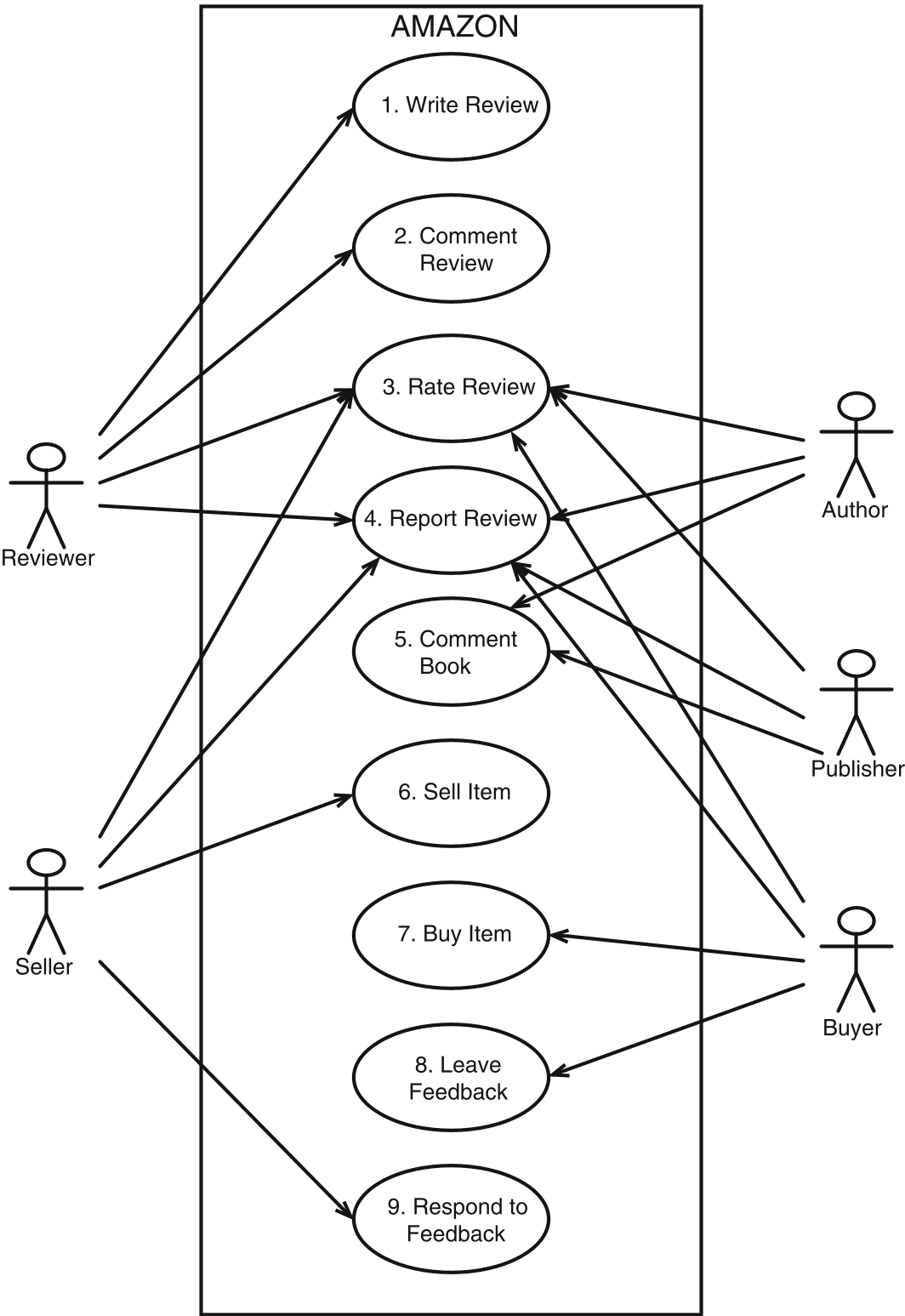 Figure 1: The authors' abstraction of how reviews and sales form directed social ties, creating Knowledge Databases for every node (user).
Case Study: Deconstructing the "Amazon Debate"
The paper takes a real Amazon conversation and maps it to specific schemes. In one example, a user (User 1) claims a book is excellent because they are an AI scholar. A second user (User 2) attacks this not by insults, but by pointing out an Inconsistent Commitment: User 1 had previously trashed a similar book by the same author.
By formalizing this as an "Argument from Inconsistent Commitment," the system can objectively lower the "reliability" score of User 1’s current review without needing a human moderator to intervene manually.
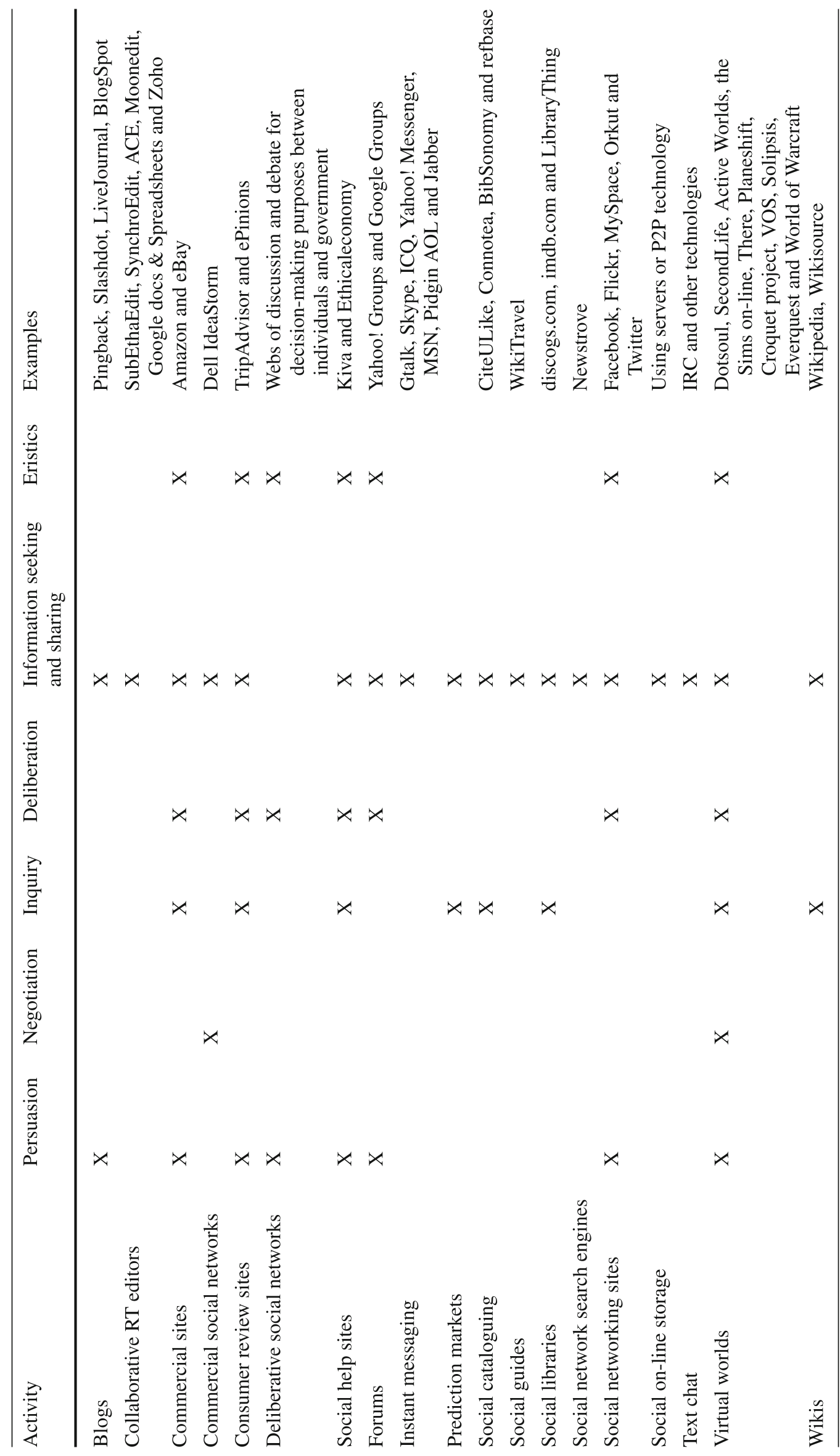 Table 1: A classification of social software activities (Blogs, Wikis, Commercial sites) according to the type of dialogue they facilitate (Persuasion, Negotiation, Inquiry, etc.).
Future Outlook: The "Argument Web"
The authors conclude that social networks should move toward an explicit network model. This includes:
- Suggesting Acquaintances: Recommending friends based on logical alignment, not just "mutual friends."
- Ontology Alignment: Using argumentation to bridge the gap between different technical vocabularies used by different communities.
- Identifying Attacks: Providing interfaces (like decision trees or questionnaires) that help non-expert users identify and rebuttal weak arguments mathematically.
Critical Analysis & Conclusion
While the paper is visionary, its main limitation—acknowledged by the authors—is the Identification Challenge. Ordinary users are unlikely to manually tag their posts with "Argument Scheme #14." The success of this methodology depends on the development of automated text-mining tools that can detect these schemes in real-time.
Takeaway: This work bridges the gap between the chaotic, social Web 2.0 and the structured, machine-readable Semantic Web. It suggests that the next generation of social media won't just be about "likes," but about the structural integrity of our shared knowledge.