
Safeguarding the Sky: Trust-Based Power Allocation in UAV-Enabled Social Networks
Resource Allocation for UAVs-Enabled Mobile Social Networks
This paper proposes a secure and efficient resource allocation framework for UAV-enabled Mobile Social Networks (MSNs). It introduces a two-phase trust mechanism to identify malicious users and a Stackelberg game-based transmission power allocation scheme that optimizes the utility of both UAVs (agents) and users.
TL;DR
When base stations are overwhelmed during concerts or disasters, UAVs act as flying relays. This paper introduces a specialized "Trust-Game" framework that filters out malicious users who don't pay and uses a Stackelberg Game to strike an optimal balance between UAV power limits and user demand, maximizing overall system efficiency.
Background & Motivation
Modern Mobile Social Networks (MSNs) are increasingly susceptible to temporary congestion hotspots. Deploying permanent ground infrastructure for a one-day sports event is economically unviable. UAVs provide the perfect "plug-and-play" solution.
However, two major "airborne" challenges exist:
- Limited Energy: UAVs aren't flying batteries; they have strict power budgets.
- Social Malice: Unlike professional industrial nodes, users in MSNs can be "selfish" or "malicious," consuming expensive UAV bandwidth and then refusing to pay the service fee.
Methodology: Trust First, Game Second
The authors propose a hierarchical solution to ensure only the "worthy" get the power.
1. The Two-Phase Trust Filter
Before any power is sold, the UAV acts as a gatekeeper:
- Phase 1 (Payment History): Users with a low historical payment ratio () are immediately blacklisted.
- Phase 2 (Social Connectivity & Helpfulness): The UAV evaluates how "close" a user is to the network () and whether they help others via D2D forwarding (). Only those crossing the trust threshold enter the resource game.
2. The Stackelberg Power Game
The resource allocation is modeled as a non-cooperative game:
- The Leader (UAV): Sets the price per unit of transmission power () to maximize its profit while considering its cost ().
- The Followers (Honest Users): Deciding how much power () to purchase based on their specific demand for content (Zipf distribution) and the price set by the UAV.
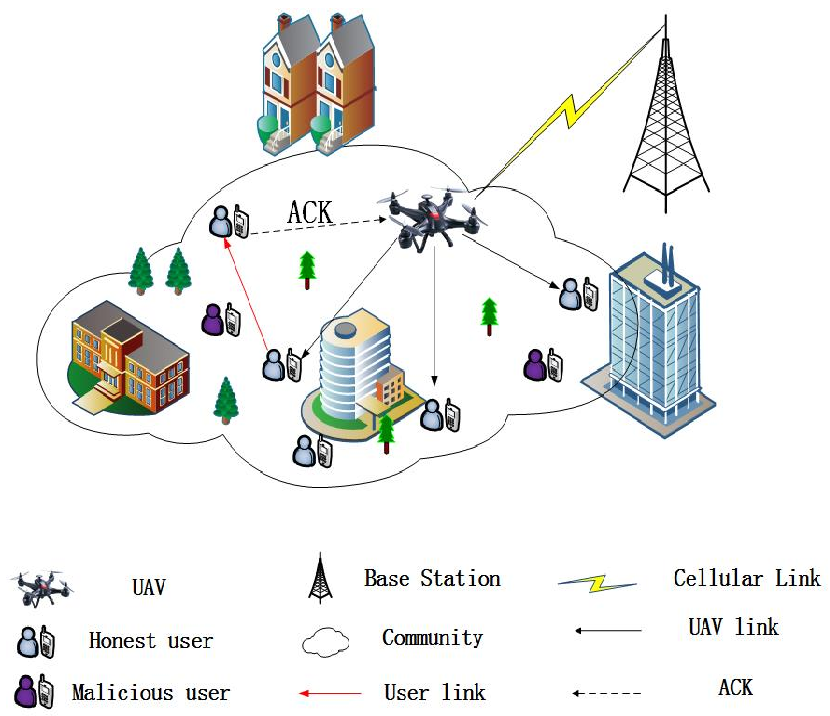 Figure 1: The UAV acts as an agent between the saturated Base Station and mobile users.
Mathematical Intuition
The core utility for a user is defined as: This reflects a diminishing marginal utility: as you get more power, the extra benefit of additional power decreases, while the cost increases linearly. The UAV’s goal is to find the "Sweet Spot" price that encourages users to buy just enough power without exhausting the UAV's total capacity .
Experimental Results
The researchers compared their approach against Fixed Price and Random schemes.
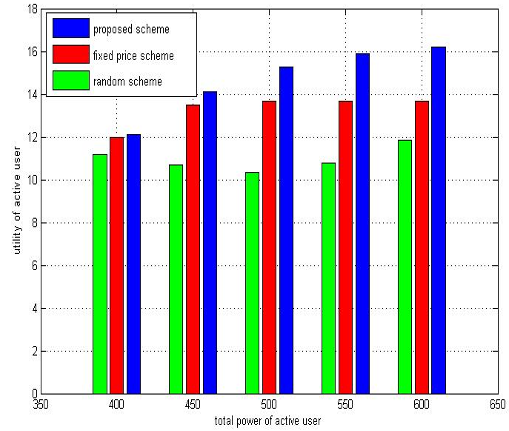 Figure 2: UAV Utility Performance Comparison.
- Fixed Price Staticity: In fixed schemes, the UAV cannot adapt to high demand, causing the utility to plateau quickly even if more power is available.
- Game Theoretic Superiority: The proposed scheme shows a steady increase in utility (profit). Because the UAV can dynamically adjust prices based on user trust and demand, it allocates power more intelligently, ensuring no Watt is wasted on low-value connections.
Critical Analysis & Conclusion
The paper successfully bridges Social Trust with Physical Layer Power Allocation. By excluding malicious actors early, the computational overhead of the Stackelberg game is reduced, and system reliability is improved.
Limitations:
- The model assumes a fixed altitude for the UAV. In reality, adjusting altitude could further optimize the Line-of-Sight (LoS) probability.
- The trust mechanism relies on a central history; in highly decentralized MSNs, a blockchain-based ledger might be more robust to prevent history tampering.
Future Outlook: This work paves the way for "Economic-Aware" UAV swarms, where the value of information and the reliability of the requester are just as important as the signal-to-noise ratio.