
Social Network Evolution: The Hidden Impact of Memory and Resource Limits
Effects of resource and remembering on social networks
This paper introduces a three-rule network-oriented simulation model to analyze the evolution of acquaintance networks. By integrating local interaction rules—introductions, arriving/leaving (aging), and a novel "remembering" mechanism—the study successfully replicates the topological features of real-world social networks, such as those found in corporate boards.
TL;DR
Why do we lose touch with some friends while others become life-long anchors? While most network science treats "small worlds" as a mathematical curiosity of random vs. regular links, this paper dives into the bottom-up local rules of human interaction. By simulating how limited time (resources) and memory (remembering) affect our social circles, the authors show that our social structure is a direct result of individual cognitive constraints.
Context: Beyond the "Six Degrees"
Since Milgram and the Watts-Strogatz model, we have known that social networks exhibit high clustering and short path lengths. However, these models are often "top-down"—they tell us what the network looks like, but not how it grows through daily human decisions. This research shifts the focus to the micro-level: how individuals manage friendships under the pressure of limited cognitive resources.
The Three Rules of Social Evolution
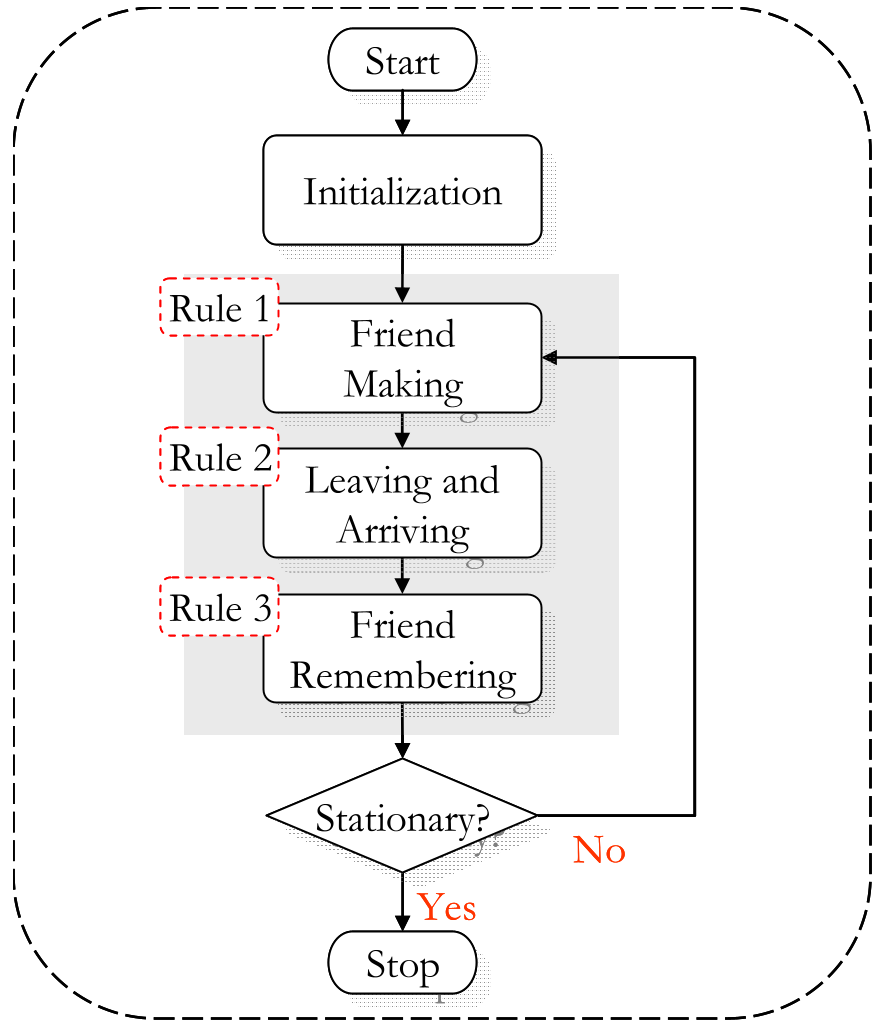
The authors argue that a social network is not a static graph but a breathing ecosystem governed by three local interaction rules:
- Friend Making: We meet people through mutual friends (introductions) or random encounters (chance).
- Arriving and Leaving: People move, change jobs, or pass away, represented as a probability of node replacement.
- Remembering & Resources (The Core Insight): Unlike previous models, this paper introduces a "friendship strength" formula: Here, is your memory of the old bond, and represents your "available resources per friend." If you have too many friends (), each relationship gets fewer resources, and if the strength falls below a threshold , the friendship breaks.
Deep Dive into the Results
The simulation results provide a sobering look at social dynamics:
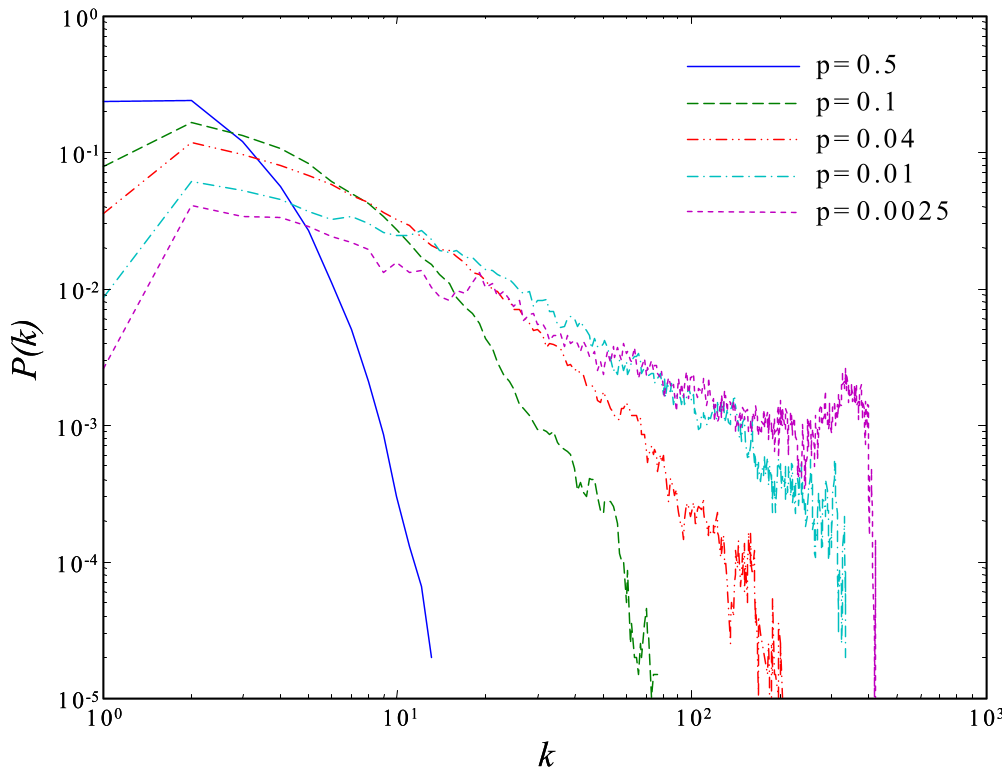
- The Resource Paradox: As you increase your "friend-making resources" (), your total number of friends () naturally goes up. However, this causes the Clustering Coefficient () to drop. In simpler terms, having more resources allows you to maintain diverse links outside your local "clique," effectively making the world feel even smaller and less segregated.
- Memory Matters: Higher "friend remembering" () stabilizes the network, allowing for higher connectivity and shorter distances between any two people in the system.
Real-World Validation
To prove the model's validity, the authors compared it against the "Corporate Directors" dataset (8,000 directors of Fortune 1000 companies). The model's degree distribution (solid blue) closely tracked the empirical data (green dashed), capturing the unique "peaked" distribution that standard random graph models often miss.
Critical Insight: The "Sampling Trap"
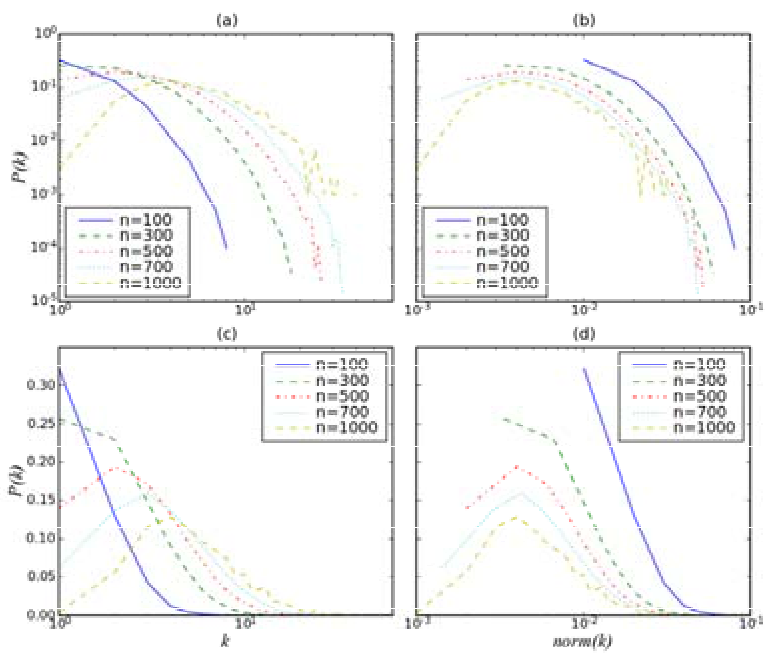
One of the most provocative findings in this paper is for social scientists: Standard sampling is misleading. When the authors sampled only 10% of their simulated network (a common practice in sociologists' questionnaires), the resulting node degree distribution was completely distorted compared to the 70% census sample. This suggests that much of our "fieldwork-based" understanding of social networks might be looking at a skewed shadow of reality.
Conclusion
This paper moves social network theory from abstract topology to behavioral simulation. By acknowledging that humans have "limited bandwidth" for friendship, it provides a powerful framework for understanding not just how our social worlds are formed, but how they dissolve.
Future Outlook: This model could be a game-changer for digital platform design. By adjusting "resource" costs (e.g., the effort required to interact), platform architects could theoretically manipulate the "small-worldness" or "echo-chamber" effects of their social ecosystems.